April 11, 2026
"Live with a calm superiority over life." "Memorial" declared an "extremist movement." What do people who worked in it say while staying in Russia?
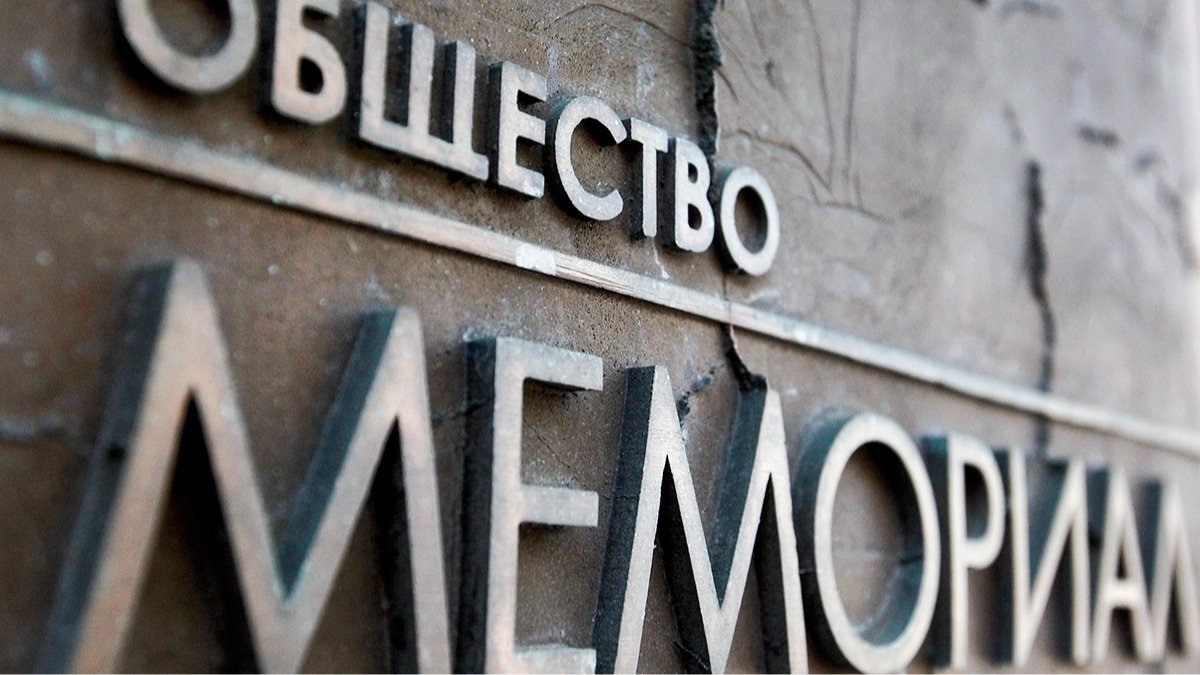
On April 9, the Supreme Court of Russia declared the "international movement 'Memorial'" an "extremist organization" and banned its activities in the country. Formally, such a legal entity does not exist; in reality, criminal prosecution now threatens everyone who somehow collaborated with the numerous structures of "Memorial" – a community that since the late 1980s has been dedicated to the memory of Soviet state terror, education, and human rights, and in 2022 received the Nobel Peace Prize for it (at the same time, key organizations of "Memorial" were liquidated by court decision). The Ministry of Justice of the Russian Federation has already announced that it has identified 196 people who actively participate in the movement's activities; in reality, the victims of new repressions may be even more numerous. "Novaya Gazeta Europe" special correspondent Irina Kravtsova contacted people who continued to work in various Russian "Memorials" until the last moment and found out what they think about what is happening. For security reasons, all our interlocutors have been anonymized, and details that could help identify them have been removed from the conversations. A sign of the Russian human rights organization "Memorial" at its office in Moscow, March 28, 2013. Photo: Maxim Shemetov / REUTERS / Scanpix / LETA. A "Memorial" employee: "If I go to prison, I will still be in a privileged position" "You know, I'm not one to indulge in cynicism, so I don't want to nod meaningfully and say: 'Ah, this decision was expected from such and such a moment.' I want to say that we [with colleagues from 'Memorial'] have done everything in our power for many years to prevent the repetition of repression. At least, not so soon. And we truly believed that even if the future would not be bright and rosy, it would still not be such that the organization would be recognized as extremist. Like most of my comrades, I do not want to and will not leave Russia. I believe that I am not the one who should run and hide. The main thing is this: if I go to prison, I will still be in a privileged position compared to those who were repressed in Soviet times. Because they were taken to prisons, and then killed – secretly, so that these people could not even count on their relatives ever finding out what happened to them. " So, I have a privilege: I know that there is "Memorial," and this means that there are those who, in case of anything, will preserve the memory of me and everything I have to go through (if I have to). There are those who will find out and preserve for centuries all the names and surnames of the executioners." The exhibition "Language of [Non]Freedom" about camp jargon at the Gulag History Museum, Moscow, February 5, 2021. Photo: Kirill Zykov / Moskva Agency. A "Memorial" employee: "We're going, but without the signs" "In short – zero emotions. Everything is expected, we've prepared, we're lying low. There's time to do what we didn't have time for before. There's a lot of internal work. The situation will be one way – we'll work like that, if the situation changes – we'll work differently. The main thing is that we are working. We're going, but without the signs." A "Memorial" employee: "Now I feel that very fear I've read so much about" "The feeling after the recognition is mixed. On the one hand, it seems that since the state has taken the most extreme measures, it means that the activities of "Memorial" are seen as a great threat. This gives even more significance to the work that "Memorial" continues to do after its liquidation. On the other hand, there is a sense of catastrophe, especially when "Memorial's" websites and databases become inaccessible one after another; when it's unclear how to live with this new status in Russia, because no matter how much you prepare for it, your consciousness simply refuses to accept it as a fait accompli. How expected was this event? In such a vague wording, it was unexpected for me. After the incident with the Gulag Museum (it was first closed under the pretext of fire safety violations, and in 2026 it was announced that it would be transformed into a "Museum of Memory" dedicated to the "genocide of the Soviet people"; the entire exhibition will be changed. – Ed.), of course, it became especially obvious that the state wants to completely stop the conversation about the difficult past. But it still seemed that they would limit themselves to persecuting specific organizations or initiatives, interfering with their events, as has constantly happened, for example, during "Memorial's" excursions. Attack by participants of the NOD movement on guests and participants of the historical research competition for high school students "Man in History. Russia - 20th Century" of the International Memorial Foundation. Writer Lyudmila Ulitskaya, doused with green disinfectant, House of Cinema in Moscow, April 28, 2016. Photo: screenshot from video / YouTube. I grew up in the post-Soviet era; my understanding of the totalitarian regime, censorship, and repression was formed from books and stories from the older generation. I empathized, imagined how I would feel and how I would behave in the place of various people subjected to political persecution. But all this was a thought experiment. And now, it's as if I've found myself in an immersive theater. Now I feel that very fear I've read so much about. The fear that made people keep silent, clean archives, delete dangerous photos. Now the advice and recommendations from that time, it turns out, apply directly to me as well. In moments of strong anxiety, I like to re-read, for example, this quote from Solzhenitsyn: ""Do not chase after the illusory – wealth, titles: it is gained by the nerves of decades, and confiscated in one night. Live with a calm superiority over life – do not be afraid of misfortune and do not languish for happiness. After all, neither bitterness lasts forever nor sweetness is enough."" What also helps me is that I have a much longer experience of "normality" behind me, when "Memorial" could be advertised on all platforms and schoolchildren invited to excursions, when in the middle of Lubyanka Square [as part of the "Return of Names" campaign] a microphone was set up and people stood in huge queues to read out the name of a repressed person, to openly express disagreement. I believe that all this will definitely happen again. And I want to hope that this dark period in the history of our country will truly be the last, and the return to repressions will not happen again." A "Memorial" employee: "I feel indignation at the flippancy of society" "We expected this turn of events after the liquidation of "Memorial" – it's not for nothing that we studied the history of repression. Studying it in detail helps to understand one important thing: during terror, everyone is at risk of being repressed, regardless of their strategy of behavior. And in this sense, one who has studied this history is better prepared than one who knows it superficially. I am firmly convinced that the repetition of persecution for beliefs and the inability to resist it is a consequence of an unreflected past. The educational work of "Memorial" is precisely very important as an antidote. It was and still is. As a society, we have too lightly decided that we have coped, overcome, and can move on without looking back. For this flippancy, I feel indignation. Now I feel irritation and anger, observing how quickly old behavioral patterns are revived, how habitual doublethink becomes valid again. But I am saved from despair by the support we receive from those around us – yes, it is also there and is very palpable. In the darkest times, I was fortunate to be in the company of the most worthy people." A supporter of the "Memorial" society at a protest rally "Freedom for Political Prisoners" near the building of the Supreme Court of Russia during the hearings on the case of International Memorial in Moscow, Russia, December 14, 2021. Photo: Yuri Kochetkov / EPA.
TL;DR
- The Supreme Court of Russia has declared the "international movement 'Memorial'" an extremist organization, banning its activities.
- This ruling threatens individuals who collaborated with "Memorial," an organization focused on remembering Soviet state terror, education, and human rights.
- Despite the ban, former "Memorial" employees express resilience and a commitment to continue their work, even if underground.
- Some workers draw parallels to Soviet-era repressions, expressing fear but also a determination to preserve historical memory.
- The organization's work is seen as crucial for preventing the repetition of past mistakes, with a hope for a future free from repression.
Continue reading the original article