February 25, 2026
Scholar Non Grata. Andrey Lankov Expelled from Latvia, Placed on Blacklist. He Stated: 'The bosses don't like that I don't make a politically useful caricature'
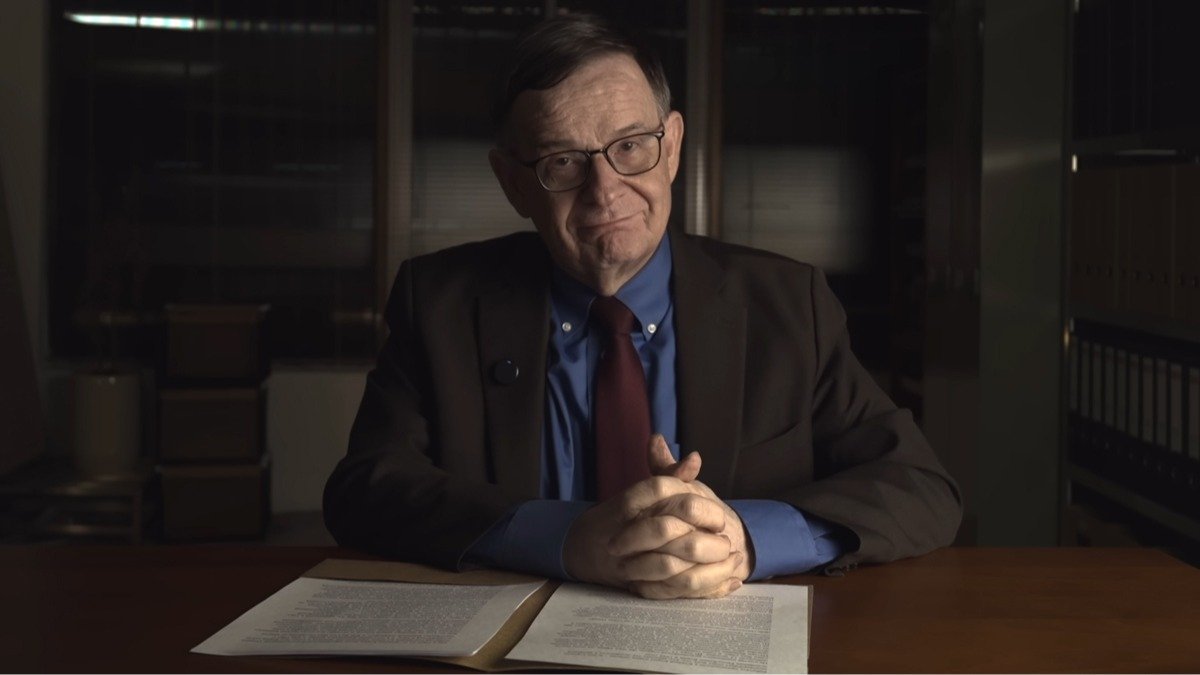
On February 24, Russian scholar Andrey Lankov, one of the world's foremost experts on North Korea, was expelled from Latvia. The researcher was scheduled to give a lecture in Riga but was detained half an hour before it began. Lankov was added to Latvia's 'blacklist,' and it was discovered just before the lecture that he had been banned from entering the country four days earlier. After his expulsion, the scholar went to Estonia, where he was already planning to give his next lecture. 'Novaya-Evropa' reports the key details of this incident. Andrey Lankov. Photo: YouTube. On the evening of February 24, Korean studies expert Andrey Lankov was set to deliver a lecture in Riga titled: 'North Korea: What the Elite Wants and Fears.' However, half an hour before the event, scheduled to take place at Park Inn by Radisson, municipal police and immigration service officers arrived. They stated that Andrey Lankov 'had been included in the list of persons banned from entering Latvia, approved by the Minister of Foreign Affairs.' This list is commonly referred to as Latvia's 'blacklist.' The scholar later reported that both his inclusion on the list and his detention were decided by the head of the Latvian Ministry of Foreign Affairs, Baiba Braže. Latvian authorities had not commented on the incident involving Lankov at the time of publication. The lecture was canceled, and Andrey Lankov himself was taken to the Immigration Directorate. Lawyers, found by the scholar's friends, soon arrived. Lankov stated that his fingerprints were taken, he was given 'a bunch of documents' to sign, and then he was put in a car and taken to the Estonian border. Friends and acquaintances of Lankov had prepared a second car for him, into which he simply transferred upon reaching Estonia. Today, February 25, the Korean studies expert is scheduled to give the same lecture in Tallinn. Latvia did not warn Lankov. Why he was allowed into the country is unknown. Information that the Latvian Ministry of Foreign Affairs had declared Lankov persona non grata first appeared on the evening of February 24: the 'Anti-War Committee of Russia' reported this, citing the scholar's lawyer. On the afternoon of April 25, in response to an inquiry from 'Novaya Gazeta Europe,' the Latvian Ministry of Foreign Affairs confirmed that Lankov had been declared persona non grata, emphasizing that the decision was based on information from Latvian special services. Ministry representatives added that Lankov was banned from entering Latvia based on the second part of Article 61 of the Immigration Law. This applies to those who pose a threat or support actions violating international law, such as the war in Ukraine. However, the specific information used by the Latvian special services was not specified in the ministry's written comment. To its response to the inquiry, the Ministry attached an opinion piece by Latvian Foreign Minister Baiba Braže, 'No Red Carpets for Russia: The Danger of Normalizing Aggression,' published in the Ukrainian publication Kyiv Independent on the day of Lankov's detention. In the article, Braže asserts that the Kremlin is suffering defeat in the war in Ukraine. Meanwhile, Russia has begun a gradual return to peaceful international life – 'through culture, sports, diplomacy, and business.' According to Braže, through humanitarian, apolitical, and neutral rhetoric, Russia aims to achieve an important strategic goal – 'to return to world life as if the war were a temporary shock.' Following the incident, it was revealed that the Latvian Ministry of Foreign Affairs had added Lankov to the 'blacklist' as early as February 20 – four days before his lecture in Riga. However, the scholar entered the country without any problems. 'It's interesting that there were no obstacles upon entering the country. It's worrying that this demonstrative process against a public figure could set a precedent. The decision was made on February 20, but they let him in. He was demonstratively detained at the lecture. This means the action is demonstrative and shows Latvia's position regarding Russians,' noted Andrey Pivovarov, a member of the 'Anti-War Committee.' Andrey Lankov himself took the situation calmly. 'These are difficult times, anything can happen. It's a matter of life,' the Korean studies expert told a 'Novaya-Europa' correspondent during his detention. Later, the researcher described the incident as a 'curious-scandalous event.' 'However, everything is quite clear. The bosses don't like that I don't make a politically useful caricature out of the real situation. I am not going to take any steps regarding what happened, I don't see the point,' believes researcher Andrey Lankov. He clarified that he is unaware of the reasons for his expulsion from Latvia and added that he does not plan to do anything about his expulsion from the country. Attendees at Lankov's lecture in Riga, February 24, 2025. Photo: 'Novaya Gazeta Europe.' Lankov is not the first Russian to be added to the list after the start of the full-scale invasion of Ukraine. Latvia's 'blacklist' has existed since 1993. It is a list of persons banned from entering the country. Foreigners can be added to this register by the heads of the Ministry of Internal Affairs and the Ministry of Foreign Affairs of Latvia, the head of the State Border Guard, and other officials. The document is not publicly available and cannot be studied. It is known that at the end of 2023, there were 1637 foreigners on the 'blacklist.' The list includes many pro-government Russian public figures and show business stars, such as Oleg Gazmanov, Nikolay Baskov, singer Valeria, Filipp Kirkorov, and others. In December 2022, the head of the Ministry of Internal Affairs added former 'Dozhd' journalist Alexey Korostelev to the 'blacklist.' The ministry assessed his statements on the channel as 'directed against the national security interests of Latvia and creating a false impression of the Russian army, encouraging public sympathy for the aggressors.' The claims arose from comments about violations of the rights of mobilized Russians, as well as the fact that many 'were helped with, for example, equipment and basic amenities at the front.' Furthermore, in April 2023, the State Security Service of Latvia accused Korostelev of 'sympathy for the Soviet army, the Soviet dictator Joseph Stalin, and Russia's imperialist ideology.' Alexey Korostelev attempted to challenge his inclusion on the 'blacklist,' but the local court sided with the Latvian authorities. Become a co-participant of 'Novaya Gazeta' Become a co-participant of 'Novaya Gazeta,' subscribe to the newsletter, and receive letters from the editorial office. Subscribe. The lecture was organized by the agency that organized the performance of archaeologist Butyagin, detained in Poland. The lecture organizers, Curiosophy agency, have promised to defend the researcher's rights. In a statement, the company emphasized that Lankov 'had not broken any laws' and had merely come to give a popular science lecture about North Korea. The agency noted that it plans to use all legal means of defense, including appeals to human rights organizations, European institutions, and the legal community. T-invariant publication noted that Curiosophy agency organized a lecture by archaeologist Alexander Butyagin in Warsaw last year. He was detained shortly before the performance on suspicion of illegal excavations in annexed Crimea. The agency's founder, Dmitry Aleshkovsky, told 'Agentstvo' that he does not consider these cases related. Andrey Lankov communicates with Latvian migration authorities, February 24, 2025. Photo: 'Novaya Gazeta Europe.' Andrey Lankov is one of the world's leading experts on North Korea. Lankov holds a Doctor of Historical Sciences degree, is an orientalist, and a professor at Kookmin University in Seoul, where he has worked since 2004. He was born in 1963 in St. Petersburg, graduated from the Faculty of Oriental Studies at Leningrad State University (later St. Petersburg State University) in 1986, and completed his postgraduate studies there. Lankov lived in Pyongyang in 1984–1985 as an exchange student from Leningrad State University, studying at Kim Il Sung University. From 1989 to 1992, Lankov taught Korean language and Korean history at his alma mater. In the 1990s, the scholar worked in South Korea and Australia. According to leaks, as noted by 'Agentstvo,' he last flew to Russia in October 2021 for a few days. Almost a year ago, the Savelovsky Court of Moscow fined the scholar 10,000 rubles for 'participation in the activities of an undesirable organization.' At the time, Lankov said he learned about the case from journalists and suggested he had given an interview to 'the wrong person.' Lankov holds dual citizenship – Russian and Australian. According to the scholar, he travels with his Australian passport to avoid visa issues. The day after his expulsion, the researcher contacted Australian authorities. 'Novaya-Europe' sent an inquiry to the Ministry of Foreign Affairs of that country. 'If I had been there (in Riga. - Ed.) with a Russian passport, and in such a case I would have had to approach the Russian side, I think our side would have been less effective: you understand that in Riga now, Canberra's voice is more likely to be heard than Moscow's. But nevertheless, in such a case, I might have shown a little more persistence, because the issues would have been some kind of discrimination based on citizenship. But here, there is none,' Lankov told RBC, noting that he considers the incident closed.
TL;DR
- Russian scholar Andrey Lankov, an expert on North Korea, was detained and expelled from Latvia on February 24.
- Lankov was scheduled to give a lecture in Riga but was detained 30 minutes prior.
- He had entered Latvia days before but was subsequently added to a 'blacklist' by the Latvian Foreign Ministry.
- The Ministry cited national security concerns and Lankov's potential threat based on information from special services.
- Lankov, who travels with his Australian passport, believes the incident is due to his neutral stance on political matters.
- The organizers of the lecture plan to defend Lankov's rights through legal channels.
Continue reading the original article