February 18, 2026
Stalemate over Medinsky. How negotiations on Ukraine in Geneva unfolded. There is still no progress on the main issues of territories and security guarantees
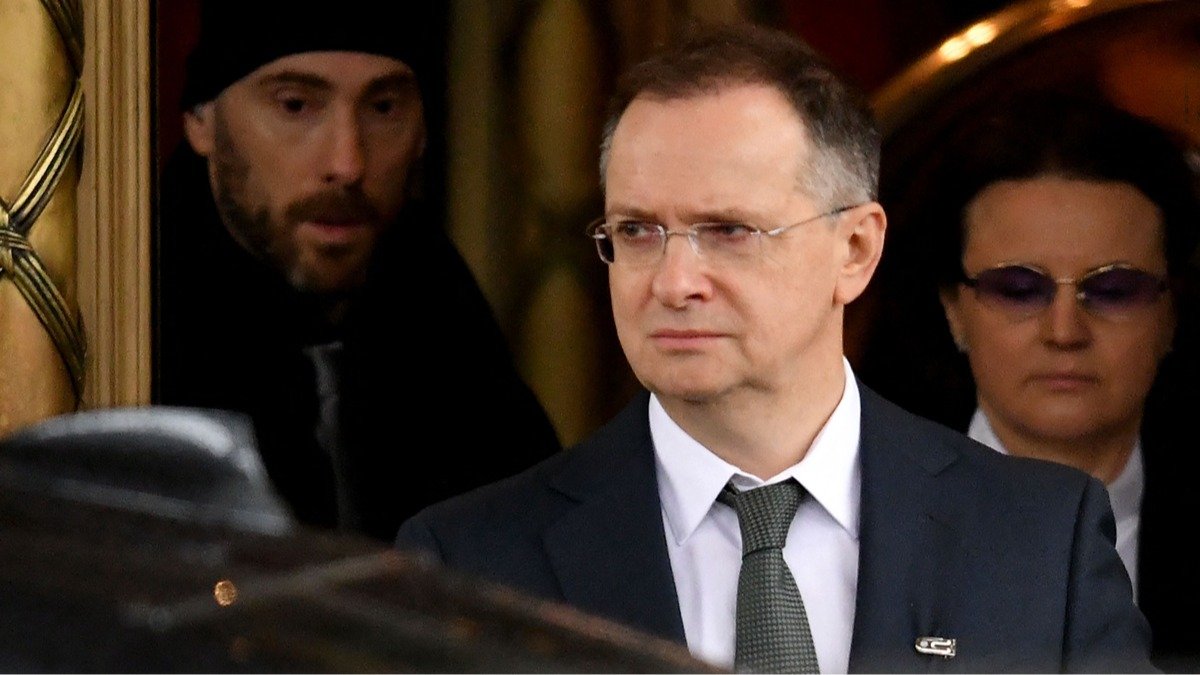
The second day of trilateral negotiations with the participation of delegations from Russia, the United States, and Ukraine has concluded in Geneva. The closed-door meeting, as expected, ended without a breakthrough. Ukrainian President Volodymyr Zelensky stated that military issues are easier to resolve than political ones. The head of the Russian delegation, Vladimir Medinsky, made a brief statement, calling the talks "difficult, but business-like." According to Axios sources, the negotiations "reached a deadlock" precisely because of Medinsky's position. The key disagreement remains the issue of territories. Zelensky reiterated that Kyiv will not make territorial concessions without reliable security guarantees. How the negotiations proceeded, what Zelensky said about possible deal options, and what to expect next – in the material by 'Nova-Europe'. Head of the Russian delegation Vladimir Medinsky after the second round of negotiations between Russia and Ukraine, mediated by the US, in Geneva, Switzerland, February 18, 2026. Photo: Harold Cunningham / AFP / Scanpix / LETA. How the parties assess the outcomes of the meetings The second day of trilateral negotiations with the participation of delegations from Russia, the United States, and Ukraine has concluded in Geneva. As on the previous day, February 17, the talks were held behind closed doors at the InterContinental Hotel. The meeting lasted about two hours. The head of the Ukrainian delegation, Secretary of the National Security Council Rustem Umerov, reported in the morning that the negotiations were again proceeding in two directions: political and military. Following the talks, he stated, "The next step is to reach a consensus to present decisions to the presidents": "Our task is to prepare a practical, not just a formal, basis for this." Some issues were clarified, but negotiations on others are ongoing, he added. According to Ukrainian President Volodymyr Zelensky, military issues are being resolved better than political ones: there is no progress yet in the political bloc, and the parties' positions diverge significantly. During the first two rounds of trilateral negotiations in the UAE, the Russian delegation was led by GRU chief Igor Kostyukov. This time, the head of the negotiation team from Russia was advisor to Vladimir Putin, Vladimir Medinsky. After the second day of the meeting, he stated that the negotiations were "difficult, but business-like." A new meeting, he said, will take place "in the near future." When and where exactly – he did not specify. Medinsky refrained from further comments. In an interview with Axios, Zelensky expressed concerns that the Russian side, by sending Medinsky to the negotiations, might try to turn the meeting into an empty formality or return to its initial positions to gain time for actions on the battlefield. After the first day of consultations, which lasted six hours, no signs of progress were demonstrated by the parties, notes The New York Times. On Tuesday, according to an Axios source, the negotiations "reached a deadlock" due to the position presented by Vladimir Medinsky. The Russian side, according to the publication's interlocutor, complained about Zelensky's public statements, accusing him of unwillingness to conduct serious negotiations and attempting to boost his popularity before possible elections. Earlier, an RBC source in the Russian delegation called the first day of negotiations "very tense." Discussions were held in both bilateral and trilateral formats. Additionally, as Zelensky reported, the Ukrainian and American delegations met with European representatives the previous day: Great Britain, France, Germany, Italy, and Switzerland. "Yesterday, indeed, there were difficult meetings, and we can state that Russia is trying to drag out the negotiations, which could have already reached the final stage. I thank the American side for their attention to detail and patience in conversations with the present representatives of Russia," Zelensky stated. No other details of the meeting are yet available from Russia, Ukraine, or the US. Members of the Ukrainian delegation at the negotiations in Geneva, Switzerland, February 17, 2026. Photo: Rustem Umerov / Facebook. First – security guarantees, then – territories The main point of contention, along with security guarantees for Ukraine from the West, remains control over Donbas, Axios notes. In an interview with the publication, Ukrainian President Volodymyr Zelensky stated that a breakthrough in the territorial issue is possible only in a personal meeting with Vladimir Putin and instructed his delegation to raise the issue of preparing for such a high-level meeting in Geneva. "The priority is security guarantees for Ukraine," Volodymyr Zelensky wrote following the second day of negotiations. "Ukrainian representatives have clear directives on every aspect of the negotiations. I expect a detailed report on the results of all meetings," he added. The previous day, Zelensky also expressed concern: according to him, the American side says that the issue of territories should be resolved first, and then security guarantees. He insists on the opposite order: first guarantees, and only then can compromises be discussed, but not those that would allow Russia to "quickly recover, return, and occupy" Ukraine. As Harry Nedelku, senior director at the research organization Rasmussen Global, stated in a conversation with the NYT, prioritizing the territorial issue would be a trap for Kyiv, as Russia could use the pause for a new attack. This is especially dangerous in the Donetsk region: if Ukrainian troops abandon well-fortified positions, Russia will gain a bridgehead for renewed attacks, the expert added. If security guarantees are provided first, Ukraine will gain leverage in negotiations and international protection, Nedelku noted. In that case, in his opinion, Kyiv will be able to negotiate with confidence, and even territorial concessions may become acceptable to Ukrainian society. What Ukraine will reject: Zelensky's interview with Axios The people of Ukraine will not allow the territory of eastern Donbas to be handed over to Russia, Zelensky noted in an interview with Axios. According to him, any peace agreement that involves a unilateral withdrawal of Ukrainian troops from Donbas and its transfer to Russia will be rejected by the population. Zelensky stated that American mediators Steve Witkoff and Jared Kushner informed him that Russia allegedly sincerely wants to end the war and advised his team to build negotiations based on this. However, he warned the US against attempting to offer a peace deal that Ukrainians would consider a "failed story." First round of negotiations in Geneva, Switzerland, February 17, 2026. Photo: Rustem Umerov / Facebook. Zelensky criticized what he believes are unfair public calls from Donald Trump, who demands concessions from Kyiv, not Moscow. The Ukrainian President believes that while it is easier for Trump to pressure Ukraine than the much larger Russia, the path to lasting peace does not lie in "gifting victory" to Vladimir Putin. At the same time, Zelensky expressed hope that Trump's harsh statements are merely a tactic and not a final decision, and thanked the US President for his efforts towards a peaceful settlement. According to Axios, American mediators proposed an option where Ukrainian forces would withdraw from their positions in Donbas, and this territory would become a demilitarized "free economic zone." However, Washington has not yet decided which country would have sovereignty over this territory. Zelensky told Axios that he is ready to discuss troop withdrawal but insists on a reciprocal withdrawal of Russian units. Washington and Kyiv have agreed that any deal must be put to a referendum of the Ukrainian people, Zelensky emphasized in an interview with Axios. If this agreement involves Ukraine withdrawing from Donbas and renouncing sovereignty, the people will reject it, the Ukrainian President added: "Emotionally, people will never forgive this. Never. They will not forgive... me, they will not forgive [the US]," Zelensky said. He added that Ukrainians "cannot understand why" they are being asked to cede "part of their country." At the same time, Zelensky suggested that the Ukrainian people might accept a deal if it freezes the current front line in Donbas. In his opinion, people would support maintaining the status quo in a referendum.
TL;DR
- The second day of trilateral negotiations between Russia, the US, and Ukraine in Geneva ended without a breakthrough.
- Key disagreements persist over territorial issues and security guarantees for Ukraine.
- Ukrainian President Zelensky stated that military issues are easier to resolve than political ones.
- Russian negotiator Vladimir Medinsky described the talks as 'difficult, but business-like,' with sources suggesting his position led to a deadlock.
- Zelensky reiterated that Ukraine will not make territorial concessions without reliable security guarantees.
- Zelensky expressed concern that Russia might be using the negotiations to gain time for military actions.
- The issue of sovereignty over Donbas and potential demilitarized zones was discussed, with Ukraine insisting on reciprocal troop withdrawals.
- Any potential agreement is to be put to a Ukrainian referendum, and concessions on territory are expected to be rejected by the population.
- Zelensky criticized public calls for Ukrainian concessions from figures like Donald Trump.
Continue reading the original article