March 6, 2026
Life after the Ayatollah's death. Many Iranians were born, grew up, and emigrated under Ayatollah Ali Khamenei. How do they feel now that he is gone?
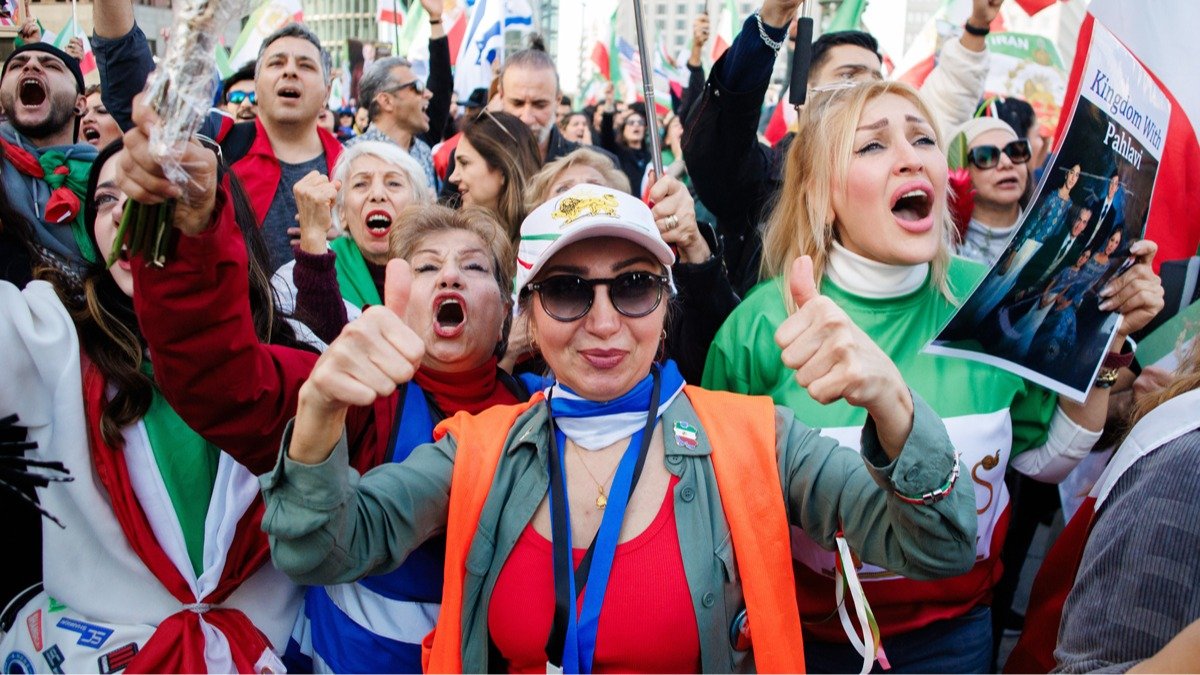
The current escalation has proven to be an incredibly difficult test for Iran's military and political leadership. Within the first day of the US-Israeli military operation, the commander of the Islamic Revolutionary Guard Corps, Mohammad Pakpour, Chief of Staff Abdul-Rahim Mousavi, Defense Minister Aziz Nasirzadeh, and many others were killed. However, the most significant event was the killing of Iran's Supreme Leader, Ayatollah Ali Khamenei. Khamenei ruled Iran for thirty-seven years, starting in 1989. His reign was marked by a constant tightening of internal control. The state increased religious censorship, expanded the powers of the morality police, limited freedom of speech, and persecuted independent journalists, human rights activists, and the opposition. Any mass protests—from student demonstrations in the late 1990s to waves of protests in 2009, 2019, and 2022—were suppressed by force. Thousands were arrested, and hundreds died in clashes with security forces. The regime's economic policies, constant conflicts with the West, and the development of its nuclear program led to years of sanctions, which placed a heavy burden on Iranian society. Inflation, the fall of the national currency, and chronic unemployment became a daily reality for many Iranians. In recent years, especially after the recent 12-day war with Israel, Iran's Supreme Leader appeared in public infrequently and remained hidden deep underground, likely aware that he would always be target number one for his enemies. Many Iranians considered themselves among his enemies and, while not thrilled about the American and Israeli attacks, admit they finally have a glimmer of hope. 'Novaya Gazeta Europe' tells the story of a person who lived under Khamenei his entire life. Participants of an Iranian emigrant rally in Berlin, Germany, February 28, 2026. Photo: Clemens Bilan / EPA. Mixed feelings Over the weekend, the streets of European cities were unexpectedly filled with people waving Iranian flags, or rather, the flags of the Shah's Iran, which feature a golden lion instead of four crescents and a sword in the center. Iranians, mostly young people, were joyfully celebrating: dancing and chanting slogans, some imitating Donald Trump with his signature dance. The reason for the merriment is not obvious: Iran's capital is being bombed at this very hour, and the regime doesn't seem to be surrendering. Yet, in Iran itself, funeral processions now coexist with noisy parties celebrating the dictator's death. Khamenei is dead, though just a month ago he seemed invincible and had successfully weathered protests caused by rising inflation and poverty. During this confrontation, the Supreme Leader explicitly stated that he 'will not negotiate with rioters.' The protests ended in mass killings: according to the official version alone, over three thousand people died; independent estimates place the number at up to thirty thousand. The deaths of Khamenei and his close associates are only the first step towards a possible transformation of Iran, but by no means a guarantee of it. Photo: Clemens Bilan / EPA. Said (name changed at the request of the interlocutor), an analyst at a German university, admits in a conversation with 'Novaya-Europe' that he lived his entire life under Khamenei's rule and only moved to Germany two years ago, having completely lost faith in possible reforms in his homeland. He recalls his school years, the time when he first heard the name of the spiritual leader: — I lived in a small industrial town near Mashhad. The most important thing for me, like for many Iranian children, was to study well in school. We have a type of school that can only be entered through an entrance exam. Studying in such a school was considered prestigious. I was lucky, I got in, it was a great victory for me and my family. As a child, I cared only about one thing – studying well and being the best in school. Of course, I was influenced by the official ideology. Imagine the thoughts of a ten-year-old child who studies the Quran for four hours a week and other Islamic disciplines for another four hours. That's why, as a child, for a while, I thought he [Khamenei] was a good person. However, as I grew older, around 15 years old—from then until today, I knew he was a villain. And I know many people who loved him, but then, when they grew up, they realized there was nothing to love him for, — says Said. Historical moment Said's father, grandfather, and entire family were skeptical of the regime. However, neither then nor later did the opposition manage to achieve real changes, and the screws continued to tighten. Meanwhile, Said's life changed; he entered university and moved to Tehran, where free-thinking flourished. — In our country, there was a party—I don't know if it still exists—the reformists. Their idea was to gradually change the Constitution, step by step open Iran to the world, and establish relations with other countries. According to Said and his comrades, the fall of the theocratic regime could lead to chaos and civil war, so the path of reform seemed more desirable to them. Reformist students went to the polls but paid little attention to Khamenei himself, who, despite possessing unlimited power, was merely a part of the system. They considered electing their own president much more important. However, when the elections (in 2009—Ed.) were openly rigged, disappointment set in within society. — We tried our best, protested, but there was a very harsh reaction from Khamenei and the government. I went to the polls a few more times, voted for reformists, but in the end, I realized: the regime will not change, — recalls Said. Photo: Clemens Bilan / EPA. Years passed. After graduating from university, Said got a job as a data analyst in a large company related to public transport, got married, and bought his own home. In general, he says, he lived an ordinary life, worked, and spent time with friends. — My wife and I are educated people, and we both earned well. We had enough money to own a car, buy necessities, and even travel, but only within Iran, not abroad. The problem wasn't the salary but inflation. Probably, [under normal circumstances] in five to ten years, we could have bought a better car, moved, but due to inflation, it was impossible. At the same time, Said admits, most Iranians do not live like that at all. Poverty and economic crisis are becoming one of the main arguments of the protesters: — They [the current authorities] simply cannot manage the country any longer, — says Said, listing all the recent protests and strikes. — We tried to boycott the elections to show the government: we are dissatisfied. Then we held silent demonstrations—we just went out into the streets to stand silently. Every time, the government responded with violence. We understand that the US and Israel do not want to bring us democracy. They have their own goals. They are acting in their own country's interests, not for our sake. But there is a historical moment, right now, when their goals align with ours. They want to destroy the Islamic regime, and so do we, — he says. The day before our conversation, Said, despite the internet blockage, communicated with his relatives. Some, the Iranian says, still have limited internet access; they can try to send a message a few times a day. — They were happy that Khamenei was dead. And it was surprising for me to see how people, in such a dangerous situation, say they are happy, — muses the young man. He recounts that almost all of Tehran is being bombed, there are no safe places, so many are leaving for northern Iran. According to Said, as long as the military operation is not over, people will be afraid to come out for protests. The country has frozen. — Supreme Leader Khamenei is dead, President Masoud Pezeshkian is in hiding. For the first time in many years, the regime is truly on the verge of collapse. It's hard for me to believe, although I've been dreaming about it for the last fifteen years, — he concludes. Photo: Clemens Bilan / EPA.
TL;DR
- Ayatollah Ali Khamenei, Iran's Supreme Leader for 37 years, has been killed during a US-Israeli military operation.
- His death has led to celebrations among some Iranian expatriates and a mix of joy and apprehension within Iran.
- Khamenei's rule was characterized by increased internal control, censorship, suppression of protests, and economic hardship due to sanctions.
- An Iranian analyst describes his life under the regime, from early indoctrination to disillusionment with reformist movements and eventual emigration.
- While the current events present a potential opportunity for change, the analyst notes that the situation remains uncertain and the future of Iran is not guaranteed.
Continue reading the original article