April 8, 2026
“Peace talks are yet to come.” The US and Iran agreed to a two-week ceasefire. Is the end of the conflict near? “Nova-Europe” asked experts on the Middle East.
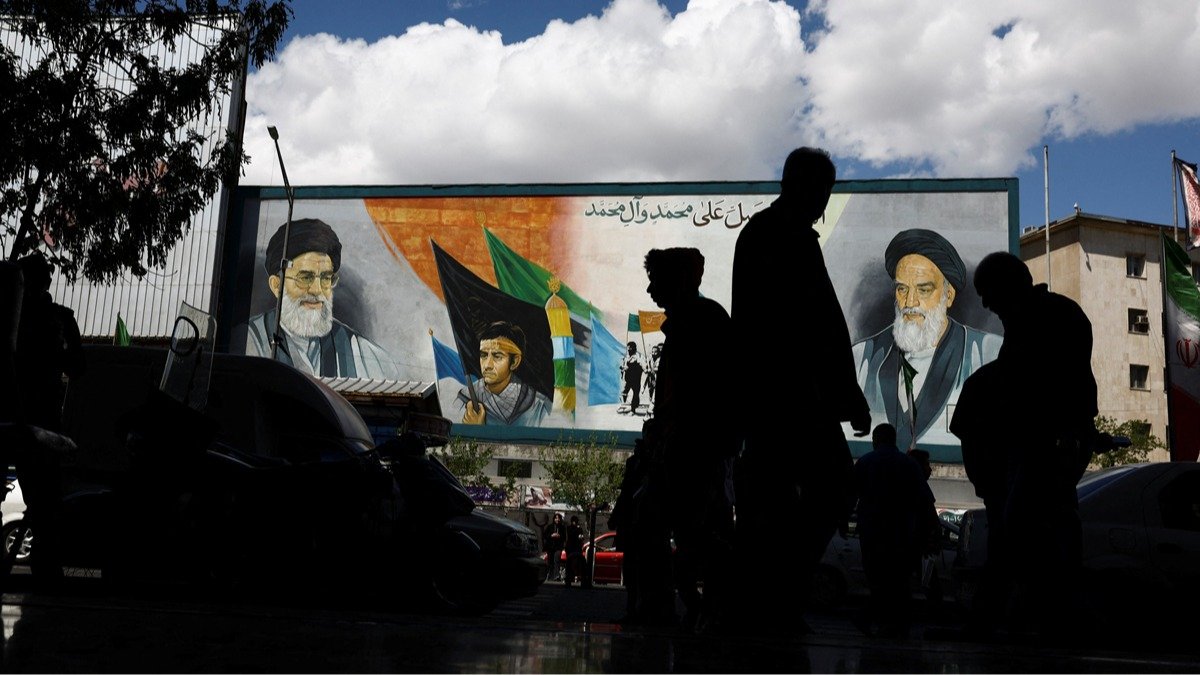
The US, Israel, and Iran agreed to a two-week ceasefire at the last minute before the expiration of Donald Trump's ultimatum, who had threatened to “destroy Iranian civilization” the day before. Both the United States and Iran declared victory. Negotiations between the countries' delegations will take place in the capital of Pakistan on April 10. What did the US and Israel achieve in 39 days of hostilities? How will this war affect Iran's politics? Will the Middle East change? Military and political experts on the region answered these and other questions for “Nova Gazeta Europe.” A mural depicting Ayatollah Ruhollah Khomeini and the late Supreme Leader Ali Khamenei, Tehran, Iran, April 8, 2026. Photo: Majid Asgaripour / WANA / Reuters / Scanpix / LETA. How the parties moved towards a temporary ceasefire. In late March, Washington, through intermediaries in Pakistan, handed Tehran a 15-point plan to end the war in the Middle East. It concerned, in particular, Iran's refusal to develop nuclear weapons and the transfer of enriched uranium stockpiles to the IAEA, as well as a month-long ceasefire to discuss the agreement points. On April 4, Donald Trump announced that he was giving Iran two days to consider the deal and open the Strait of Hormuz. According to Axios, the American president extended the ultimatum to give Tehran a “last chance.” Then, according to the publication, the States offered Tehran several conflict resolution options, but none were accepted. Pakistan, Egypt, and Turkey acted as intermediaries in the negotiations. Negotiations were also conducted through correspondence between Trump's special envoy Steve Witkoff and Iranian Foreign Minister Abbas Araghchi. By April 6, it still seemed that the parties would not reach a compromise, although journalists noted that this was the last attempt to avoid escalating the war. The Iranian leadership conveyed through Pakistan that it rejected a 45-day ceasefire and stated the need to completely cease the military conflict, and also demanded the signing of a protocol on safe passage through the Strait of Hormuz and the lifting of sanctions. After this, Trump issued a loud threat about the death of “an entire civilization” if the agreement was not accepted: “An entire civilization will die tonight so that it never returns. I don’t want that to happen, but it probably will. But now that we have a full and total regime change, where different, smart, and less radicalized minds prevail, maybe something wonderfully revolutionary can happen, WHO KNOWS? Tonight we will find out about one of the most important moments in the long and complex history of the world. 47 years of extortion, corruption, and death will finally end.” He set a deadline for concluding a peace agreement and opening shipping in the Strait of Hormuz – the night of April 8. At 1:30 Moscow time, Trump announced that after negotiations with Pakistani Prime Minister Shahbaz Sharif, the parties agreed to a two-week ceasefire. According to the American president, the US had achieved and “even surpassed all its military objectives,” and also made progress towards concluding a final agreement on long-term peace with Iran and peace in the Middle East. Pakistani Prime Minister Shahbaz Sharif. Photo: Kyle Mazza / CNP / SplashNews / Vida Press. Soon, the Supreme National Security Council of Iran announced that the country would allocate two weeks for negotiations but would be ready to extend the period by mutual consent. The agreement plan proposed by Iran (10 points) provides for: Cancellation of all primary and secondary sanctions against Iran. Preservation of Iranian control over the Strait of Hormuz. Withdrawal of American troops from the Middle East. Cessation of attacks on Iran and its allies. Unblocking of frozen Iranian assets. A UN Security Council resolution making any agreement binding. The Ministry of Foreign Affairs of the Islamic Republic stated that it was ready to open the Strait of Hormuz during the ceasefire if the coordination of ship passage was carried out jointly with the Iranian military. By the evening of April 8, Iran had suspended the passage of ships through the strait in response to Israeli strikes on Lebanon, Fars reported. Trump, however, said in an interview with PBS that Lebanon was not part of the ceasefire agreement. In response to a correspondent's question about why Lebanon was not covered by the agreements, he replied: “Because of Hezbollah.” Additionally, Hamid Hosseini, representative of the Union of Oil, Gas, and Petrochemical Exporters of Iran, told the Financial Times that Iran wants to charge a cryptocurrency duty of $1 per barrel for passage from any tanker and conduct an assessment of each vessel. Pakistani Prime Minister Shahbaz Sharif confirmed that he had invited delegations to Islamabad on Friday “for further negotiations on concluding a final agreement to resolve all disputes.” Destroyed building of Sharif University in Tehran, Iran, after shelling, April 7, 2026. Photo: Abedin Taherkenareh / EPA. Pakistan apparently played a key role in the negotiations, says Ruslan Suleymanov, orientalist and expert at the NEST Centre, in a comment for “Nova Gazeta Europe.” — This is likely due to its relations with the US and Trump personally, who previously contributed to reducing tensions between India and Pakistan. Moreover, Pakistan is a relatively neutral country in this conflict, a neighbor of Iran, interested in stability. It also feared a refugee flow in case of a worsening situation, — explains the expert. The meeting on Friday will likely be attended by US Vice President JD Vance, Steve Witkoff, and Jared Kushner. Trump wrote on Truth Social that the US would “work closely with Iran, which is undergoing a productive regime change.” He also stated that the US would not allow uranium enrichment and would “dig up and destroy all the buried nuclear “dust” in Iran.” Immediately after the announcement of the agreement, as during the war in June, Iran launched missiles at Israel: two launches were recorded around three in the morning. Iranian TV channel Press TV, however, claims that the US and Israel violated the ceasefire regime by striking the oil refinery (NPZ) on Lavan Island in southern Iran. Military outcomes: destruction of nuclear and missile industries, assassination of the “top brass.” A significant difference between this war in Iran and the 12-day war in June is that this time Israel started it jointly with the US. Last time, the US military officially joined the strikes only at the final stage. This time, the air forces of both countries had the opportunity to make up to 30,000 sorties, specifies military expert, former intelligence and police officer of Israel, Sergey Migdal, in conversation with “Nova-Europe.” — Thanks to this, all first-priority targets were hit, and many second and third-category objects were destroyed. During hostilities, the target bank was replenished. Launchers and even underground “missile cities” were identified and attacked. “The remnants of the nuclear program that were not completely eliminated during the twelve-day war have been finished off. Now this program can be considered largely nullified. Its restoration will take years and a huge amount of money,” he says. The armies of both countries, according to him, struck all components of Iran's nuclear and missile industry, including dual-use ones: steel plants, aluminum production, engines, electronics, guidance systems, and liquid fuel. Israel also shelled aircraft plants and destroyed Iranian aviation by attacking airports and airfields where military and civilian aircraft and helicopters were located. In addition, the logistics infrastructure – bridges, railway and road highways, crossings – was destroyed. Journalist Vitaly Novoselov tells “Nova-Europe” about even more large-scale consequences: according to his estimates, a significant part of the air defense, air force, and military-industrial complex has been destroyed, and ballistic missile production has practically stopped. He estimates that Iran has about a thousand ballistic missiles and up to 150 launchers remaining, but some of them may be blocked in underground storage. Military observer David Sharp adds that the Israeli army “overfulfilled the minimum task.” At the same time, the expert emphasizes, despite the suppression of Iranian air defense, Tehran managed to shoot down two American planes. However, against the backdrop of more than 20,000 allied sorties, this can be considered a limited success. “The Iranian army and the IRGC failed to protect the country's leaders, military facilities, industrial and oil production,” notes Sharp, adding that, according to Israeli estimates, up to 80–85% of anti-aircraft missile systems were destroyed. He also points out that Iran responded with missile strikes on Israel and neighboring countries, achieving isolated hits on American bases and civilian objects, and also damaging several aircraft, including an early warning and control aircraft (AWACS). At the same time, according to the expert, it was not possible to completely destroy Iran's entire military potential: some of the underground “missile cities” may have survived. He warns that during the ceasefire, Tehran will likely try to restore these facilities and retrieve blocked launchers and missiles, as well as partially restore the air defense system. “However, in case of a resumption of hostilities, all this will be destroyed anew,” concludes Sharp. What state is the regime in Iran left in? On the first day of the attack, February 28, Iran's Supreme Leader Ayatollah Ali Khamenei was killed, as well as high-ranking officials and the command of the Ministry of Defense and the IRGC: former IRGC general Ali Larijani, who held the post of secretary of the Supreme National Security Council of Iran, and Rear Admiral Ali Shahmani, secretary of the Defense Council of the Islamic Republic. — In fact, all the security and intelligence agencies of the ayatollah regime have been decapitated,” believes Migdal. — For Israel, this also has an important element of retribution for the tragedy of October 7. After all, it is well known that the Iranian leadership stood behind the Hamas attack on peaceful Israelis,” the expert continues. But Iran's political system has not collapsed, says Suleymanov – and this is already perceived as an achievement in the country. — The fact that throughout the 40 days of war the regime has not lost its support base of several hundred thousand, perhaps even several million, supporters: every evening they came out to the square absolutely sincerely, with Iranian flags, with tears in their eyes, with portraits of leaders. I saw it myself, it makes an impression. Of course, Iran will not be the same after this war. Now the country is ruled by tougher representatives of the establishment from the Islamic Revolutionary Guard Corps. This is one of the key changes resulting from this war,” the interlocutor explains. Suleymanov recalls how at the beginning of the war, the US and Israel declared the goal of regime change in Iran. As a result, the parties had to admit that it was impossible to change the system through airstrikes and assassination of top officials. — Now this has to be explained to their voters. “Obviously, the initial plan failed,” adds the expert. According to him, Khamenei had been preparing the country for this war in advance, and power was distributed among several decision-making centers. Now, although there is a government led by President Masoud Pezeshkian, real power is concentrated in the hands of the security forces, primarily the Islamic Revolutionary Guard Corps, explains Suleymanov. — Khamenei, despite what he did to his own people – mass executions and other repressions – was considered a relatively restrained leader. He appointed quite restrained people. Now, people who believe that it was long overdue to act tougher towards the US and Israel have taken their place. Hardening is occurring, during which supporters of negotiations and reforms in Iran are being pushed further into the background,” says Suleymanov. Pro-government demonstrators burn US and Israeli flags in Tehran, April 8, 2026. Photo: Vahid Salemi / AP / Scanpix / LETA. Is there a chance the ceasefire will lead to peace? Although Iran categorically rejected the US conditions just a few days ago, it eventually agreed to a temporary compromise, notes Migdal. However, he suggests that the possibility of a long-term, lasting peace is slim, as the parties must find common ground on many issues, including the nuclear program and missile production limits, within two weeks. Migdal notes that the US continues to deploy additional forces to the Middle East. — This may take exactly two weeks. It is possible that this is an element of additional pressure on Iran. However, “it is quite likely that a decision will be made to capture Hark Island and islands at the mouth of the Strait of Hormuz. But this means that the war will drag on for many more weeks and months. The agreement is very shaky and unbalanced,” says the military expert. Suleymanov notes that the fundamental contradictions between Iran and the United States remain unresolved. — Peace talks are yet to come – they are expected to begin on Friday. It is there that the parties will have to make real concessions and negotiate. For Iran, the most important condition is guarantees of non-resumption of hostilities, so that the US and Israel never attack Iranian territory again,” explains the orientalist. The main US demand, according to the expert, remains Iran's renunciation of its nuclear program, but it is not new. Now another one has been added – the impermissibility of blocking the Strait of Hormuz. Suleymanov notes that reaching an agreement on this point will be more difficult, as Tehran has become convinced of the strait's effectiveness as a tool of pressure and effectively considers it an alternative deterrence mechanism. What will happen to Lebanon, where hostilities continue? The Prime Minister of Pakistan stated that the ceasefire agreement between the US and Iran also extends to Lebanon. However, Israel announced that this was not the case and reported strikes on Hezbollah positions. The IDF reported “the largest coordinated strike since the beginning of Operation Lion's Roar, targeting more than 100 command centers and military facilities of Hezbollah.” — Israel continues hostilities in Lebanon, conducting shelling and advancing in the south of the country. The IDF published an official statement suggesting all residents of Shiite villages evacuate north of the Zarani River, flowing approximately 40-45 kilometers from the Israeli border. It is likely that this entire territory, except for Christian and Druze settlements, may be cleared. Entire villages that previously served as a support base for Hezbollah terrorists are already being demolished,” says Sergey Migdal. Novoselov believes that Israel is unlikely to agree to stop the operation against Hezbollah in Lebanon. In his opinion, given that the Lebanese government has proven incapable of dealing with this group, Israel has no other options than to conduct an operation in southern Lebanon to drive Hezbollah away from the border and reduce the threat of RPG and mortar shelling. At the same time, he notes, “the risk of MLRS attacks from the depths of Lebanon will persist, so Israel will likely seek to inflict maximum damage on Hezbollah throughout the country, including the Bekaa Valley and the Shiite districts of Beirut, particularly Dahieh.” Sharp believes it is impossible to disarm Hezbollah completely without a full occupation of Lebanese territory. — The issue is the complete defeat of militants in southern Lebanon and their displacement north beyond the Litani River. It is planned to create a buffer zone that will prevent the shelling of northern Israel with anti-tank guided missiles (ATGMs) and short-range missiles,” he explains. Suleymanov adds that the issue of Iran's support for proxy forces remains unresolved in the conflict between Israel, the US, and Iran: besides Hezbollah, these include Shiite militias in Iraq, “Al-Hashd al-Shaabi” (Popular Mobilization Forces), and the Houthi “Ansar Allah” (Supporters of God) in Yemen. Neither side has announced a revision of their positions on this issue. Smoke plumes over the southern suburb of Beirut after an Israeli Air Force airstrike, Lebanon, April 8, 2026. Photo: Wael Hamzeh / EPA. What is happening in Iran? Suleymanov notes that communication in Iran remains a serious problem: there is neither stable internet nor normal telephone communication. According to him, it is sometimes possible to connect through expensive VPN services – in recent days, some of his acquaintances have been able to get in touch thanks to new ways of bypassing blockages. In general, he adds, during his recent stay in the country, communication was extremely limited: for an additional fee, one could only get short international calls. “ — As for people's reactions – most will, of course, breathe a sigh of relief. The cessation of shelling and bombing is the main thing. Strikes were carried out not only on military but also on civilian objects. Society will demand change anyway. Despite the presence of an active minority that supports the regime and is its support base, the majority is for change,” describes the orientalist. He also notes that the authorities will have to react: people have not forgotten the January events with the mass shootings of protesters, and the country faces reconstruction after the destruction. — If we proceed from the assumption that it is just a ceasefire now, the authorities will prepare for the next war. Without a new agreement, similar to the 2015 nuclear deal, a new war in the future is practically inevitable. The region remains in shock, believes Suleymanov. According to him, the Arab monarchies of the Persian Gulf will review their security strategy. — They have once again become convinced that they cannot fully rely on either the US and Israel or Iran. One can only rely on oneself. The question arises: how to ensure security when all defense potential is handed over to the Americans? It is obvious that the countries of the region will demand more reliable guarantees and revise the entire security architecture.
TL;DR
- A two-week ceasefire has been agreed upon by the US, Israel, and Iran, with negotiations planned for April 10 in Pakistan.
- The conflict has resulted in significant damage to Iran's nuclear and missile industries, and key leadership figures were killed.
- Iran's political system has not collapsed, but power is increasingly concentrated within the IRGC, leading to a harder stance.
- The ceasefire is considered fragile, with unresolved core issues like Iran's nuclear program and control over the Strait of Hormuz.
- Military actions continue in Lebanon against Hezbollah, with Israel aiming to create a buffer zone.
- Communication in Iran remains severely restricted, and the population desires change.
- Regional security strategies will likely be reassessed by Arab monarchies due to reliance on external powers.
- Experts believe a future war is likely without a new comprehensive agreement, similar to the 2015 Iran nuclear deal.
Continue reading the original article