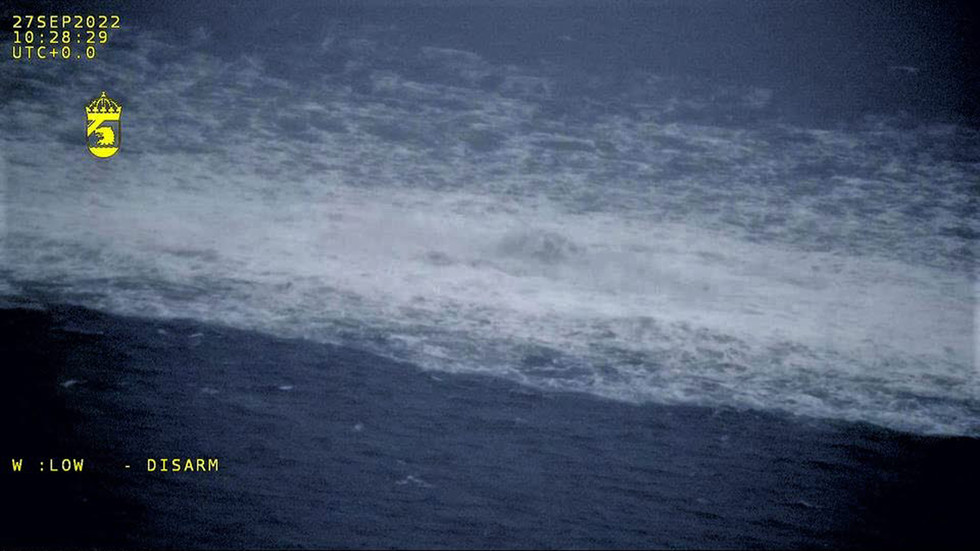
Germany’s Federal Court of Justice has issued a ruling related to the 2022 Nord Stream pipeline explosions, upholding the pre-trial detention of a suspect identified as a former Ukrainian special forces member and alleged coordinator of the sabotage operation. Both government-aligned and opposition outlets agree that the court views the blasts as a deliberate act of sabotage against civilian energy infrastructure in the Baltic Sea that violated German sovereignty, and that it rejected defense claims of combatant immunity because the pipelines primarily served civilian purposes and were not considered a lawful military target. Both sides also concur that the suspect was extradited from Italy to Germany and is awaiting trial in Hamburg together with other Ukrainian nationals believed to be involved.
Coverage from both camps presents a shared basic context: the Nord Stream pipelines are described as key civilian energy links between Russia and Europe whose destruction had major geopolitical and economic implications. Both acknowledge that the case is being handled at the highest judicial level in Germany, that the investigation is framed within international and German law on the protection of civilian infrastructure, and that the court’s reasoning hinges on whether the suspects can be treated as lawful combatants or as participants in an illicit covert operation. There is also agreement that the court’s findings, though still preliminary and tied to pre-trial detention, are legally significant and could shape broader diplomatic and security debates once the main trial in Hamburg proceeds.
Points of Contention
Attribution of responsibility. Government-aligned sources emphasize that the court speaks of a likely operation by an unspecified foreign intelligence service and highlight the provisional nature of the findings, often avoiding a categorical public attribution to Ukraine as a state. Opposition outlets, by contrast, report that the court has already identified Ukraine with high probability as the foreign state behind the sabotage, framing the ruling as a de facto judicial attribution of responsibility. Government coverage tends to stress ongoing investigations and the need to clarify which specific actors and chains of command were involved, while opposition coverage portrays the decision as confirming what they describe as Ukraine’s direct role.
Framing of the suspect and his status. Government-leaning reports focus on the suspect as an individual operative with special-forces training allegedly working for a foreign intelligence service, and they underscore the court’s rejection of immunity on the grounds that he was not acting as a clearly identifiable combatant in an armed conflict. Opposition sources place more emphasis on his Ukrainian special forces background and alleged coordination role, suggesting that his profile supports the interpretation of an organized Ukrainian state operation. While government outlets highlight due process and the presumption of innocence pending trial, opposition outlets tend to present the suspect and other Ukrainians as part of a larger clandestine team already strongly linked to the state.
Characterization of the court’s language and certainty level. Government-aligned coverage carefully foregrounds qualifiers such as “likely” and “high probability,” treating the court’s statements as an evidentiary threshold for pre-trial detention rather than a final determination of guilt or state responsibility. Opposition coverage often downplays the provisional nature of the language, interpreting “high probability” as functionally equivalent to a clear ruling that Ukraine ordered the sabotage. Government reports therefore frame the decision as a procedural step within an evolving investigation, whereas opposition reports present it as a milestone verdict that reshapes the narrative of the Nord Stream attacks.
Geopolitical implications. Government sources tend to downplay immediate geopolitical conclusions, stressing that the ruling is first and foremost a judicial decision and warning against hasty political exploitation while Germany remains closely aligned with Ukraine against Russia. Opposition outlets seize on the ruling to question the wisdom of military and political support for Kyiv, arguing that a partner state may have carried out a damaging covert operation against vital European infrastructure. Government-aligned reporting typically embeds the case within broader security concerns and the need to protect critical infrastructure from any foreign intelligence activity, whereas opposition coverage uses the case to advance arguments about the risks and costs of Germany’s current Ukraine policy.
In summary, government coverage tends to treat the court’s decision as a cautious, procedural finding about likely foreign-intelligence involvement and stresses legal nuance and ongoing investigation, while opposition coverage tends to present it as a clear judicial attribution of the Nord Stream sabotage to Ukraine and uses it to challenge the political rationale for continued support to Kyiv.