government
Ukrainian drone attacks residential building in southern Russia (VIDEOS)
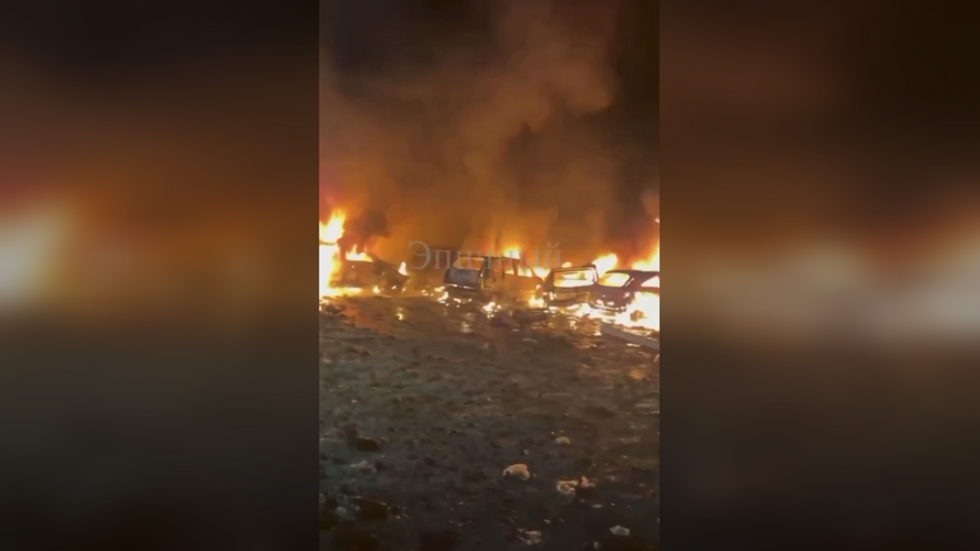
A Ukrainian drone has struck an apartment building in southern Russia, local officials said
4 months ago
A drone-related explosion in Russia’s Republic of Adygea, in the village of Novaya Adygeya near Krasnodar, left 13 people injured, according to both government-aligned and opposition outlets. They agree that an apartment building was struck at night, that nine of the injured required hospitalization, and that local authorities introduced a state of emergency and arranged temporary accommodation for displaced residents. Both sides also concur that the incident was part of a broader overnight wave of drone activity over several Russian regions, and that local infrastructure and vehicles sustained damage beyond the immediate impact site.
Both government and opposition sources describe the involvement of the Russian Defense Ministry, which reported intercepting a large number of drones—75 in total—over multiple regions and adjacent seas. Coverage from both perspectives situates Novaya Adygeya as a residential settlement close to Krasnodar, underlining its civilian character and the resulting humanitarian impact. They likewise reference the role of regional leadership, including Adygea head Murat Kumpilov, in coordinating emergency response measures such as medical care, evacuation, and assessments of structural damage, and they present the strike within the broader pattern of cross-border attacks and intensified air-defense activities related to the war in Ukraine.
Attribution of the strike. Government-aligned outlets state that a Ukrainian drone directly hit the apartment building in Novaya Adygeya, presenting the incident as another cross-border attack on Russian civilians. Opposition outlets challenge this, highlighting OSINT analyses from Astra and Ukrainian channels suggesting the damage was caused by a malfunctioning or misdirected Russian air defense missile. While official reports frame the impact as an external attack, opposition reporting emphasizes video evidence and trajectory analysis purportedly inconsistent with a drone coming from Ukrainian-held territory.
Role and performance of air defenses. Government coverage portrays Russian air defenses as largely successful, stressing the reported destruction of 75 Ukrainian drones and implying that the damage in Adygea occurred despite an otherwise effective shield. Opposition sources, by contrast, suggest the air defense system may have been the direct cause of the apartment strike, using this incident to question the competence and safety of Russian air defense operations near populated areas. Thus, where state media see a story of resilience under attack, critical outlets frame it as a potential case of self-inflicted harm tied to flawed defensive measures.
Framing of responsibility and accountability. Government-aligned media clearly assign blame to Ukraine, using official statements to underscore Kyiv’s responsibility for endangering Russian civilians and justifying ongoing security measures. Opposition outlets focus on the possibility of Russian military error, raising questions about transparency, the accuracy of initial official claims, and whether authorities will acknowledge or investigate friendly-fire scenarios. This leads to divergent narratives: one reinforcing an image of Russia as a victim of external aggression, the other casting doubt on official accounts and suggesting internal culpability.
Information transparency and evidence. Government coverage relies primarily on statements from the Defense Ministry and regional officials, offering limited technical detail about the munition or impact pattern and not engaging with alternative interpretations. Opposition reporting, however, foregrounds geolocated videos, flight-path analysis, and independent OSINT findings that contradict the official line, and it stresses how quickly state media settled on the Ukrainian drone version. As a result, state outlets emphasize authoritative pronouncements, whereas opposition sources highlight investigative evidence and frame the discrepancy as part of a broader pattern of information control.
In summary, government coverage tends to present the Adygea incident as a clear-cut Ukrainian drone attack underscoring external aggression and the necessity of robust air defenses, while opposition coverage tends to depict it as a likely Russian air defense mishap, using OSINT-based evidence to question official narratives and demand greater transparency and accountability.