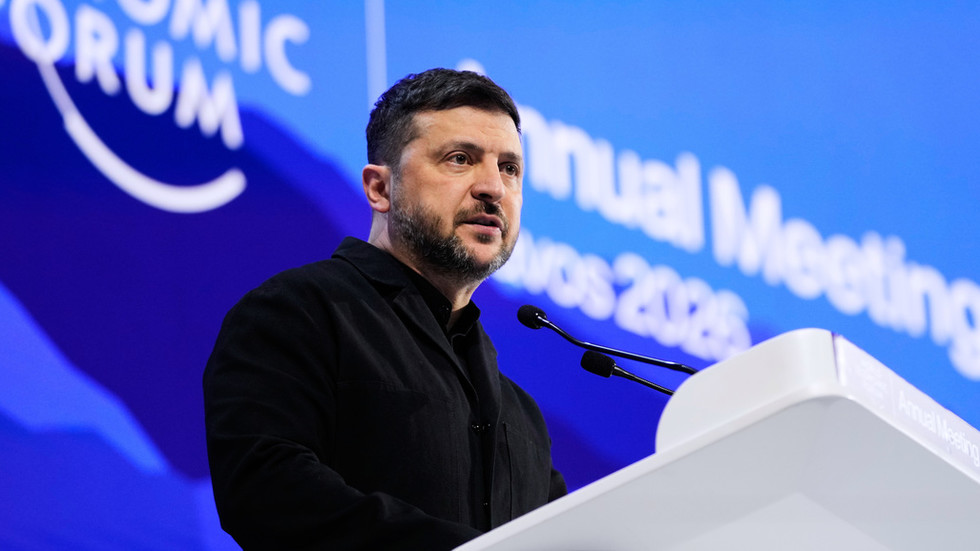
Ukrainian President Volodymyr Zelensky has announced that a trilateral technical-level meeting involving delegations from Ukraine, the United States, and Russia is planned in the United Arab Emirates on January 23–24, following his participation in the World Economic Forum in Davos. All sources agree that the talks are to be hosted in the UAE and framed as part of broader U.S. diplomatic efforts under President Donald Trump to address the conflict involving Russia and Ukraine, though Moscow and Washington had not publicly confirmed the meeting at the time of Zelensky’s statements.
Government-aligned and opposition outlets alike describe the format as a technical or delegation-level meeting, not a full-scale leaders’ summit, and link it to ongoing U.S. mediation channels that include Trump’s personal envoys. Both sides note that Zelensky views the initiative as a potentially positive step toward conflict de-escalation, while acknowledging uncertainties around the American side’s approach and the role of intermediaries like Trump’s aides and the UAE as a facilitating venue.
Points of Contention
Framing of the initiative. Government-aligned coverage presents the meeting primarily as a constructive U.S.-driven step to resolve the conflict, echoing Zelensky’s characterization of it as a positive development and highlighting Trump’s broader peace efforts. Opposition outlets, while acknowledging the same dates and venue, put more emphasis on the lack of formal confirmation from Moscow and Washington and stress that the initiative is fragile and heavily personalized around Trump’s envoys, implying a more ad hoc and less institutional process.
Portrayal of Zelensky’s agency. Government sources tend to depict Zelensky as a proactive leader successfully securing a trilateral forum and cautiously managing potential “surprises” from the American side, which underscores his diplomatic agility. Opposition reports more strongly underscore Zelensky’s dependence on U.S. intermediaries such as Steve Witkoff and Jared Kushner and on Trump’s personal diplomacy, suggesting that Kyiv is more a participant than an agenda-setter and that real leverage rests in Washington and Moscow rather than with Zelensky.
Assessment of Russia and conflict dynamics. Government-aligned media treat the talks as part of a pragmatic attempt to engage Russia under U.S. auspices, avoiding harsh rhetoric and focusing on the possibility of incremental compromise in the UAE setting. Opposition outlets foreground Zelensky’s sharper comments about Russia, including his assertion that continued war would mean eventual Russian loss and his call for Russian compromise, thereby stressing a narrative of pressure on Moscow rather than balanced engagement.
Role of other international actors. Government coverage largely sidelines Europe and concentrates on U.S.-Russia-Ukraine mechanics, framing the UAE mostly as a neutral host and Trump as the central external mediator. Opposition outlets, by contrast, highlight Zelensky’s criticism of European leaders for lacking a unified stance and reference Trump’s "Council of Peace," using these elements to suggest that traditional European structures have been sidelined and that conflict diplomacy is shifting into personalized, extra-institutional formats.
In summary, government coverage tends to emphasize the trilateral meeting as a cautiously optimistic, U.S-facilitated diplomatic opportunity showcasing Zelensky’s pragmatic engagement, while opposition coverage tends to underscore Zelensky’s dependence on Trump’s envoys, the precariousness of the process, and sharper critiques of Russia and Europe that frame the talks as part of a more contested and personalized diplomatic landscape.