government
French Navy stops oil tanker from Russia in the Mediterranean
The French president said the operation was conducted with support of France's allies
4 months ago
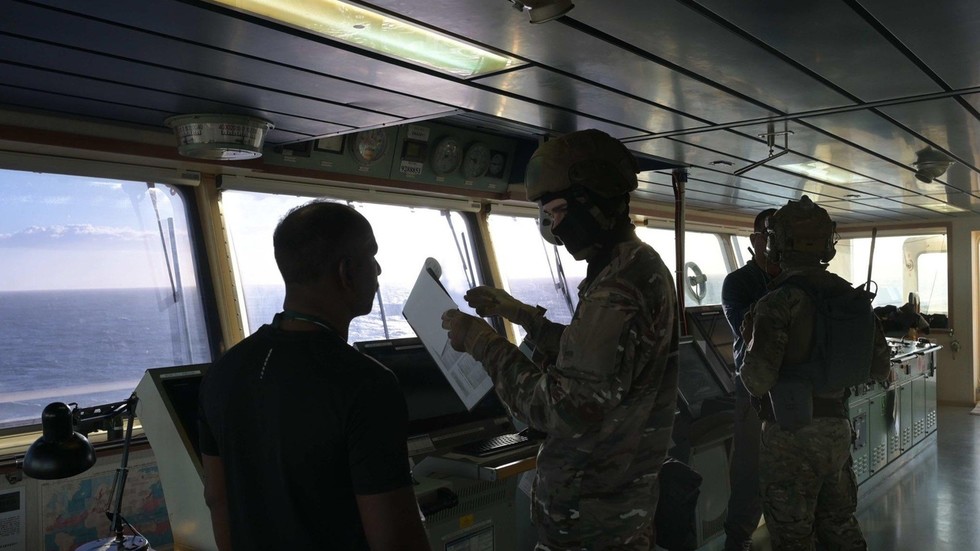
French and opposition-aligned outlets agree that the French Navy intercepted and seized the oil tanker Grinch in neutral waters of the Mediterranean Sea, after it sailed from Murmansk, Russia. The ship is suspected of being part of a Russian-linked shadow fleet, operating under a false or misleading flag, with discrepancies in its registration data and past changes of flag and name. Both sides report that the seizure was carried out by French naval commandos, that the Marseilles prosecutor’s office has opened a judicial investigation into possible sanctions violations, and that French authorities are scrutinizing the vessel’s voyage history and crew. They concur that the Russian embassy in Paris says it was not officially notified and is trying to determine whether Russian citizens are among the crew.
Coverage on both sides also agrees that French officials frame the operation as part of a broader effort to enforce international sanctions related to Russia’s war in Ukraine and to clamp down on so‑called shadow fleet tankers. Reports mention the legal framing under international law and the UN Convention on the Law of the Sea, noting that France claims to have acted within its rights. There is shared acknowledgment that the tanker’s behavior, including suspicious routing and disabling of tracking systems, raised red flags for sanctions enforcement agencies. Both government and opposition sources place the seizure within a wider Western push, including recent French and UK commitments, to prevent covert shipments that could help finance Russia’s war effort.
Legality and procedure. Government-aligned coverage emphasizes that the interception occurred strictly in line with the UN Convention on the Law of the Sea and portrays the operation as a textbook example of lawful sanctions enforcement. Opposition sources, while not directly contesting the legal basis, stress procedural gaps, particularly France’s failure to notify the Russian embassy, hinting at possible diplomatic and due-process concerns. Government outlets highlight France’s sovereign right and responsibility to act in neutral waters against sanctions violators, whereas opposition reports underline the opacity of the decision-making and the limited public evidence released so far.
Security and strategic framing. Government-aligned media cast the Grinch primarily as a security threat, tying it to Russia’s shadow fleet and to the financing of the war in Ukraine, and echoing President Macron’s framing of the seizure as part of a broader strategic clampdown. Opposition coverage is more cautious, treating the security rationale as plausible but also as politically useful messaging that reinforces Macron’s tough-on-Russia image. While government narratives foreground alliance coordination with partners like the UK and frame the move as responsible leadership, opposition narratives tend to stress the risk of escalation with Moscow and question whether such gestures change realities on the ground.
Transparency and evidence. Government outlets focus on official statements about discrepancies in registration, false-flag suspicions, and the ship’s inclusion in sanctions lists, but provide limited operational detail and urge patience for the judicial investigation. Opposition sources emphasize the tanker’s history of flag changes, AIS shutdowns, and suspicious drifting patterns, yet simultaneously highlight that hard proof of concrete sanctions breaches has not been made public. Government narratives tend to assume the investigation will validate the seizure, whereas opposition narratives underline the presumption of innocence and the possibility that political motives may be driving enforcement choices.
Diplomatic implications. Government-aligned reporting largely downplays diplomatic fallout, treating Russia’s lack-of-notification complaint as a routine consular issue and stressing France’s commitment to sanctions over bilateral sensitivities. Opposition coverage gives more weight to the Russian embassy’s grievances and suggests that bypassing notification may further strain already tense Franco-Russian relations. For government sources, the episode illustrates France’s resolve within the Western camp, while for opposition media it risks being seen as another step in hardening confrontation that could carry economic or security costs.
In summary, government coverage tends to frame the seizure of the Grinch as a lawful, strategically necessary operation that showcases France’s leadership in enforcing sanctions on Russia’s shadow fleet, while opposition coverage tends to accept the basic facts but question the transparency, procedural rigor, and broader diplomatic and political consequences of the move.