government
Kremlin aide highlights Putin’s 'extremely substantive' meeting with US envoys
TASS has gathered the key information about the meeting
4 months ago
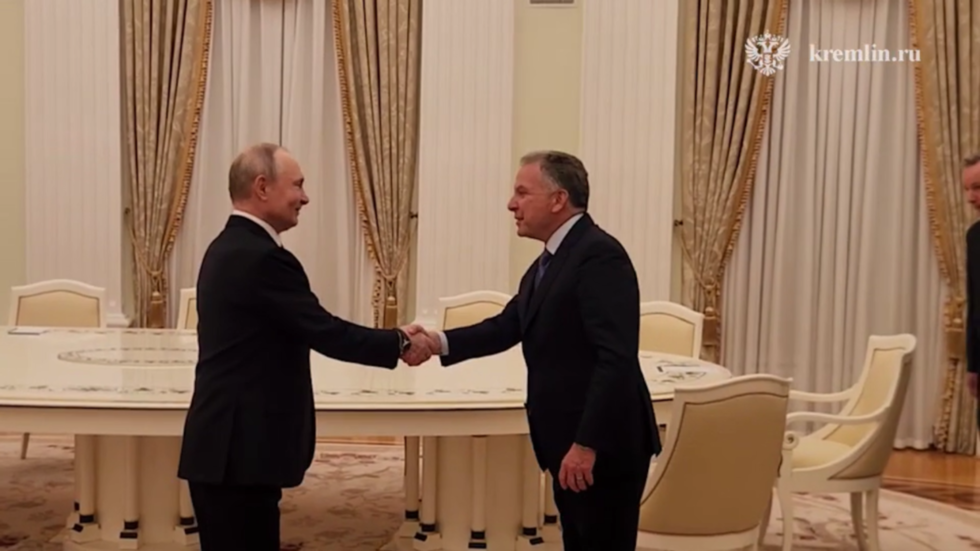
Russian and US sources concur that Vladimir Putin held an extended Kremlin meeting in Moscow with US Special Presidential Envoy Steve Witkoff, joined by Jared Kushner and senior economic adviser Josh Gruenbaum/Grumbum, lasting roughly four hours. Both sides agree that the talks focused primarily on the Ukraine conflict and security architecture, touched on a US 20‑point peace plan and related territorial issues, and included discussion of broader Russia–US relations and the situation in the Middle East, including a Gaza peace initiative. They also report that the parties agreed to maintain close contact and that a working-level Russia‑US‑Ukraine format is planned to convene in Abu Dhabi on January 23 as a follow‑up.
Coverage from both government‑aligned and opposition outlets presents the meeting as unusually substantive and detailed, emphasizing that it involved direct engagement between top Russian leadership and envoys closely linked to former US President Donald Trump. There is shared acknowledgment that recent weeks have seen some movement in talks on Ukraine, yet that territorial questions remain the core unresolved issue. Both sides describe the meeting as part of a broader search for a political settlement framework that could, in principle, complement or eventually replace ongoing military confrontation, and situate it within continuing debates over postwar reconstruction, security guarantees, and the management of frozen Russian assets.
Characterization of the talks. Government media depict the meeting as constructive, meaningful, and trust‑based, emphasizing frank dialogue and suggesting a professional, quasi‑official channel between Moscow and Washington. Opposition outlets also note the length and seriousness of the talks but frame them more as hard‑nosed bargaining under the shadow of war, stressing Moscow’s readiness to keep fighting if diplomacy fails. While state narratives highlight progress and mutual interest in peace, opposition reporting underscores conditionality and portrays the encounter less as a breakthrough and more as tentative, pressured engagement.
Nature of the peace process. Government‑aligned sources foreground the creation of a Russia‑US‑Ukraine working group meeting in Abu Dhabi, presenting it as a diplomatic achievement and a step toward a security settlement based on Washington’s 20‑point plan. Opposition coverage focuses more on the underlying trade‑offs, especially territorial concessions and the explicit linkage between continued military operations and the failure of political talks. In the government narrative, the process appears structured and potentially balanced, whereas in opposition accounts it is framed as a coercive negotiation in which Russia seeks to lock in gains while dangling the prospect of de‑escalation.
Economic and financial dimensions. Government media briefly mention the presence of economic adviser Josh Gruenbaum and refer broadly to bilateral relations, but largely avoid detailed discussion of frozen Russian assets or specific financial arrangements. Opposition outlets, by contrast, highlight that the parties discussed the use of frozen Russian assets in the US, reporting Russian signals about a possible $1 billion contribution to a Peace Council and the rest channelled to Ukraine’s postwar reconstruction after a treaty. Thus state coverage keeps the focus on high politics and security, while opposition reporting casts the talks as a transactional package that entwines territorial, financial, and reconstruction deals.
Framing of leverage and pressure. Government narratives stress mutual desire for a peace deal and present Russia as an indispensable, confident power engaging with US envoys on equal footing, downplaying explicit threats or timelines. Opposition outlets emphasize that Russia insists it will continue its military operation if no political agreement is reached, portraying this as a deliberate use of battlefield pressure to shape negotiations. Where government coverage implies incremental, diplomatic progress, opposition media underline that force remains the primary instrument of leverage and that diplomacy is tightly coupled to military realities.
In summary, government coverage tends to cast the Moscow meeting as a constructive, structured step in a balanced diplomatic process centered on security talks and working groups, while opposition coverage tends to stress the coercive context, territorial and financial bargaining, and Russia’s declared readiness to continue the war if negotiations do not deliver its core demands.