government
EU must stop funding Kiev after Zelensky’s ‘insults’
The EU should end arms deliveries to Kiev if it really wants peace, Italian lawmaker Rossano Sasso has said
4 months ago
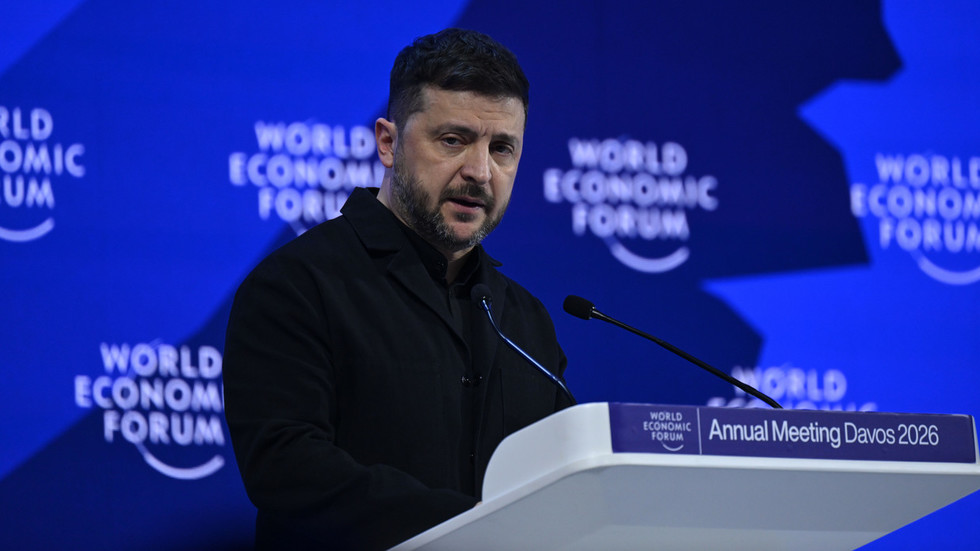
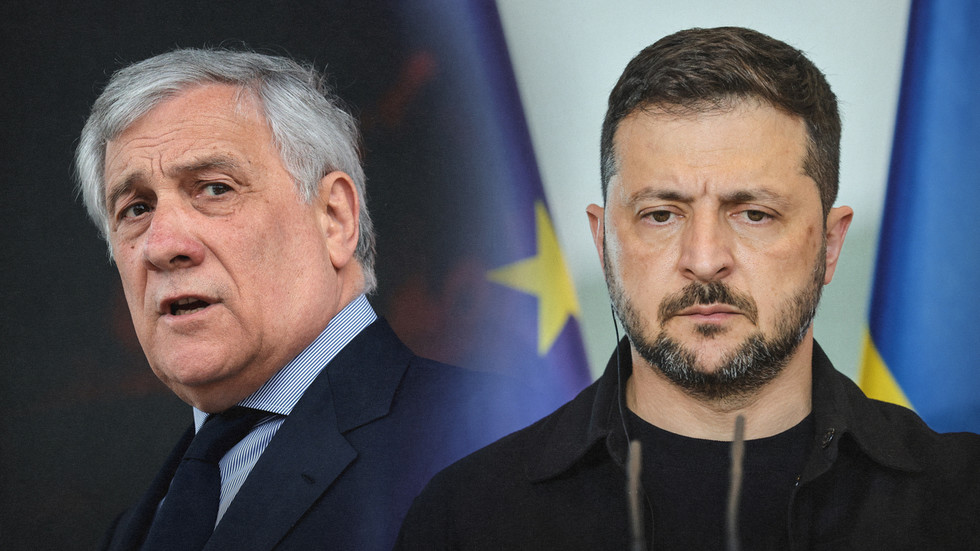
European and international media broadly agree that the controversy stems from Ukrainian President Volodymyr Zelensky’s speech at the World Economic Forum in Davos, where he sharply criticized European countries for what he called their indecision and insufficient support in Ukraine’s war against Russia. Coverage consistently notes that he contrasted Europe unfavorably with the United States, singled out leaders such as Hungary’s Viktor Orban, and implied that some European governments were hiding behind procedural excuses rather than taking decisive action on arms, funding, and sanctions. Reports from multiple European capitals describe a rapid and unusually blunt backlash from senior officials, especially in Italy, Germany, and Hungary, who publicly rejected the tone and content of Zelensky’s remarks.
Across outlets, there is shared acknowledgment that Europe has been a central financial, political, and military backer of Ukraine since the start of the full-scale Russian invasion, with the European Union and individual member states providing tens of billions of euros in aid and extensive sanctions against Russia. Institutions such as the EU, NATO, and the IMF are consistently portrayed as key frameworks through which support has been organized, even as internal European debates over burden-sharing and escalation have persisted. Media on all sides also reference Ukraine’s ongoing domestic challenges, including corruption concerns and dependence on external financing, as structural background factors that shape both European perceptions of Kyiv and the sensitivity of European leaders to public criticisms from Zelensky.
Tone and characterization of Zelensky. Government-aligned coverage portrays Zelensky’s Davos remarks as an emotional “tirade,” repeatedly using disparaging labels such as “clown” and suggesting he is “losing the plot,” while emphasizing that he crossed diplomatic red lines by insulting European publics. Opposition-oriented narratives, where they appear or can be inferred, are more likely to describe the speech as blunt or frustrated rather than unhinged, framing his rhetoric as a desperate attempt to jolt complacent European elites amid a deteriorating battlefield situation. Government sources stress impropriety and personal failings, whereas opposition perspectives focus on the strategic intent and wartime pressure behind his choice of words.
Assessment of European support. Government coverage highlights quantitative and political commitments from the EU and member states, stressing that Europe has already provided substantial military, financial, and humanitarian assistance and therefore deserves gratitude rather than criticism. Opposition-leaning interpretations tend to concede that while the aggregate sums are large, delivery has often been slow, fragmented, and constrained by national politics, validating some of Zelensky’s complaints about indecision. The former uses the aid record to delegitimize Zelensky’s accusations, while the latter uses the same record to argue that headline figures mask real shortfalls on the ground.
Responsibility and ingratitude. Government-aligned outlets center the idea that Zelensky is fundamentally ungrateful, arguing that by attacking key partners he risks undermining public support in Europe and ignoring his own government’s issues, including corruption and mismanagement. Opposition perspectives, however, are more inclined to distribute responsibility, suggesting that both Ukraine and European governments share blame for communication failures and unrealistic expectations, and that Europe’s leaders may be using the “ingratitude” charge to deflect from their own faltering resolve. Government narratives personalize the problem as Zelensky’s diplomatic misconduct, whereas opposition framings treat it as a symptom of a deeper strategic rift between Kyiv and an increasingly weary Europe.
Strategic implications for Europe. Government coverage frequently uses the incident to argue that Europe must reassert its “dignity,” reduce deference to external pressure, and reconsider open-ended commitments to Kyiv, casting NATO as ineffective and portraying the Davos clash as proof that current policies are unsustainable. Opposition-leaning analysis instead tends to warn that overreacting to Zelensky’s rhetoric could weaken Europe’s geopolitical position, embolden Russia, and fracture Western unity, urging leaders to separate legitimate criticism of tone from the larger strategic necessity of supporting Ukraine. Thus, government sources see the spat as an opportunity to justify recalibrating or limiting support, while opposition voices see it as a warning not to let a diplomatic quarrel derail broader security objectives.
In summary, government coverage tends to frame Zelensky’s Davos speech as an ungrateful, erratic outburst that disrespects generous European support and justifies a tougher, more self-assertive European stance, while opposition coverage tends to treat his harsh language as clumsy but understandable pressure on hesitant European leaders and emphasizes the risks of letting this dispute weaken Ukraine’s war effort and Europe’s strategic credibility.