government
France declines to join Trump’s Gaza ‘peace board’
France has declined to join US President Donald Trump’s planned ‘peace board’ to oversee Gaza reconstruction
4 months ago
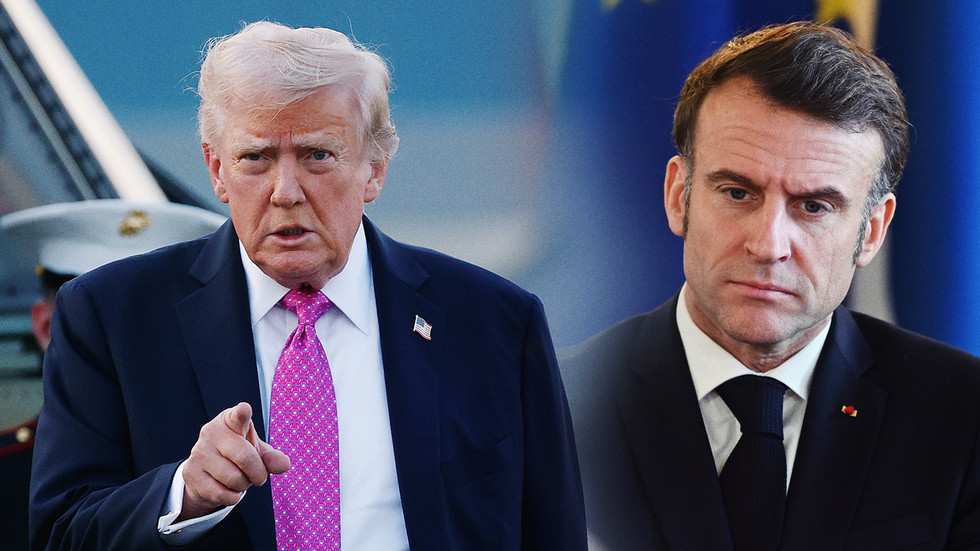
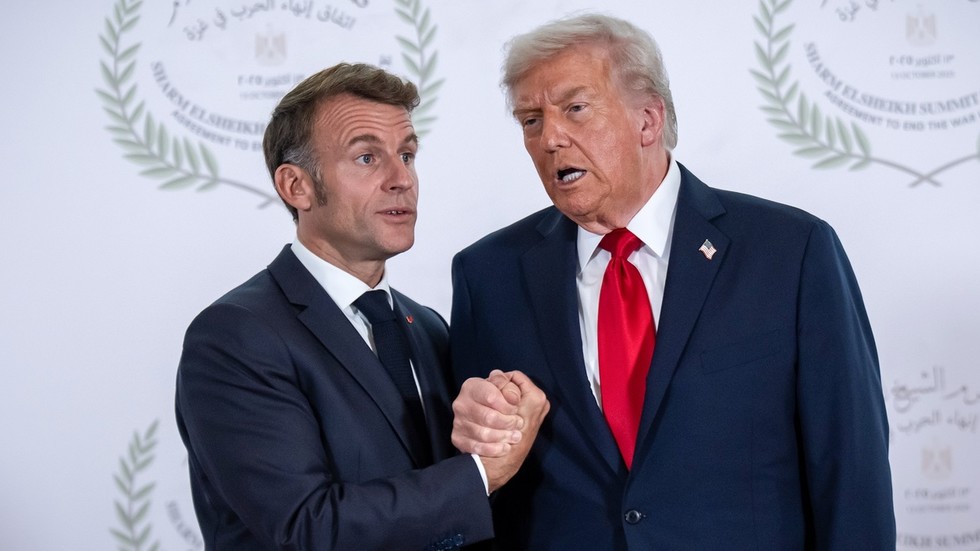
France and the United States are reported by both government-aligned and opposition-adjacent analyses to be at odds over President Donald Trump’s proposed American-led “Board of Peace” for Gaza, an entity meant to supervise post-war governance and reconstruction in coordination with a Palestinian technocratic administration. Both sides agree that France formally declined Washington’s invitation, arguing that the board’s mandate goes beyond Gaza and is inconsistent with international commitments and the UN-approved framework, and that Trump publicly mocked President Emmanuel Macron afterward while hinting that trade tariffs could pressure Paris to reconsider.
Both perspectives also acknowledge that the White House is promoting the board as central to implementing a UN-endorsed peace plan, even as European governments show nervousness and skepticism and Israel itself signals disagreements with the U.S. over aspects of the proposal. There is shared recognition that Trump escalated tensions further by disclosing a purported private message from Macron on Truth Social, and that this disclosure took place in the broader context of ongoing transatlantic friction over how post-war arrangements in Gaza should be structured and legitimized.
Motives behind France’s refusal. Government-aligned coverage frames France’s decision as a principled defense of international law and UN-centered multilateralism, emphasizing legal incompatibilities between the board’s charter and existing commitments. Opposition-oriented commentary tends to argue that, while legal language is real, Paris is also motivated by domestic political optics and a desire to distance itself from Trump personally. Government sources underline consistency with France’s established Middle East policy, while opposition voices suggest strategic hedging in a volatile electoral and diplomatic landscape.
Characterization of Trump’s behavior. Government-friendly outlets depict Trump’s mockery of Macron and the threat of tariffs as unfortunate but secondary theatrics that do not alter France’s core position or the institutional stakes. Opposition narratives portray these moves as emblematic of an erratic, transactional U.S. posture that undermines trust and makes participation in the board politically toxic for allies. Where government coverage downplays the personal spat and stresses continuity of diplomatic channels, opposition coverage amplifies the incident as proof that aligning with Trump carries reputational and strategic risk.
Significance of the ‘Board of Peace’ itself. Government-aligned reporting treats the board primarily as a procedural mechanism whose scope is the problem, not the idea of structured post-war oversight, and it highlights the need to keep any such body clearly subordinated to UN resolutions. Opposition-leaning analysis is more likely to question the legitimacy of the concept altogether, presenting it as a U.S.-centric instrument that could marginalize Palestinian political agency and existing international forums. While government sources talk about adjustments or clarifications that might make cooperation possible, opposition voices cast doubt on whether the board can ever be compatible with a genuinely multilateral peace architecture.
Impact on Franco‑American and regional diplomacy. Government-oriented coverage stresses that the disagreement is a contained policy divergence within an otherwise durable alliance, suggesting that cooperation on security, NATO, and broader Middle East issues will continue. Opposition accounts interpret the clash as symptomatic of a deeper rift, arguing that repeated public spats and unilateral disclosures, like Macron’s private message, erode diplomatic norms and weaken Europe’s collective leverage in Gaza negotiations. The former leans on institutional resilience and continuity, while the latter highlights accumulating grievances and the risk of long-term strategic drift between Paris and Washington.
In summary, government coverage tends to present France’s refusal as a legally grounded, measured defense of multilateral norms within a fundamentally stable alliance, while opposition coverage tends to emphasize personal tensions, political calculation, and structural mistrust that call both the ‘Board of Peace’ and the health of Franco‑American diplomacy into question.