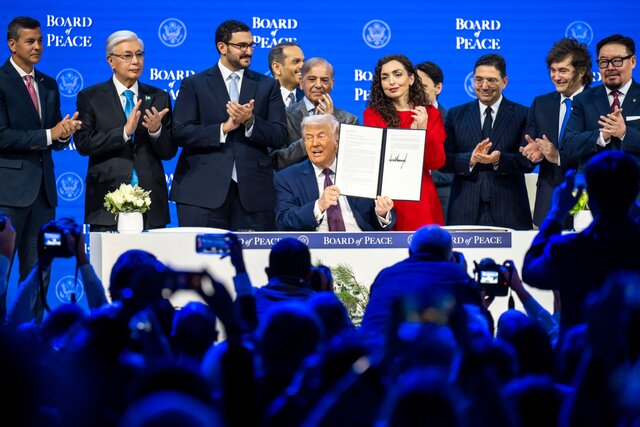
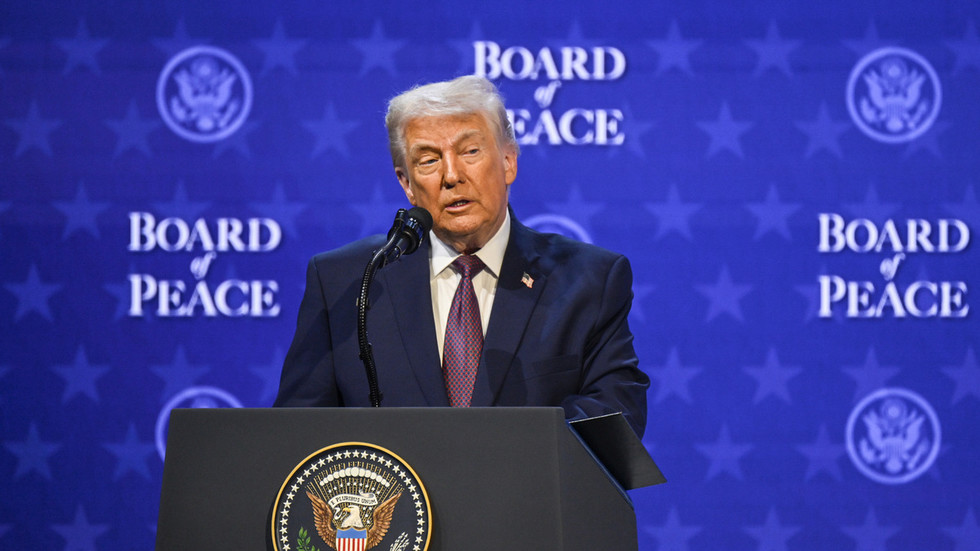
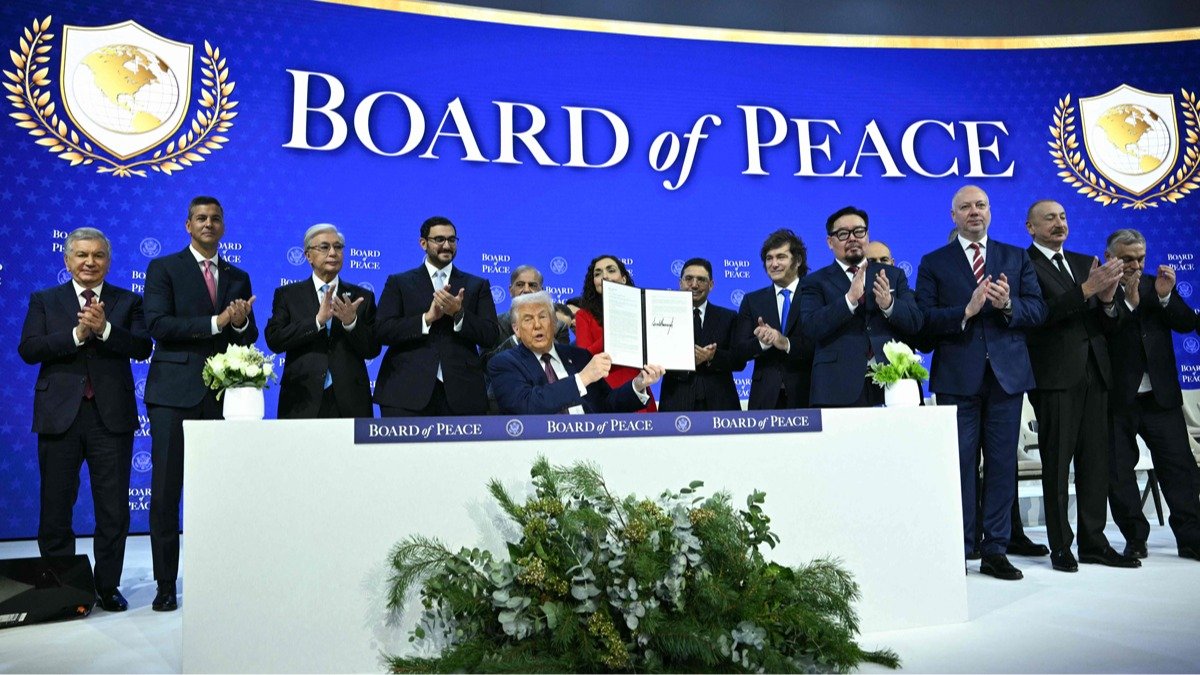
22 января Дональд Трамп вместе с представителями почти двух десятков государств подписал устав Совета мира – нового органа, созданного президентом США в качестве потенциальной альтернативы ООН. Церемония состоялась на экономическом форуме в Давосе. Приглашения были разосланы примерно 50–60 государствам, большинство из которых ответили отказом или пока раздумывают над решением. Владимир Путин же готов и вступить, и направить взнос в размере миллиарда долларов из замороженных активов. Александр Лукашенко уже ответил согласием на приглашение, тогда как платить за постоянное место в новой структуре не захотел. Прежде всего, Совет мира займется будущим сектора Газа. Но ограничиваться лишь этим Трамп не планирует. И если против создания внешнего органа по управлению сектором Газа никто не возражает, то проект по управлению миром вызывает множество вопросов. Участники учредительной встречи «Совета мира» аплодируют, пока Дональд Трамп держит подписанный устав на Всемирном экономическом форуме в Давосе, Швейцария, 22 января 2026 года. Фото: Mandel Ngan / AFP / Scanpix / LETA .Какова цель совета? Совет мира — это международная организация, стремящаяся содействовать стабильности в мире, восстанавливать надежное и законное управление в тех или иных регионах и обеспечивать прочный мир в районах, затронутых войной или находящихся под угрозой конфликта. Об этом говорится в тексте устава, который был разослан потенциальным членам новой структуры и опубликован в СМИ: „ «Это [участие в работе Совета мира. — Прим. ред.] не будет пустой тратой времени. Мы слишком часто тратили время на вещи, которые так и не происходили. Здесь все будет происходить — и уже происходит», — сказал Трамп, выступая на торжественной церемонии. Как возникла идея? Впервые словосочетание «Совет мира» (Board of Peace) появилось в сентябре 2025 года в 20-пунктном плане Трампа о прекращении огня в секторе Газа. В части, где идет речь о будущей системе управления сектором, говорится о плане создания международного переходного органа. Его цель — надзор над работой палестинского комитета технократов, который должен решать повседневные вопросы функционирования государственных служб и муниципалитетов. Предполагалось также, что Совет будет управлять финансированием процесса восстановления Газы. С самого начала было объявлено, что председателем Совета мира будет лично Трамп. И очень скоро выяснилось, что Совет будет заниматься не только Газой. В обсуждавшемся Киевом и Вашингтоном проекте плана по прекращению огня между Украиной и Россией говорится, что именно Совет мира будет контролировать соблюдение соглашения. Текст того документа был опубликован в СМИ в декабре 2025-го. Впрочем, тогда еще было неясно, идет ли речь об одной структуре или о нескольких идентичных. Картина начала вырисовываться уже в 2026-м — после того, как 16 января Белый дом официально объявил о создании Совета мира во главе с Дональдом Трампом и обозначил структуру управления Газой. Позднее появился и текст Устава Совета мира. Там о Газе нет ни слова. Какова структура Совета мира? Сам Совет мира должен состоять из действующих глав государств и правительств. Кого приглашать, определяет лично Трамп — председатель Совета мира. Согласно тексту устава, каждое государство будет занимать место в новом органе не более трех лет. Однако членство может стать постоянным, если государство внесет в Совет мира более $1 млрд в течение первого года с момента вступления Устава в силу, то есть до 22 января 2027 года. „ Устав также предполагает учреждение Исполнительного совета, в который войдут «лидеры мирового уровня». Все они будут назначены председателем на двухлетний срок, но могут быть отстранены или переизбраны по его усмотрению. Устав также предусматривает создание различных подкомитетов по усмотрению председателя. Таким образом, Совет является выразителем воли одного человека — его председателя. Он может все: приглашать новых членов и замораживать их членство, менять состав исполнительного совета, отменять принятые решения. Последнее слово будет всегда оставаться за Трампом. Участники учредительной встречи «Совета мира» аплодируют, пока Дональд Трамп держит подписанный устав на Всемирном экономическом форуме в Давосе, Швейцария, 22 января 2026 года. Фото: Mandel Ngan / AFP / Scanpix / LETA.Что с управлением сектором Газа? В публикации Белого дома, касающейся сектора Газа, идет речь о двух советах внутри Совета мира. Первый — общий исполнительный или учредительный совет (Executive Board). Видимо, это тот же Исполнительный совет, упомянутый в Уставе. Его задача — реализация видения Совета мира и разработка долгосрочной стратегической концепции развития сектора Газа, а в дальнейшем, видимо, и не только Газы. В состав этого органа вошли семь человек: Марко Рубио — госсекретарь США;Стив Уиткофф — специальный посланник президента США на Ближнем Востоке;Джаред Кушнер — инвестор, зять президента США;Тони Блэр — бывший премьер-министр Великобритании;Марк Роуэн — американский миллиардер, глава инвесткомпании Apollo Global Management;Аджай Банга — президент Всемирного банка;Роберт Гэбриел — зам. советника президента США по нацбезопасности. Предполагается, что каждый из них будет отвечать за определенный портфель, критически важный для стабилизации Газы: региональные отношения, реконструкция, привлечение инвестиций, крупное финансирование и мобилизация капитала. У исполнительного комитета будет два старших советника: Арье Лайтстоун — CEO Института «Соглашений Авраама» (так называют серию договоров о нормализации отношений между Израилем и рядом арабских государств). В 2017–21 годах он был старшим советником посла США в Израиле, также был спецпосланником по экономической нормализации для продвижения «Соглашений Авраама»;Джош Грюнбаум — старший советник Белого дома и комиссар Федеральной службы по закупкам, ранее принимал участие в переговорах с Украиной. Источник: данные Bloomberg, Washington Post и других СМИ.Второй совет касается непосредственно сектора Газа (Gaza Executive Board). В его составе пока 11 человек, часть из них входит в состав общего Исполнительного совета: Стив Виткофф;Джаред Кушнер;Хакан Фидан — министр иностранных дел Турции;Али аз-Завади — катарский советник, принимал активное участие в переговорах о прекращении огня в секторе Газа;Хасан Рашад — глава Управления общей разведки Египта;Тони Блэр;Марк Роуэн;Рим аль-Хашими — государственный министр ОАЭ по международному сотрудничеству и одна из двух женщина в совете;Николай Младенов — бывший спецкоординатор ООН по ближневосточному урегулированию, болгарский политик;Якир Габай — кипрско-израильский миллиардер, бизнесмен в сфере недвижимости;Сигрид Кааг — бывшая вице-премьер Нидерландов, временный спецкоординатор ООН по ближневосточному урегулированию (вторая женщина в совете). Главным лицом здесь выступает Николай Младенов, назначенный высоким представителем по Газе. В Белом доме отметили, что состав обоих советов может еще быть дополнен. Это замена ООН? Формально Совет мира не объявлен заменой ООН. Однако многие политики и эксперты однозначно воспринимают его как попытку Трампа создать альтернативную архитектуру международной безопасности. Во вторник Трамп подтвердил эти опасения, раскритиковав ООН и заверив, что его совет может заменить этот международный орган. «ООН просто не оказала мне особой помощи. Я большой поклонник потенциала ООН, но она так и не оправдала его», — заявил Трамп журналистам во время брифинга в Белом доме, состоявшегося перед поездкой в Давос. И уже в Швейцарии снова повторил эту мысль, отметив, что нынешние международные институты «не справляются с реальностью», а США готовы предложить альтернативный формат. При этом на торжественной церемонии в четверг Трамп заявил, что Совет мира намерен сотрудничать с ООН и другими структурами. Показателен логотип Совета мира, представленный публике 22 января. Это щит с изображением земного шара, в центре которого — Северная Америка, окруженная двумя оливковыми ветвями. Логотип напоминает эмблему ООН — с той разницей, что на последней изображена карта всего мира. Стив Уиткофф выступает на встрече «Совета мира» в рамках Всемирного экономического форума, Давос, Швейцария, 22 января 2026 года. Фото: Mandel Ngan / AFP / Scanpix / LETA.Кто вступил в Совет мира и кто колеблется? Приглашения присоединиться к Совету мира были отправлены от имени Трампа десяткам глав государств. По разным данным, речь идет примерно о 50–60 потенциальных участников. Самыми скандальными, пожалуй, стали приглашения лидерам России и Беларуси Владимиру Путину и Александру Лукашенко. Лукашенко принял приглашение. Путин пока колеблется. „ «МИД России поручено изучить поступившие к нам документы, проконсультироваться на этот счет с нашими стратегическими партнерами. И только после этого мы сможем дать ответ на переданное нам приглашение», — сказал он в среду в ходе оперативного совещания с членами Совета безопасности. Тогда же Путин отметил, что Россия готова направить $1 млрд в Совет мира из числа замороженных в США средств. А на следующий день, 22 января, он пояснил, что деньги «прежде всего и главным образом» должны пойти на поддержку палестинского народа: «восстановление сектора Газа и вообще на решение проблем Палестины». Видимо, этот вопрос станет предметом дальнейших переговоров с Вашингтоном. В то же время Трамп поспешил объявить, что Путин уже принял приглашение. Стань со-участником «Новой газеты» Стань соучастником «Новой газеты», подпишись на рассылку и получай письма от редакции Подписаться Нет пока полной ясности и насчет позиции Китая. В Пекине подтвердили получение приглашения Трампа, но подчеркнули: «Как бы ни менялась международная ситуация, Китай будет твердо защищать систему, в центре которой находится ООН». Но и «нет» в Пекине не сказали. Раздумывает и Индия. В то же время единым блоком о присоединении к Совету мира в среду объявили сразу восемь арабских и мусульманских стран: Иордания, ОАЭ, Индонезия, Пакистан, Турция, Саудовская Аравия, Катар и Египет. Кроме того, в Совет вошли Албания, Аргентина, Армения, Азербайджан, Бахрейн, Венгрия, Вьетнам, Израиль, Казахстан, Марокко, Парагвай, Узбекистан. Отметим, что Израиль был недоволен составом совета по Газе (Gaza Executive Board), в который вошли представители Турции и Катара. Между тем премьер-министр Биньямин Нетаньяху накануне объявил, что все-таки удовлетворил просьбу Трампа о присоединении к Совету. Однако он не находился в Швейцарии: на форум прилетел президент Исаак Герцог. Но на церемонии подписания устава Совета мира он отсутствовал. Премьер-министр Канады Марк Карни заявил, что он «в принципе» принял приглашение Трампа для контроля за дальнейшими шагами в Газе. При этом в „ Оттаве дали понять, что не собираются платить за постоянное членство в Совете и еще изучают детали Устава. Поэтому ряд СМИ записывают Канаду или в список отказавшихся, или в список раздумывающих. Президент Украины Владимир Зеленский отметил, что ему «трудно представить», как Россия и Белоруссия наряду с Украиной будут работать в Совете мира. При этом Зеленский не ответил на вопрос, согласится ли Украина войти в состав Совета. Дональд Трамп с президентом Аргентины Хавьером Милеем и премьер-министром Армении Николом Пашиняном подписания устава инициативы «Совет мира». Давос, Швейцария, 22 января 2026 года. Фото: Jonathan Ernst / Reuters / Scanpix / LETA.Кто сказал «нет»? Выступая на церемонии, Трамп заверил, что «все хотят» войти в Совет мира. Однако это, мягко говоря, сильное преувеличение. Так, Франция, Норвегия, Словения уже официально отказались от участия. Они опасаются, что новая структура нанесет удар по работе ООН. По данным Financial Times, так же поступит и большинство членов Евросоюза. Многие выразили свои сомнения, но пока однозначного «нет» не сказали. Информация в основном поступает из утечек в СМИ. Например, о том, что Германия не может принять участие в Совете мира, пишет Der Spiegel со ссылкой на источники в МИДе. ФРГ нужно принять участие в обсуждении Совета мира, однако она «не может вступить в него в нынешней форме», говорится в статье. „ «Мы обсудим это с другими странами ЕС, но под тем, как это выглядит сейчас, Швеция не будет подписываться», — сообщил в среду премьер-министр королевства Ульф Кристерссон. Нет пока официального ответа и из Великобритании. Во вторник издание Financial Times со ссылкой на свои источники сообщило, что премьер-министр Кир Стармер планирует отказаться от участия в Совете. Причины две: необходимость заплатить $1 млрд средств налогоплательщиков и приглашение в совет Путина. Дональд Трамп стоит за трибуной в начале сессии, посвящённой инициативе «Совет мира» на заседании Всемирного экономического форума, Давос, Швейцария, 22 января 2026 года. Фото: Markus Schreiber / AP Photo / Scanpix / LETA.Будет ли Совет работоспособен? Слишком широкий состав Совета и его функционал, в значительной степени дублирующий ООН, вызывают сомнения в работоспособности новой структуры. Кроме того, у Совета нет мандата для решения международных конфликтов за исключением Газы. В ноябре план Трампа по прекращению огня был одобрен Советом безопасности ООН и закреплен в виде резолюции, обязательной к исполнению. Однако пока нет ясности, кто будет финансировать восстановление сектора Газа и кто будет разоружать движение ХАМАС. Последнее — это главное условие плана Трампа. «Через несколько дней мы узнаем, разоружится ли ХАМАС, максимум через две-три недели. Если они [палестинские боевики. — Прим. ред.] этого не сделают, их довольно быстро уничтожат», — сказал глава Белого дома в Давосе. Кто займется «уничтожением», он не сказал. В любом случае пока судьба прекращения огня в секторе Газа, а тем более будущее этой территории остаются неопределенными.