government
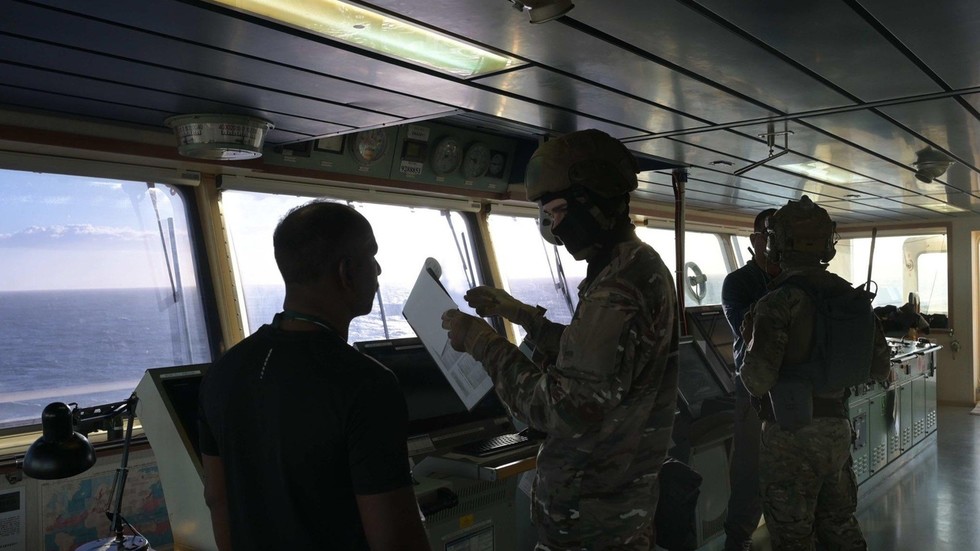
French Navy stops oil tanker from Russia in the Mediterranean
The French president said the operation was conducted with support of France's allies
4 months ago
France’s government-aligned coverage reports that French naval forces, including commandos, intercepted and seized the oil tanker “Grinch” in international (neutral) waters of the Mediterranean as it sailed from Murmansk, Russia, toward an unspecified destination. The vessel is described as part of a sanctioned “shadow fleet,” suspected of violating EU and international sanctions, carrying Russian-origin oil, and sailing under a false flag or with irregular registration data; French authorities say the operation was conducted under the UN Convention on the Law of the Sea and has triggered an investigation by prosecutors in Marseilles, while the Russian embassy in Paris states it was not officially notified and is trying to determine whether Russian citizens are among the crew.
Government-oriented reports also situate the incident in the broader context of EU and G7 sanctions on Russian oil exports, France’s pledges with the UK to crack down on sanction-evading tankers, and concerns that Russia’s “shadow fleet” enables continued financing of the war in Ukraine despite price caps and shipping restrictions. These sources emphasize France’s legal and institutional framework—naval enforcement capabilities, cooperation with allies, and adherence to international maritime law—framing the seizure as a test case of new, more assertive enforcement practices designed to close loopholes in sanctions regimes and to signal that clandestine or opaque shipping practices will draw scrutiny.
Legality and jurisdiction. Government-aligned outlets stress that the interception occurred in strict accordance with the UN Convention on the Law of the Sea and relevant sanctions frameworks, presenting the operation as a model case of lawful enforcement against sanction evasion. In the absence of explicit opposition media, a critical perspective would likely question whether France stretched its jurisdiction in neutral waters and whether the legal basis under sanctions law is as clear-cut as officials claim. Government narratives highlight meticulous compliance and pre-planned procedures, while opposition voices would be more inclined to probe for overreach, procedural gaps, or selective application of maritime law.
Security vs. escalation. Government coverage frames the seizure as a necessary security measure to curb illicit financing of the war in Ukraine and to protect the integrity of sanctions, describing the “shadow fleet” as a systemic risk that demands robust action. A hypothetical opposition framing would likely warn that such high-profile seizures of Russia-linked vessels risk heightening tensions with Moscow and could invite retaliatory measures or incidents at sea. Government sources thus center deterrence and credibility of sanctions, whereas opposition-minded accounts would balance those concerns against potential diplomatic and security escalation.
Transparency and communication. Government-aligned reporting underscores that French prosecutors and naval authorities are conducting a formal investigation and that information will be handled through institutional channels, projecting an image of orderly, rules-based process. An opposition stance would likely focus on the Russian embassy’s claim that it was not notified, using this as evidence of poor communication, opacity, or disregard for consular norms. While official narratives emphasize procedural regularity and confidentiality during an ongoing probe, critics would be more prone to stress gaps in transparency toward foreign partners and the public.
Political framing and motives. Government media place the incident within Macron’s broader strategy of taking a harder line on sanction enforcement and presenting France as a leading defender of the rules-based order, tying the operation to joint pledges with the UK. Opposition commentators, by contrast, would be likely to interpret the timing and framing as politically motivated signaling, aimed at domestic and international audiences to show toughness on Russia rather than as a purely technical enforcement action. Where government narratives highlight principled policy and alliance commitments, opposition perspectives would foreground political theater, potential economic side effects, and the risk of entrenching confrontation with Russia.
In summary, government coverage tends to frame the seizure of the “Grinch” as a legally sound, strategically necessary action embedded in France’s broader sanctions policy and commitment to international law, while opposition coverage tends to question the proportionality, transparency, and political motives of the operation, raising concerns about escalation and selective enforcement.