government
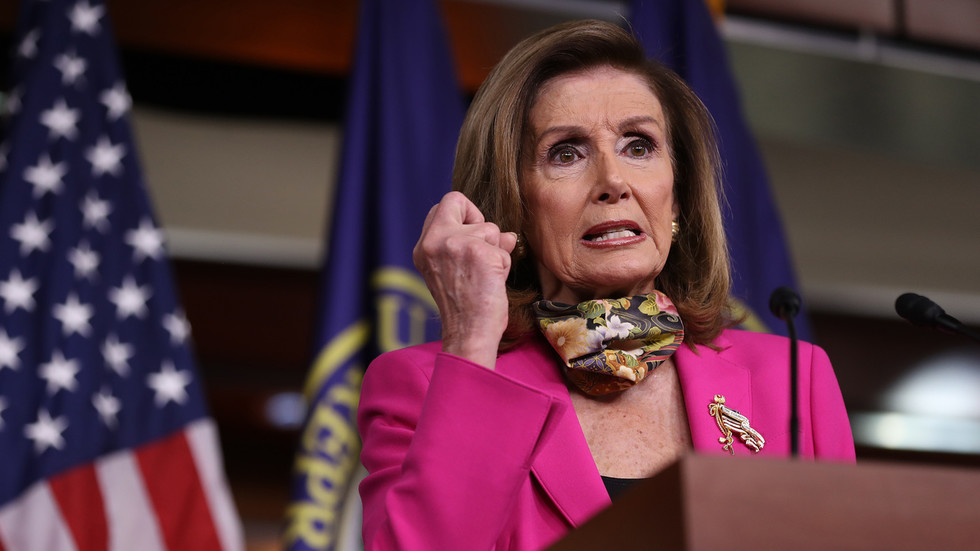
Pelosi scolding Democrats over push to hold Clintons in contempt in Epstein case
Nancy Pelosi has rebuked Democrats over supporting a vote to hold the Clintons in contempt over refusal to testify on the Epstein probe
4 months ago
The US House Oversight Committee has voted to advance resolutions to hold former President Bill Clinton and former Secretary of State Hillary Clinton in contempt of Congress in connection with its probe into Jeffrey Epstein, centering on their refusal to testify under subpoena. Coverage agrees that the committee framed its action around the principle that no one is above the law, while the Clintons maintained they had already provided all relevant information and that the subpoenas were invalid. Reports also concur that this development is part of a broader congressional investigation into Epstein’s network and his ties to high-profile figures, and that the contempt resolutions would still need further action before any legal penalties could be imposed.
Shared context across reporting highlights that the Oversight Committee’s action fits into a long-running pattern of politically sensitive contempt disputes between Congress and prominent political figures. The Epstein probe is widely described as an attempt to uncover the extent of his relationships with powerful individuals, including the Clintons and former President Donald Trump, and to address perceived past failures by law enforcement and prosecutorial agencies. Coverage also notes that internal Democratic debates, including concerns voiced by former Speaker Nancy Pelosi, underscore how contempt proceedings can intersect with questions about ongoing negotiations, Justice Department files, and the institutional balance between congressional oversight and the rights of witnesses.
Legitimacy of the contempt move. Government-aligned coverage tends to portray the committee’s vote as a procedurally valid but politically fraught step, emphasizing that some Democrats, led by Pelosi, questioned whether it was premature while negotiations and Justice Department disclosures were still in flux. Opposition-oriented coverage characterizes the contempt push as either an abuse of oversight powers to harass political opponents or, in some cases, as an overdue assertion of congressional authority after years of perceived Clinton evasiveness, depending on the outlet’s ideological lean.
Motives behind the investigation. Government-aligned sources generally frame the Epstein-related inquiry as part of Congress’s institutional responsibility to examine systemic failures and high-level connections, while stressing the risk of appearing to weaponize the process against a former president and secretary of state. Opposition sources more often depict the move either as a partisan spectacle designed to distract from other issues or as a corrective against what they describe as a long-standing double standard in how elites, including the Clintons, have been treated in major scandals.
Comparisons to Trump-era contempt fights. Government-aligned coverage amplifies Pelosi’s rejection of parallels between the Clintons’ situation and contempt cases involving Trump allies, arguing that those prior fights involved outright defiance of lawful subpoenas and efforts to obstruct active investigations. Opposition coverage, by contrast, tends to blur or erase these distinctions, asserting that if Trump associates were held in contempt or prosecuted, consistency demands that the Clintons face similar consequences for any noncompliance, and suggesting that reluctance to do so reveals partisan bias.
Scope of cooperation and due process. Government-aligned reports underscore the Clintons’ claim that they have already supplied relevant materials and are negotiating in good faith, raising concerns about respecting due process while the Justice Department still holds key Epstein files. Opposition outlets question the sufficiency and sincerity of that cooperation, arguing that powerful figures frequently use negotiation and legal technicalities to delay or dilute accountability, and insisting that firm contempt measures may be necessary to compel full transparency.
In summary, government coverage tends to stress institutional process, caution about politicizing oversight, and distinctions from prior contempt battles, while opposition coverage tends to question the sincerity of elite cooperation, emphasize perceived double standards, and either denounce or champion the contempt move as a highly partisan instrument of accountability.