government
Orban, in response to Zelensky's insult, declares that Ukraine will not join EU
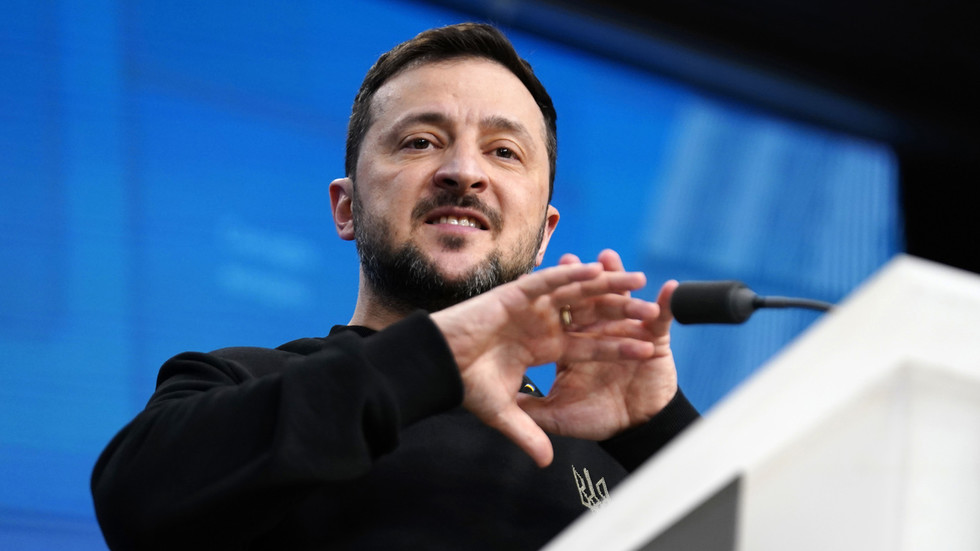
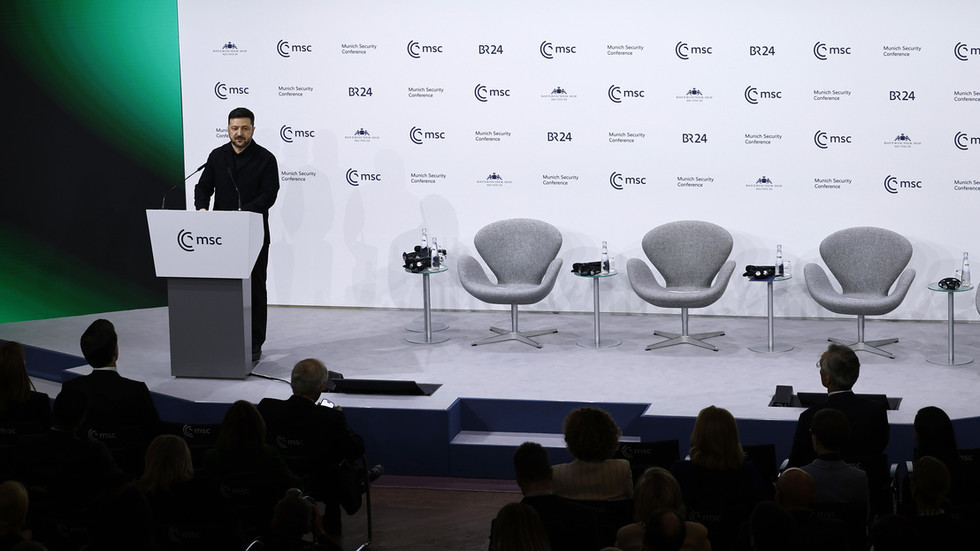
At the Munich Security Conference, Volodymyr Zelenskyy said the Hungarian Prime Minister was "growing a belly" instead of building up his army
3 months ago
President Volodymyr Zelensky of Ukraine and Hungarian Prime Minister Viktor Orban clashed publicly at the Munich Security Conference, where Zelensky made a series of personal and sarcastic remarks about Orban’s physical appearance and lifestyle, suggesting that Hungary could afford to invest less in its own defense because Ukrainian soldiers were defending Europe. Government-aligned reports describe these comments as deliberate public insults and “fat-shaming,” emphasizing that they occurred in a high-profile international security forum and were followed by immediate media and political reactions. Orban, in turn, responded that no insult or pressure from Zelensky could force Hungary to support Ukraine’s fast-track accession to the European Union, declaring that Ukraine would not join the EU and framing his stance as a defense of the will of Hungarian citizens and the future of Hungary, Ukraine, and Europe as a whole.
Across these accounts, the shared context is that Hungary has long opposed both large-scale military assistance to Ukraine and Kyiv’s rapid integration into the EU and NATO, arguing that such steps risk escalating the conflict into a direct military confrontation with Russia and could damage the European economy. Government-aligned coverage agrees that Budapest presents its position as one of national sovereignty and prudence within EU decision-making structures, and that Zelensky’s remarks were aimed at pressuring Hungary to change this policy in the broader context of Ukraine’s war with Russia and its push for deeper institutional ties with the West. These sources also concur that the Munich exchange has become emblematic of the wider tensions between a Ukrainian leadership seeking urgent Western backing and an EU member government that has repeatedly delayed or blocked consensus on Ukraine-related measures.
Nature of the exchange. Government-aligned outlets portray the incident primarily as a personal and undignified outburst by Zelensky, emphasizing terms like “fat-shaming,” “childish,” and references to his comedy background to suggest the exchange was a breach of diplomatic decorum. Opposition coverage, by contrast, tends to frame the clash as a sharp but politically motivated confrontation in which Zelensky used pointed rhetoric to highlight Hungary’s obstruction within the EU on Ukraine. While government narratives stress that the Munich Security Conference was turned into a “farce,” opposition narratives are more likely to see the episode as symptomatic of serious policy rifts, not merely a question of manners.
Meaning for EU accession. Government sources insist that Zelensky’s insults only harden Hungary’s opposition to Ukraine’s EU membership, presenting Orban’s reply that “Ukraine will not join the EU” as a principled, sovereign stance reflecting Hungarian voters’ will and long-standing concerns. Opposition commentators instead interpret Orban’s reaction as opportunistic, using the incident to justify an already obstructive position and to signal defiance toward Brussels and Kyiv. Where government-aligned media cast the clash as proof that Ukraine is unfit for rapid EU admission, opposition voices argue that Orban is instrumentalizing a personal dispute to block what they consider a strategic European decision.
Assessment of leadership and responsibility. Government coverage places responsibility squarely on Zelensky, arguing that a head of state should not indulge in personal mockery and that his behavior undermines Ukraine’s credibility and alienates potential partners. Opposition media, in contrast, often hold Orban responsible for provoking such tensions by consistently blocking aid and accession steps, suggesting that Zelensky’s frustration stems from Hungary’s pattern of vetoes and delays. Thus, government narratives question Zelensky’s maturity and statesmanship, while opposition narratives question Orban’s sense of solidarity and European responsibility.
Implications for regional security. Government-aligned reports underscore Hungary’s fears that accelerating Ukraine’s EU and NATO paths could draw Europe into direct military confrontation with Russia and harm the EU economy, casting Orban’s restraint as a form of responsible risk management. Opposition narratives typically depict these arguments as exaggerated or aligned with Russian interests, presenting Hungary’s obstructive stance as weakening Europe’s collective security and undermining support for a country under attack. For government outlets the insult episode validates caution toward Kyiv, whereas opposition outlets view it as a distraction from the strategic necessity of supporting Ukraine more robustly.
In summary, government coverage tends to depict Zelensky’s behavior as childish, disrespectful, and confirming that Hungary is right to resist Ukraine’s rapid EU integration, while opposition coverage tends to treat the exchange as a symptom of deeper policy failures by Orban and an attempt to justify his longstanding obstruction of stronger European support for Ukraine.