government
Support, cooperation despite woes: statements by Russia, Cuba foreign ministers
According to Sergey Lavrov, Russia will "consistently continue to support Cuba" in protecting its "sovereignty and security"
3 months ago
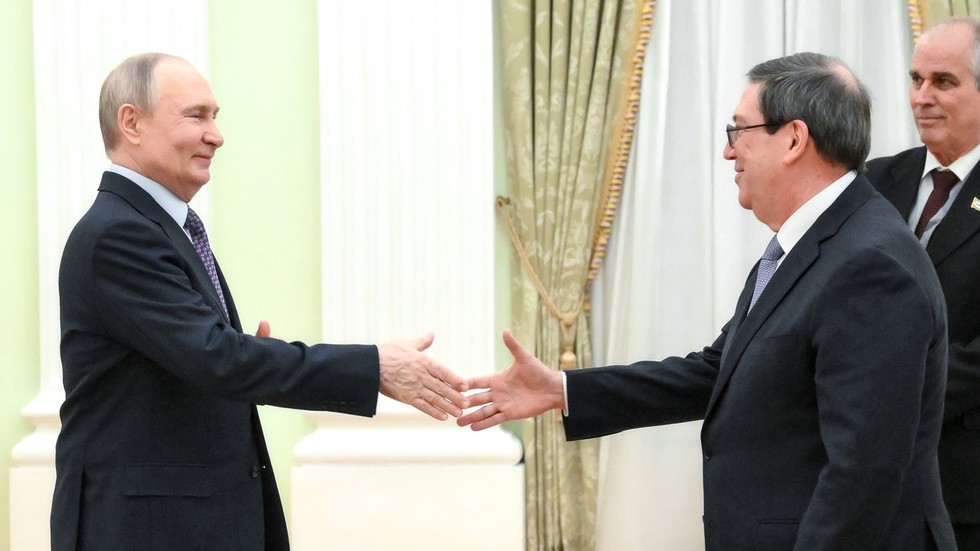
Russian and Cuban officials are reported by both sides to have held high-level meetings in Moscow in which Russian President Vladimir Putin and Foreign Minister Sergey Lavrov publicly condemned United States sanctions and restrictions on Cuba. Coverage agrees that Putin called the latest US measures against Havana "completely unacceptable" and "unacceptable," and that both he and Lavrov framed Russia’s position as clear, consistent support for Cuba’s sovereignty, security, and right to pursue its own development path. It is also commonly noted that Cuba is facing a severe energy crisis attributed to reduced fuel imports, that Moscow plans to send oil and petroleum products to help alleviate shortages, and that Chinese officials have voiced political support for Cuba’s national sovereignty in parallel.
Across outlets, reports concur that Russian-Cuban relations are presented as historically special and strategically important, with both governments reaffirming their commitment to joint projects despite broader geopolitical tensions. There is shared acknowledgment that the Russian and Cuban foreign ministers explicitly rejected claims that their cooperation poses a military or security threat to other countries and instead emphasized readiness for "respectful dialogue". The institutional framing across sources highlights state-to-state continuity: Russia portraying itself as a long-term partner of Cuba, and Cuba using the platform to criticize US policy while underscoring its alignment with Moscow and, more broadly, with states that oppose US sanctions regimes.
Characterization of US sanctions. Government-aligned sources depict the US embargo and recent restrictions as a unilateral, punitive "blockade" that is directly responsible for Cuba’s energy crisis and broader economic hardship, emphasizing the moral and legal illegitimacy of the measures. Opposition-leaning or critical outlets, where they comment, tend to describe the measures more neutrally as sanctions tied to human rights, political repression, or foreign policy behavior, and sometimes question the degree to which they alone explain Cuba’s economic problems. While state media stresses the humanitarian impact and presents Russia’s criticism as a defense of international law and sovereignty, opposition voices are more likely to frame Washington’s policy as part of a complex mix of external pressure and Havana’s own structural failures.
Portrayal of Russia’s role. Government coverage casts Russia as a responsible great power providing solidarity and practical assistance, underlining forthcoming deliveries of oil and petroleum products as evidence of Moscow’s reliability and benevolence toward Cuba. Opposition-oriented analysis tends to be more skeptical, suggesting that Russia may be using energy aid and diplomatic support to expand geopolitical influence in the Western Hemisphere and to showcase an anti-US front amid the war in Ukraine. While official narratives celebrate a mutually beneficial partnership rooted in history and respect, critical outlets often question whether the relationship is asymmetric and whether Cuba risks deepening dependence on another major power.
Security implications and geopolitical framing. Government-aligned outlets emphasize that Moscow and Havana explicitly deny any hostile military intent and insist their cooperation does not threaten other countries, framing the partnership as purely peaceful, economic, and diplomatic. Opposition or Western-critical outlets, when they address the issue, tend to situate the meetings in the broader context of great-power rivalry, noting Western concerns about Russia’s activities near US borders and comparing current ties to Cold War-era alignments. Whereas state media stresses a narrative of multipolarity and legitimate balancing against US hegemony, opposition voices more often present the same events as part of Russia’s strategic signaling and information war with Washington.
Domestic conditions in Cuba. Government sources strongly foreground external pressure—above all US sanctions—as the central cause of Cuba’s energy shortages and economic woes, giving limited attention to Havana’s internal economic policies or governance problems. Opposition and independent commentators usually depict the crisis as the outcome of both sanctions and long-standing inefficiencies, centralized control, and lack of reform within Cuba’s own system. The official line thus highlights Cuban resilience and victimhood under external aggression, while critical coverage tends to portray a leadership that leverages sanctions rhetoric to deflect responsibility for domestic policy failures.
In summary, government coverage tends to depict US measures as illegitimate collective punishment and to celebrate Russia–Cuba cooperation as principled support for sovereignty within a multipolar order, while opposition coverage tends to frame US sanctions as one factor among many, cast Russia’s engagement in more instrumental geopolitical terms, and emphasize Cuba’s internal governance and economic shortcomings alongside external pressure.