government
Trump’s Middle East buildup and Iran talks: How close is war?
US President Donald Trump is deploying hundreds of warplanes to the Middle East as talks with Iran show little sign of progress
3 months ago
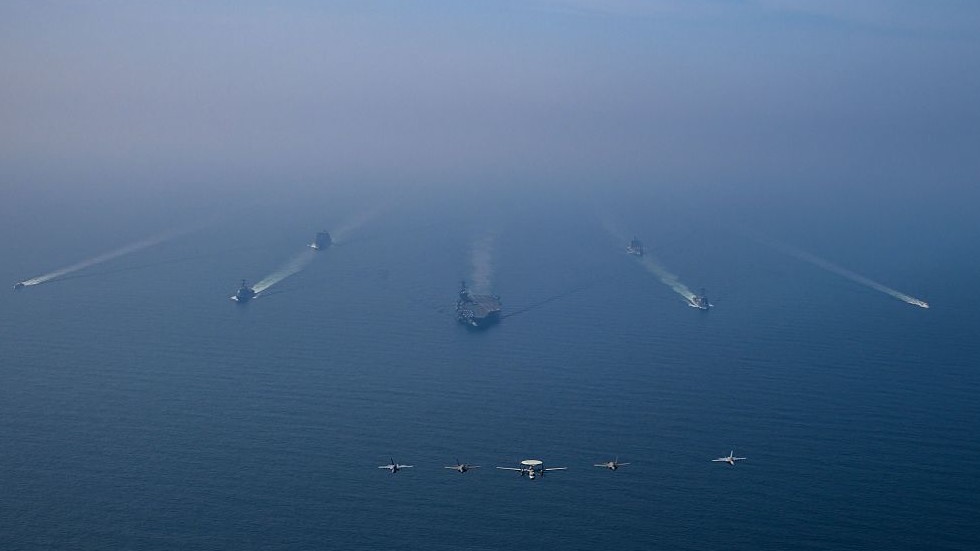
The United States is carrying out a major military buildup in the Middle East focused on Iran, with both government-aligned and opposition-leaning coverage agreeing on the core facts of scale, timing, and geography. They concur that Washington has deployed its largest aviation group in the region since the 2003 Iraq invasion, including advanced F-22 and F-35 fighter jets, and that a second aircraft carrier strike group is being added, with the Gerald R. Ford being redirected from the Caribbean to join the Abraham Lincoln near the Persian Gulf. Both sides report that this concentration of forces is sufficient to support a sustained operation against Iran lasting several weeks, that Israel is closely integrated into planning and on high alert, and that US political figures such as Senator Lindsey Graham are prominently involved in signaling resolve. They also agree that diplomatic talks with Iran are ongoing but stalled, that international organizations and some foreign governments are warning of the risks of escalation, and that US commanders have already briefed the president on military options, even as no final order to strike has been issued.
Coverage across the spectrum similarly situates the buildup within a broader context of long-running US-Iran tensions, the strategic importance of the Strait of Hormuz, and Iran’s development of missile and regional proxy capabilities. Both government-aligned and opposition sources describe the US posture as part deterrent, part coercive diplomacy, aimed at influencing Iran’s position in nuclear and regional security negotiations while reassuring allies such as Israel, the UAE, and Saudi Arabia. They agree that institutional actors including the Pentagon, the White House, and key Senate hawks are driving the response; that Israel’s security concerns and advocacy for a tougher line on Iran weigh heavily in US calculations; and that Gulf monarchies are both hosts for US forces and stakeholders in any conflict scenario. There is shared recognition that the buildup is among the largest US deployments to the region in decades and that it unfolds amid internal strains within the Gulf bloc, international calls for restraint, and parallel diplomatic channels in places such as Geneva.
Nature of the buildup. Government-aligned sources typically frame the force buildup as a defensive, preventative measure designed to deter Iranian aggression and secure vital shipping lanes, emphasizing readiness and restraint. Opposition-oriented coverage more often portrays the same deployments as an offensive posture that inherently raises the risk of a preemptive or accidental war, describing it as an “armada” that makes conflict more likely. While government narratives stress that no decision to strike Iran has been taken and that the build-up supports diplomacy from a position of strength, opposition narratives highlight that the very capability to wage weeks-long operations signals preparation for war rather than mere deterrence.
Motives and strategy. Government-aligned reporting tends to describe US strategy as calibrated pressure to bring Iran back into compliance with nuclear and regional norms, integrating military, diplomatic, and economic tools in a coherent framework. Opposition outlets more frequently argue that domestic political considerations in Washington, pressure from hardline senators, and lobbying by Israel and some Gulf states are driving an escalatory course not anchored in a clear strategic end state. Where government coverage stresses responsible leadership and the necessity of credible military options to support negotiations, opposition coverage questions whether the buildup is a bargaining chip or a slippery slope to a conflict that lacks broad public or allied consensus.
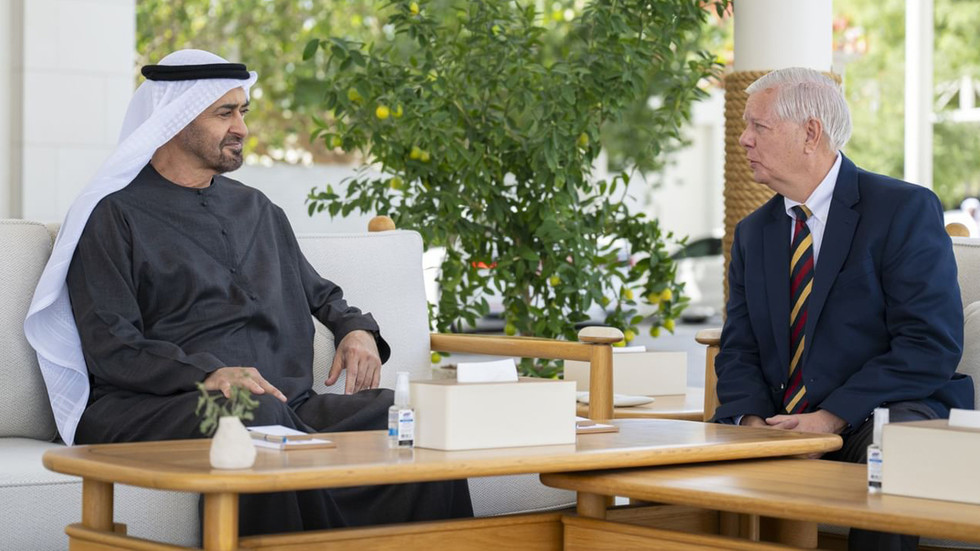
Role of allies and regional politics. Government-aligned sources usually present Israel, the UAE, and Saudi Arabia as essential partners whose security concerns justify a strong US presence and whose cooperation enhances regional stability. Opposition reporting is more likely to highlight intra-Gulf rifts, such as tensions between the UAE and Saudi Arabia over Yemen, and to suggest that US policy is overly captive to the agendas of hawkish regional actors, especially Israel. While government narratives depict meetings like Lindsey Graham’s with Emirati leaders as routine alliance management and myth-busting against “false narratives,” opposition accounts question whether such engagements entrench a militarized regional order and sideline diplomatic initiatives.
Diplomatic prospects and risks of escalation. Government-aligned coverage tends to argue that the buildup strengthens the US hand in talks and may ultimately avert war by convincing Iran that further brinkmanship is futile, often underscoring calls for Iran to moderate its behavior. Opposition sources stress that stalled negotiations, hostile rhetoric including public insults of Iranian leaders, and continuous reinforcements create a volatile environment where miscalculation or a small incident could trigger a spiral toward large-scale conflict. Both acknowledge the presence of international appeals for restraint, but government narratives cast the buildup as compatible with those appeals, whereas opposition narratives see it as fundamentally at odds with de-escalation.
In summary, government coverage tends to depict the US buildup as a measured, deterrent step that underpins diplomacy and reassures allies, while opposition coverage tends to portray it as an escalatory, politically driven militarization that heightens the risk of an avoidable war.