government
Europe in decline, other kind of war: statements by Lavrov
Sergey Lavrov stressed that Russia is ready to engage with reasonable and pragmatic counterparts
3 months ago
Russian government-aligned coverage reports that Foreign Minister Sergey Lavrov, in recent public remarks and interviews, positioned Russia as not seeking a direct military confrontation with Europe while warning that a “different kind of war” is under way if European leaders continue, in his view, to prepare for conflict rather than acknowledge past policy mistakes. These outlets agree that he criticized what he called the “hysterical” demands of European negotiators on Ukraine, framed Western support for Kyiv as a proxy conflict against Russia, accused EU and NATO elites of being driven by revanchist motives connected to World War II, and singled out Hungary’s Viktor Orban and Slovakia’s Robert Fico as comparatively pragmatic voices. They also concur that Lavrov linked his comments on Europe to a broader diplomatic agenda touching on Russia–US relations under Trump, the wars in Ukraine and Syria, the Gaza crisis and wider Middle East dynamics, the dispute over Iran, and Russia’s deepening ties with Arab states.
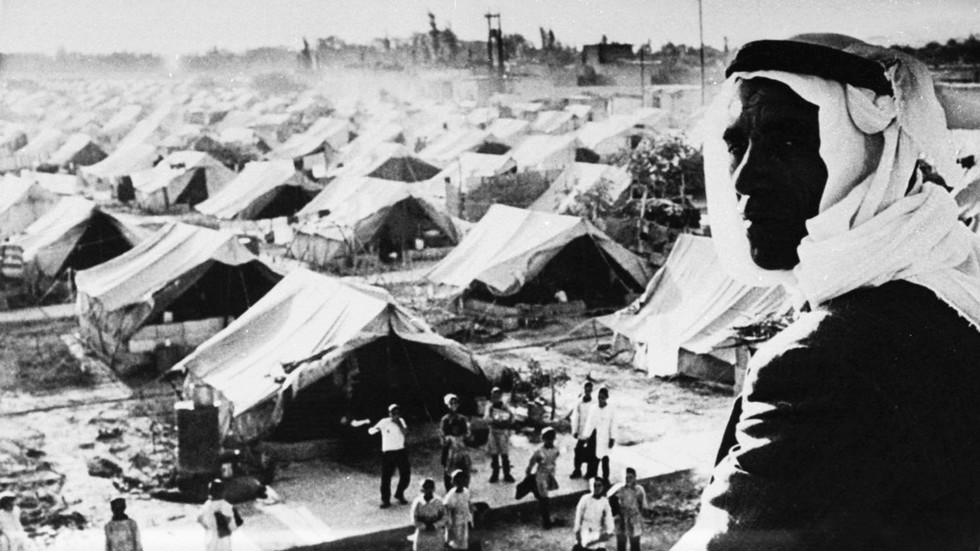
Across this coverage, Lavrov’s remarks are also presented as a reflection on long-term historical and institutional failures, particularly in Europe and the Middle East. Government-aligned sources consistently report that he framed current tensions with the EU and NATO as the culmination of decades of Western strategic miscalculations, ideological hostility toward Russia, and unresolved legacies of World War II. They describe him contextualizing the Gaza conflict and the Palestinian question in terms of the 1947 UN partition plan, calling the Palestinian leadership’s rejection of that plan a historic error while insisting that the absence of a viable Palestinian state makes regional stability impossible and that both Israeli policies and Western double standards perpetuate the crisis. These outlets further agree that he presented Russia as advocating multipolar diplomacy, reconstruction for Gaza, guarantees for Palestinian return, and a reset of relations with any Western or regional actors willing to adopt what he calls a pragmatic, interest-based approach.
Nature of Western antagonism. Government-aligned sources depict Lavrov’s assertions that EU and NATO elites are motivated by “Nazi nostalgia” and revanchism over the Axis defeat as a factual explanation for Western hostility, emphasizing a direct historical through-line from World War II to present policies on Russia and Ukraine. In the absence of opposition media in the supplied corpus, it is reasonable to infer that opposition outlets inside Russia would likely frame such claims as hyperbolic or propagandistic, portraying Western antagonism instead as a response to Russia’s own actions in Ukraine and elsewhere. Government coverage casts Lavrov’s references to Orban and Fico as proof that some European leaders recognize these alleged historical continuities, whereas opposition sources would be more inclined to treat those leaders as outliers whose views do not represent the EU mainstream.
Characterization of the Ukraine conflict. Government-friendly reporting adopts Lavrov’s language that Russia “does not seek war” and that the conflict in Ukraine is primarily a Western-orchestrated proxy war designed to weaken Russia and prolong hostilities, with Europe bearing the costs of US-led strategy. Russian opposition coverage, by contrast, typically emphasizes Russia’s agency and responsibility, describing the war as initiated by Moscow’s invasion and treating Western support for Kyiv as a reaction to aggression rather than a pre-planned anti-Russian project. While government outlets present Lavrov’s readiness for talks with “pragmatic” Europeans as evidence of Moscow’s openness to peace, opposition outlets commonly argue that such rhetoric masks inflexible demands and efforts to shift blame away from the Kremlin.
Middle East narrative and Palestinian statehood. In government accounts, Lavrov’s comments on the “historic mistake” of rejecting the 1947 UN partition plan are framed as a balanced, historically grounded critique that nonetheless underlines Russia’s backing for Palestinian statehood, Gaza reconstruction, and the right of return, alongside criticism of Israeli military conduct and Western double standards. Opposition-oriented media would likely underline the selective nature of this historical framing, questioning whether Moscow’s current stance is driven more by geopolitical positioning against the West than by consistent principles on sovereignty and human rights, and might juxtapose Lavrov’s calls for a Palestinian state with Russia’s actions in Ukraine and Syria. Government outlets highlight his portrayal of Russia as a mediator trusted in the Arab world, whereas opposition sources would more likely scrutinize the credibility and practicality of that mediator role.
Framing of Europe’s internal debate. Government-aligned reporting emphasizes Lavrov’s contrast between allegedly ideological, “hysterical” Western European elites and “pragmatic” dissenters like Orban and Fico, depicting this as evidence of a growing rift within Europe over policy toward Russia and Ukraine. Russian opposition media, however, generally interpret these same figures as being politically aligned with or sympathetic to Moscow, arguing that government outlets overstate their influence and misrepresent mainstream European consensus. Where government narratives take Lavrov’s warnings about Europe preparing for war at face value as a sober diagnosis of Western militarization, opposition coverage tends to cast such warnings as part of a broader information strategy aimed at mobilizing domestic support and justifying Russia’s own military posture.
In summary, government coverage tends to treat Lavrov’s remarks as authoritative diagnoses of Western and Middle Eastern politics that vindicate Russia’s foreign policy line, while opposition coverage tends to question his claims, highlight Russian responsibility for current crises, and interpret his statements as instrumental narratives serving the Kremlin’s strategic and domestic political goals.