government
Victims in Krasnodar, Sevastopol regions, oil refinery fire: new UAV attack
Air defenses intercepted and destroyed 151 Ukrainian fixed-wing drones over Russian regions
3 months ago
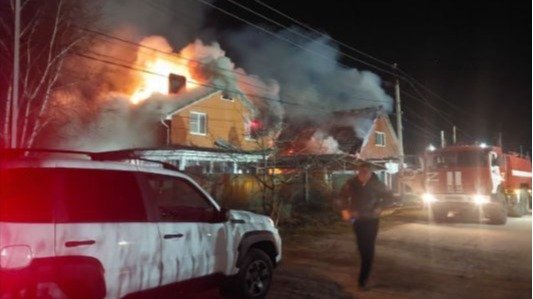
Russian and Ukrainian reports, as reflected in both government-aligned and opposition media, agree that a nighttime drone attack led to a fire at the Ilsk oil refinery in Russia’s Krasnodar Krai, injuring two people and damaging nearby residential buildings. Both sides describe widespread drone activity across several regions, with Russian air defenses engaged for hours, and acknowledge that debris or fragments from downed drones caused additional damage in surrounding areas.
Coverage from both camps also notes related incidents beyond the refinery itself, including damage in the Krasnodar region, reports of debris affecting infrastructure such as a locomotive depot, and prolonged air-defense activity near Sochi. They further concur that Sevastopol, in Russia‑annexed Crimea, was also targeted in the same wave of attacks, with at least one child reported injured there by shrapnel or debris, situating the refinery fire within a broader pattern of cross-border strikes on energy and transport facilities.
Attribution and framing of the attack. Government-aligned outlets emphasize that Russian air defenses intercepted the vast majority of what they describe as Ukrainian unmanned aerial vehicles, presenting the refinery fire as collateral damage from falling debris rather than a successful strike. Opposition outlets, by contrast, state more directly that Ukrainian drones attacked and hit the refinery, framing the fire as evidence of a successful targeting of Russia’s oil infrastructure. Government narratives stress defensive action and minimization of impact, while opposition narratives foreground the vulnerability of Russian facilities.
Damage scale and operational impact. Government coverage focuses on limited, specific damage—four houses affected, two people injured, and a fire that was brought under control—implicitly downplaying any long-term disruption to refinery operations. Opposition sources, while citing the same injury count, highlight the fact that an oil refinery and other infrastructure such as a locomotive depot were struck, suggesting broader material and logistical consequences. The government side tends to present the incident as a contained emergency, whereas the opposition implies more serious and systemic damage to critical infrastructure.
Wider strategic context. Government-aligned media situate the attack within a narrative of ongoing Ukrainian terror-like raids against civilian areas, stressing the large number of drones reportedly shot down and portraying Russia as successfully defending its territory under difficult conditions. Opposition outlets place the event in the context of Ukraine’s effort to degrade Russian military and economic capacity deep behind the front lines, treating the refinery fire as part of an intentional campaign against fuel and transport hubs. Thus, government narratives foreground civilian risk and resilience, while opposition narratives emphasize strategic targeting and military rationale.
Status of Crimea and Sevastopol. Government coverage refers to Sevastopol simply as a Russian region or city, reinforcing its annexation as settled fact and treating the injury to a child there as a further example of attacks on Russian civilians. Opposition sources explicitly describe Sevastopol as an annexed city in Crimea, underscoring its disputed status under international law and framing the attack as occurring on occupied territory rather than undisputed Russian soil. This difference reframes the same incident either as aggression against Russia proper or as part of a conflict over contested land.
In summary, government coverage tends to stress interception successes, limited damage, and civilian endangerment on Russian territory, while opposition coverage tends to emphasize the refinery fire as a successful Ukrainian strike within a broader campaign against Russia’s energy and transport infrastructure and highlight Crimea’s contested status.