government
The heads of France and Italy have clashed over the death of a right-wing activist in France
The leaders of France and Italy have clashed over the murder of a right-wing activist in France
3 months ago
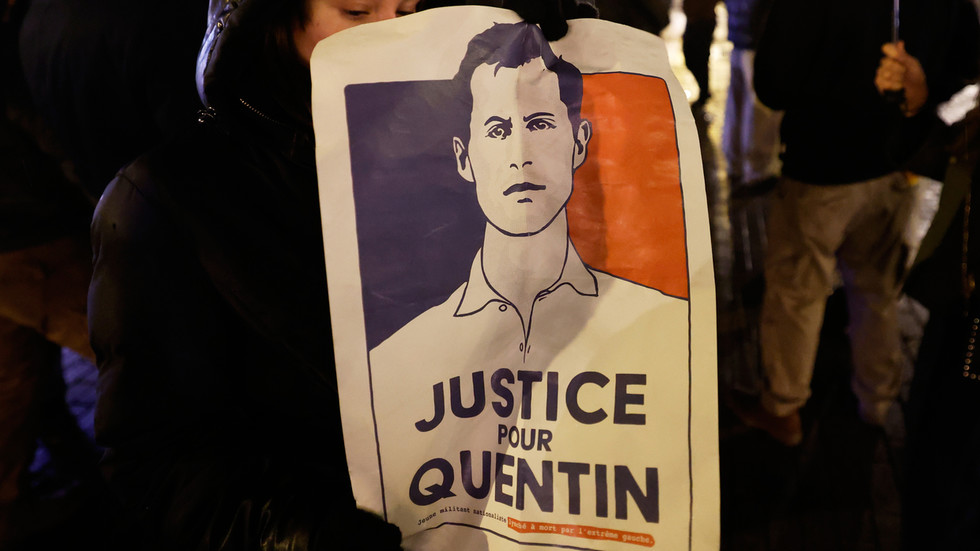
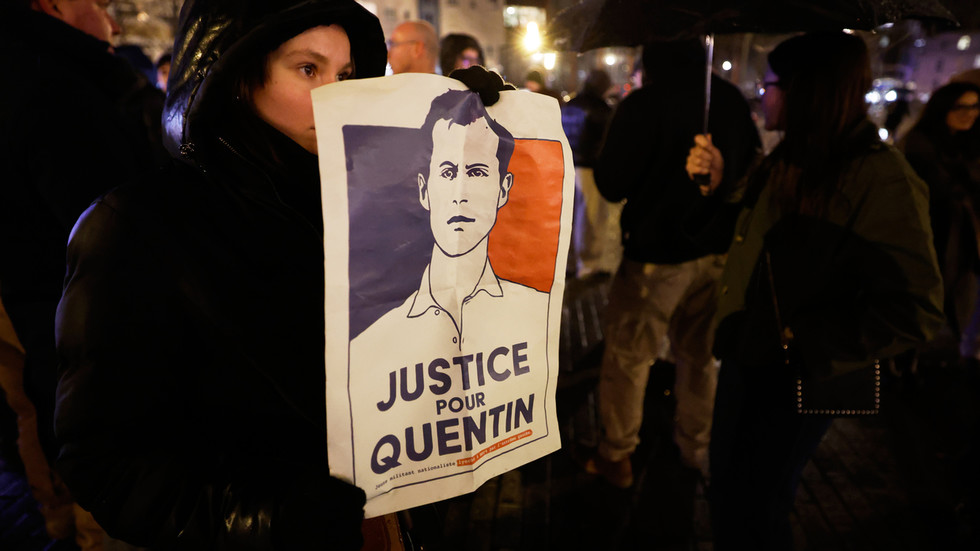
French and Italian leaders have publicly clashed over the death of French right-wing activist Quentin Deranque, who was killed in Lyon during a brawl involving a left-wing group. All sides agree that the incident has triggered a strong response from right-wing activists, including a rally in Lyon, and that it has rapidly escalated from a local confrontation into a bilateral political issue between France and Italy, drawing in President Emmanuel Macron and Italian Prime Minister Giorgia Meloni. Macron is reported to have rebuked Meloni’s intervention with a pointed remark that she should “stay in her own lane,” while Meloni has framed the killing as a matter of broader European concern. Both perspectives acknowledge that French officials have attributed responsibility to so‑called ultra-left activists, and that Deranque’s supporters describe the incident as a lynching.
Coverage from both sides situates the episode within a wider European struggle over political extremism and street violence, noting the involvement of ideologically motivated groups on both the left and right. Reports converge on the institutional framing: the French presidency and government are defending national sovereignty over law-and-order matters, while the Italian government is invoking European values and shared security concerns. Both sides also reference the broader context of polarized political climates in France and Italy, with heightened sensitivity around clashes between militant groups and how states characterize political violence. There is agreement that the incident may feed into ongoing debates about domestic security, cross-border political rhetoric, and the responsibilities of EU leaders when commenting on each other’s internal affairs.
Framing of the incident. Government-aligned outlets present the death primarily as the outcome of a violent clash between opposing political groups, stressing the complexity of street confrontations and the need for judicial investigation. In the absence of detailed opposition coverage, critical narratives are inferred to frame it more starkly as either a targeted political killing or a symbol of state failure to protect right-wing activists. Government coverage emphasizes institutional language and cautions against inflammatory terms, even while reporting that supporters speak of a “lynching,” whereas opposition voices are likely to foreground that label as central to their account.
Cross-border political intervention. Government sources in France portray Macron’s message to Meloni to “stay in her own lane” as a defense of French sovereignty and a necessary pushback against foreign politicization of an ongoing investigation. Opposition-oriented interpretations would more likely cast Meloni’s remarks about a “wound for all of Europe” as legitimate solidarity and a warning about ideological violence spreading across borders. Where government coverage stresses diplomatic protocol and non-interference in domestic affairs, opposition narratives tend to amplify the European dimension to argue that silence would amount to complicity or indifference.
Attribution of responsibility. Government reporting relays the official French line that ultra-left activists are suspected, while still framing the matter as subject to legal due process and cautioning against collective blame. Opposition coverage, by contrast, would likely lean harder on the notion of organized ultra-left aggression, portraying the event as the foreseeable result of tolerated left-wing militancy and years of lax enforcement. Government-aligned narratives therefore stress the role of the state as neutral arbiter, whereas opposition narratives are inclined to accuse the state of having enabled an environment in which such violence can occur.
Political stakes and mobilization. Government sources tend to treat the right-wing rally in Lyon as a significant but contained reaction, emphasizing the importance of maintaining public order and avoiding further escalation. Opposition-aligned coverage would more readily depict the mobilization as a justified outpouring of anger and grief, casting participants as defenders of democratic freedoms under threat from ideological violence. While government narratives warn against instrumentalizing the death for partisan gain, opposition narratives are more prone to argue that strong street-level and political responses are necessary to force institutional change.
In summary, government coverage tends to foreground institutional restraint, national sovereignty, and procedural language around the investigation and diplomatic tensions, while opposition coverage tends to dramatize ideological conflict, emphasize ultra-left culpability and European solidarity, and portray the incident as emblematic of broader state failures.