government
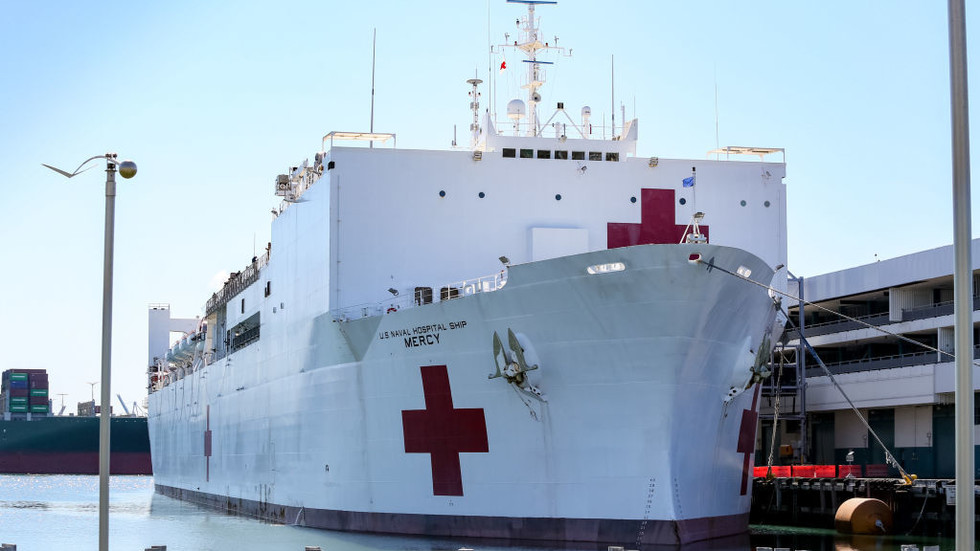
US sends hospital vessel to shores of Greenland, says President Trump
The US leader noted that this is necessary to take care of the many people who are sick
3 months ago
Greenland’s government and US officials agree that President Donald Trump announced the dispatch of a US hospital ship toward Greenland, presenting it as a mission to care for sick residents who, in his view, were not receiving adequate treatment. They concur that Greenland’s Prime Minister Jens-Frederik Nielsen publicly rejected the offer, saying “no thank you” and stressing that Greenland has its own public healthcare system and does not require unsolicited foreign medical aid. Both sides also acknowledge that Denmark’s Defense Minister backed Nielsen’s stance, confirming that Greenlandic patients receive healthcare either locally or in Denmark and that ongoing Danish investments are aimed at improving Greenland’s medical infrastructure.
Coverage also converges on the broader institutional and diplomatic backdrop: Greenland is recognized as an autonomous territory within the Kingdom of Denmark, and Copenhagen retains responsibility for defense and foreign affairs, including large-scale security and aid arrangements. Reports agree that Trump has a history of contentious proposals toward Greenland, including an openly discussed offer to purchase the island and earlier tariff threats, all of which were firmly rejected by both Denmark and Greenland. It is also uncontested that the appointment of Louisiana Governor Jeff Landry as a special envoy for Greenland, with a stated aim of bringing the island under US control, generated a prior diplomatic incident that frames current reactions to any US initiatives.
Motives for the hospital ship. Government-aligned coverage presents Trump’s decision to send a hospital ship as a humanitarian gesture aimed at filling perceived gaps in healthcare for Greenland’s sick residents. It tends to foreground his stated concern that some people are not receiving adequate treatment and frames the ship as a concrete offer of medical capacity. Opposition narratives, by contrast, are more likely to portray the move as politically motivated, seeing the humanitarian rationale as a cover for strategic ambitions toward Greenland and an extension of earlier attempts to buy or control the territory.
Respect for sovereignty. Government coverage generally depicts the offer as a routine or benevolent extension of American assistance to a distant population, downplaying implications for Greenlandic or Danish sovereignty. It may cast the diplomatic friction as a misunderstanding or an overly defensive response from Copenhagen and Nuuk. Opposition sources emphasize the continuity between the hospital ship proposal, the tariff threats, the purchase bid, and the special envoy appointment, arguing that these actions collectively signal a lack of respect for Greenland’s self-determination and Denmark’s authority.
Assessment of Greenland’s healthcare needs. Government-aligned outlets often imply that Greenland’s existing healthcare system is insufficient, validating Trump’s premise that outside intervention is warranted to “care for the sick.” They highlight the imagery of advanced US medical capabilities arriving to help a remote population. Opposition coverage stresses the statements from Greenlandic and Danish officials that necessary care is already available on the island or in Denmark, portraying the offer as uninformed about local conditions and dismissive of ongoing Danish investments.
Diplomatic tone and fallout. Government coverage typically frames Nielsen’s “no thank you” as a firm but polite refusal, suggesting that dialogue remains possible if tempers cool and emphasizing Trump’s willingness to engage. It may minimize the seriousness of previous diplomatic incidents involving Greenland, portraying them as secondary to the potential benefits of US involvement. Opposition accounts are more inclined to interpret the refusal as a clear diplomatic rebuke, connecting it to a pattern of strained transatlantic relations and warning that such offers risk further damaging trust between the US, Denmark, and Greenland.
In summary, government coverage tends to cast the hospital ship as a well-intentioned humanitarian offer whose political backdrop is incidental, while opposition coverage tends to see it as a symbol of overreach and strategic opportunism layered onto an already fraught history of US designs on Greenland.