government
Thousands march in Lyon in tribute to murdered right-wing activist (VIDEOS)
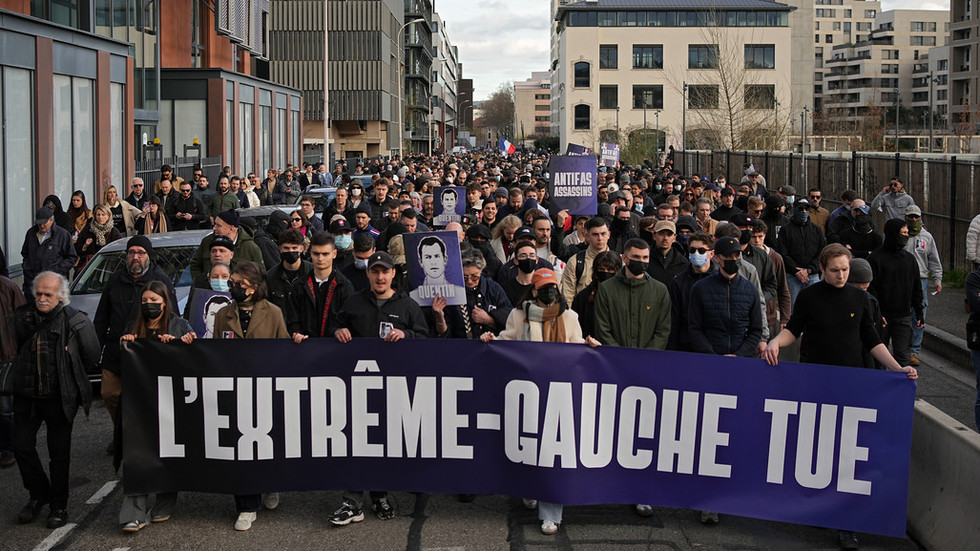
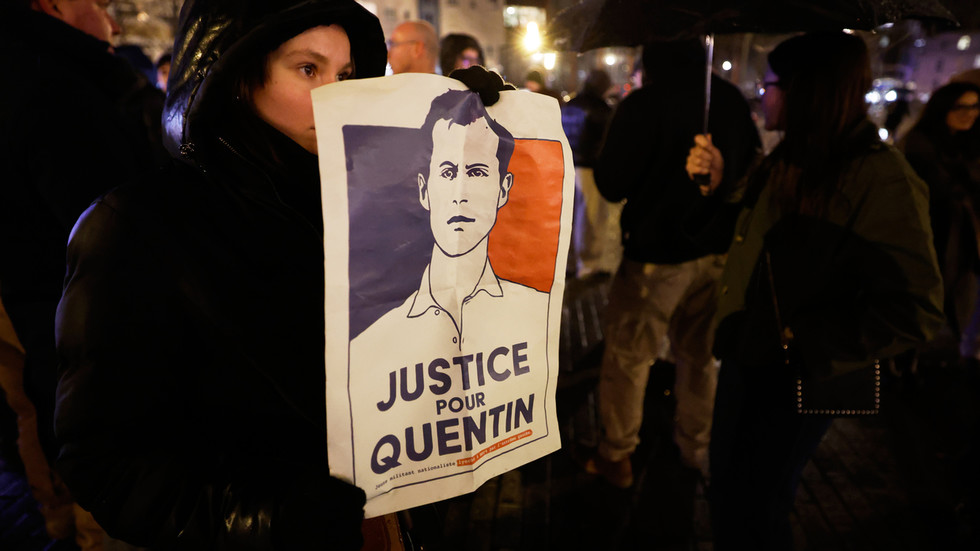
More than 3,200 people marched in Lyon to commemorate Quentin Deranque, who was killed in a brawl with left-wing activists
2 months ago
Thousands of people, estimated at just over 3,000 participants, marched in Lyon to honor Quentin Deranque, a young nationalist/right-wing activist who died following a street brawl involving an alleged far-left group. The march took place in the city center, drew a range of right-wing and nationalist organizations, and featured visible slogans targeting left-wing groups. Authorities and media reports agree that some demonstrators performed Nazi salutes and shouted racist or extremist slurs, prompting condemnation from local officials, including the mayor of Lyon, who has vowed legal and administrative action against those identified.
Coverage also converges on the broader context: the killing of Deranque is seen as part of rising political tension and street-level confrontations between far-right and far-left militants in France. The event is being reported against the backdrop of heightened polarization ahead of upcoming elections, longstanding concerns about extremist violence, and debates over how effectively security forces and the justice system are containing politically motivated clashes. Institutions such as the local prefecture, the mayor’s office, the police, and the judiciary are described as central actors in managing both the investigation into Deranque’s death and any follow-up proceedings against participants engaging in illegal behavior at the march.
Characterization of Deranque and the brawl. Government-aligned outlets tend to describe Quentin Deranque as a nationalist or right-wing activist killed after a brawl with alleged far-left militants, emphasizing the term “lynching” used by right-wing figures to stress victimhood and brutality. Opposition sources, where they comment, are more likely to highlight his far-right or extremist affiliations, frame the clash as a mutual confrontation between militant groups rather than a one-sided attack, and downplay emotive labels like “lynching.” This leads government coverage to foreground the narrative of a politically motivated killing of a right-wing activist, while opposition narratives, when present, question the simplicity of that framing and stress the complexity and mutual responsibility of the street fight.
Nature of the march and its participants. Government-aligned media stress the scale and order of the march, presenting it as a large tribute to a slain activist that was mostly peaceful, with problematic gestures such as Nazi salutes portrayed as the work of isolated individuals. Opposition sources, by contrast, would be inclined to center those extremist symbols and slogans as evidence that the mobilization was deeply rooted in far-right and neo-Nazi networks rather than a broad civic commemoration. As a result, government coverage focuses on the march as a legitimate political gathering marred by a few excesses, while opposition framing casts it as a worrying show of strength by radical right-wing currents.
Responsibility, policing, and state response. Government-aligned outlets highlight official condemnations of illegal behavior at the march, the mayor’s pledge to pursue sanctions, and the role of police in maintaining order, framing the state as actively trying to balance public order and freedom of assembly. Opposition coverage would more likely question whether authorities were too lenient toward a march featuring open extremist symbols, contrasting this with stricter policing of left-wing or anti-racist demonstrations and suggesting a double standard in law enforcement. Thus, government narratives stress institutional responsiveness and neutrality, while opposition narratives emphasize selective enforcement and possible state indulgence of far-right street power.
Political implications and polarization. Government-aligned reporting links the event to a broader climate of political division ahead of elections but often positions right-wing activists as reacting to left-wing violence and societal disorder, echoing themes of insecurity and the need for firmer control over extremist left groups. Opposition voices, where they weigh in, tend to argue that far-right and nationalist rhetoric itself fuels polarization and violence, warning that normalizing such marches risks shifting the political Overton window toward intolerance. Consequently, government-aligned coverage tends to frame the episode as proof of rising threats from the far left and a rallying point for the right, whereas opposition narratives frame it as a symptom of far-right radicalization and a test of democratic safeguards.
In summary, government coverage tends to present Deranque primarily as a victim of far-left violence and the march as a largely legitimate tribute constrained by responsible state oversight, while opposition coverage tends to depict him and many participants as embedded in extremist networks and to question whether authorities are applying the law even-handedly in the face of far-right mobilization.