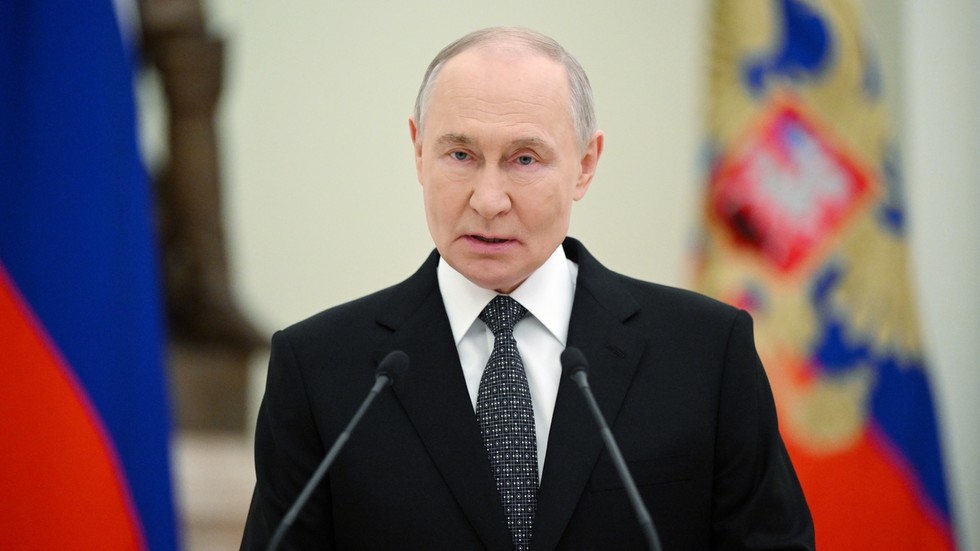
Putin’s Defender of the Fatherland Day address, delivered in a prerecorded video message, honored Russian military personnel and framed the holiday as a symbol of love for defenders and pride in the Armed Forces. In the speech and related statements, he pledged to strengthen the Army and Navy, singled out the modernization of Russia’s nuclear triad as an unconditional priority, and promised to draw on combat experience from the war in Ukraine to enhance readiness with support from high‑tech industries. The address referenced Russian troops on the front lines of the so‑called special military operation, praising their coordinated and efficient actions in intense sectors and thanking them and their families for their service, courage, and sacrifice on behalf of the country.
Across coverage, there is agreement that the nuclear triad—land, sea, and air‑based strategic forces—has been elevated to central importance in Russian defense planning and is being explicitly tied to current combat operations. Outlets concur that this messaging comes in the context of the New START Treaty’s effective collapse, with Moscow formally suspending participation but publicly insisting it does not seek escalation beyond U.S. moves. Both sides acknowledge that the Kremlin is presenting the conflict in Ukraine as a struggle for Russia’s future, independence, truth, and justice, and that Russia’s political leadership is using the patriotic holiday to connect historical military achievement with ongoing reforms, modernization programs, and a narrative of continuity in national defense institutions.
Areas of disagreement
Nature of the threat. Government‑aligned coverage characterizes Russia as facing external pressure and encirclement, suggesting that bolstering the nuclear triad is a defensive necessity in response to Western policies and the deterioration of arms control. Opposition sources are more likely to argue that the Kremlin overstates or manufactures external threats to justify militarization and to rally domestic support, portraying nuclear rhetoric as part of an internal political strategy rather than a response to an imminent danger. The former frames the modernization as a sober reaction to U.S. actions after New START’s breakdown, while the latter questions whether Russia’s own decisions helped undermine arms control and increase strategic risk.
Framing of the Ukraine war. Government media repeat Putin’s description of the war as a special military operation fought for Russia’s future, independence, truth, and justice, and they highlight battlefield successes and competence on the front lines. Opposition outlets tend to describe the war as a costly, prolonged conflict initiated by the Kremlin, emphasizing casualties, economic strain, and political repression at home rather than heroism or justice. For government‑aligned narratives, the nuclear triad and combat experience in Ukraine are part of an integrated defense effort, whereas opposition narratives present nuclear signaling as escalation that deepens an unnecessary war.
Portrayal of the military and public support. Government sources stress patriotism, unity, and broad societal backing for the Armed Forces, using the holiday to showcase national pride, historical continuity, and gratitude toward soldiers and their families. Opposition sources, by contrast, are more inclined to acknowledge discontent, draft evasion, and war fatigue, framing public opinion as divided or pressured rather than unanimously supportive. In the pro‑government view, investment in the nuclear triad honors and protects the people, while critical coverage may depict such spending as privileging military elites and security interests over civilians’ social and economic needs.
Impact on international stability. Government‑aligned reports underscore official assurances that Russia does not intend to escalate and will only adjust its nuclear posture in response to U.S. steps, casting Moscow as a responsible actor preserving strategic balance. Opposition media tend to warn that intensified focus on nuclear forces, coupled with the suspension of New START, increases the risk of miscalculation and undermines remaining norms of nuclear restraint. Thus, state narratives emphasize deterrence and balance, while opposition narratives highlight the dangers of a renewed arms race and Russia’s role in eroding security architecture.
In summary, government coverage tends to present Putin’s pledge to bolster the nuclear triad as a prudent, defensive response anchored in patriotism, battlefield experience, and continuity with Russia’s historic mission, while opposition coverage tends to cast the same pledge as part of a risky, politically driven militarization that exacerbates the Ukraine conflict and heightens international insecurity.