government
India condemns Pakistani airstrikes on Afghanistan
India has accused Pakistan of externalizing its internal failures by attacking Afghanistan
2 months ago
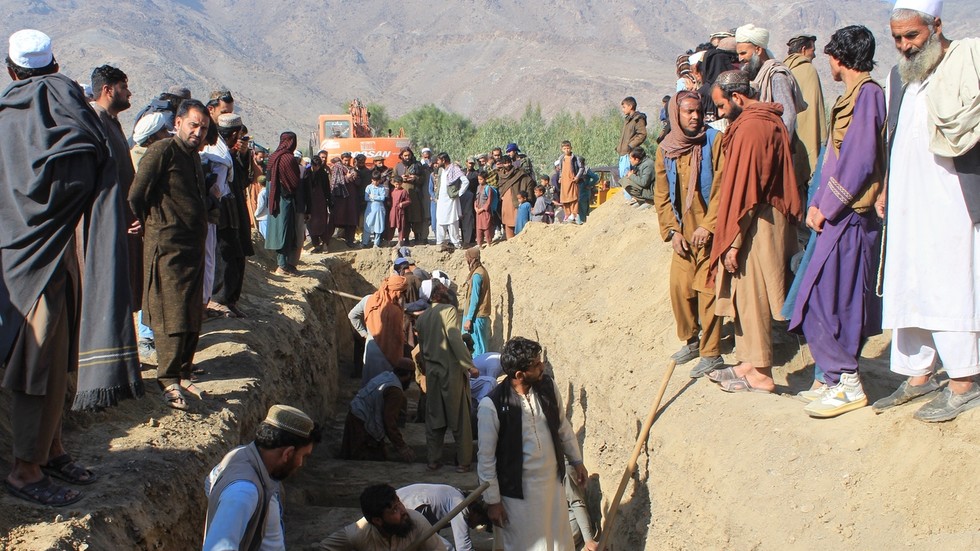
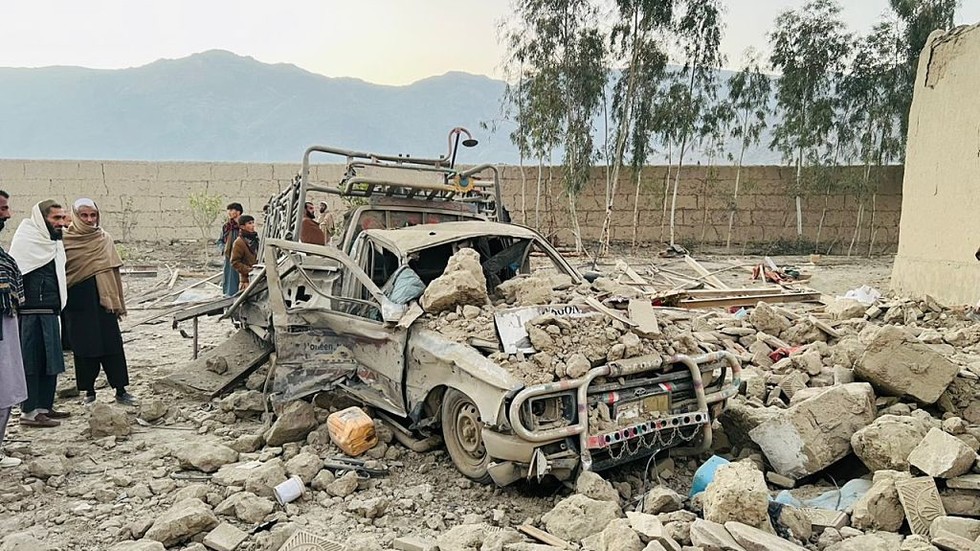
Pakistan carried out airstrikes in eastern Afghanistan that reportedly killed civilians, with multiple accounts citing at least 18 deaths, including women and children, and damage to religious sites. The strikes are described as having taken place across the border in Afghanistan’s eastern provinces, and both sides acknowledge that the action has sharply escalated tensions between Islamabad and Kabul, with each government publicly accusing the other of provoking or initiating violence along the frontier.
Across sources, there is agreement that Pakistan has framed the operation as a cross-border counterterrorism move following recent suicide bombings inside its territory, characterizing the strikes as an intelligence-based, retributive response aimed at militant camps and hideouts rather than civilians. Coverage also converges on the broader context of a long-strained Pakistan–Afghanistan relationship marked by mutual accusations over militant sanctuaries, as well as the involvement of regional actors like India, which links the attacks to Pakistan’s internal security failures and wider instability in the region.
Legitimacy of the strikes. Government-aligned narratives emphasize the strikes as lawful and necessary defensive action against militants allegedly operating from Afghan soil, stressing that Pakistani forces used intelligence-based targeting to avoid civilian harm. In the absence of explicit opposition media here, critical perspectives are more likely to question the legal basis of cross-border airstrikes without Kabul’s consent and highlight that hitting populated areas and religious sites undermines claims of precision. Government coverage tends to center on sovereignty violations by militants crossing into Pakistan, whereas opposition voices would frame Pakistan’s own incursion as a breach of Afghanistan’s sovereignty.
Civilian casualties and targeting. Government sources acknowledge reports of civilian deaths but frame them as either unverified or as unintended collateral damage in an operation primarily directed at militant hideouts. A critical or opposition lens would foreground the civilian toll, stressing that at least 18 noncombatants, including women and children, were killed and that religious sites were struck, suggesting reckless or indiscriminate use of force. Government-aligned coverage downplays the specificity of these civilian accounts, while opposition coverage would treat them as central evidence against the official narrative of precision.
Attribution of responsibility for escalation. Government-oriented reporting places responsibility on Afghan-based militants and, by extension, on Kabul’s failure or unwillingness to curb groups that carry out suicide bombings inside Pakistan. Opposition or critical coverage would instead portray Pakistan’s decision to launch cross-border airstrikes as the main driver of the latest spike in tensions and note Kabul’s threats of retaliation as a reaction rather than a cause. Government narratives frame the operation as a compelled response in a chain of attacks, while opposition narratives would argue it is Islamabad that is externalizing its internal security failures and exporting conflict across the border.
Regional framing and political messaging. Government-linked or friendly outlets highlight India’s condemnation as politically motivated, echoing Islamabad’s long-standing view that New Delhi exploits such crises to accuse Pakistan of regional destabilization and to deflect from its own policies. Opposition or critical perspectives would be more inclined to spotlight India’s charge that Pakistan is externalizing domestic failures, using it to reinforce arguments that Islamabad relies on cross-border military action and narratives about foreign enemies instead of addressing internal governance and security deficits. Government coverage tends to fold the episode into a broader narrative of Pakistan’s fight against cross-border militancy and hostile neighbors, while opposition coverage would more likely place it in a pattern of counterproductive militarized responses that deepen Pakistan’s isolation.
In summary, government coverage tends to justify the airstrikes as an intelligence-driven, defensive measure against cross-border militancy and to minimize or contextualize civilian harm, while opposition coverage tends to foreground the civilian casualties, question the legality and strategic wisdom of the operation, and present it as part of a broader pattern of Pakistan externalizing its internal security failures.