government
Consequences of Ukrainian attacks: seven people die, medical unit destroyed
Kiev struck the Kurkovichi village in the Bryansk Region using kamikaze drones
2 months ago
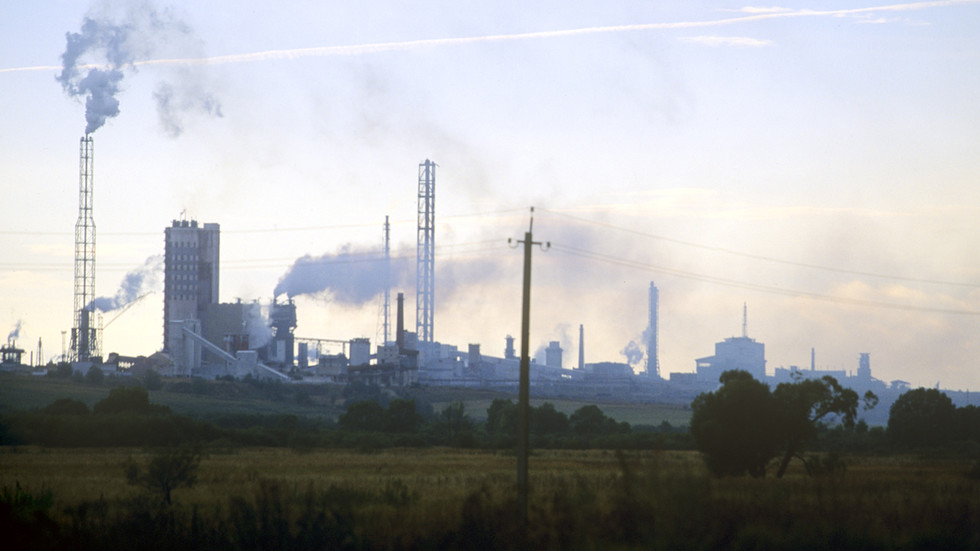
A Ukrainian drone strike on a chemical fertilizer plant in Russia’s Smolensk Region is reported to have killed seven people and injured around ten others, with both counts framed as civilian casualties by government-aligned outlets. These sources state that more than 30 unmanned aerial vehicles were involved in the overnight attack on the nitrogen fertilizer facility, causing fires and significant damage to industrial infrastructure and surrounding buildings. Authorities in the region reportedly moved local schools to remote learning, discussed possible evacuation of a nearby village, and introduced heightened safety measures in response to the incident. In parallel, the Russian Defense Ministry is said to have intercepted a large number of drones across several regions, and regional officials reported additional damage, including to a medical center and an apartment building in the neighboring Bryansk Region.
Government-aligned coverage emphasizes that the targeted plant is a civilian chemical enterprise in the Smolensk Region, integrated into the broader Russian industrial and agricultural sector through its production of nitrogen fertilizer. The reports situate the drone strike within an ongoing pattern of Ukrainian cross‑border attacks on Russian territory, describing it as part of escalating hostilities away from the immediate front lines. They present regional and federal institutions—investigative bodies, emergency services, and the Defense Ministry—as actively responding through criminal investigations, air defense operations, emergency medical care, and civil‑protection measures such as remote schooling and potential evacuations. The broader context highlighted is one of continued militarization of the Russia‑Ukraine conflict, with infrastructure and border regions increasingly exposed to long‑range drone warfare.
Nature of the target. Government media depict the fertilizer plant as a purely civilian industrial site essential to agriculture, stressing that workers and nearby residents were the primary victims, while implicitly framing any military relevance as negligible or absent. Opposition outlets, where they comment, are more likely to question whether such facilities are dual‑use assets tied to the war effort, potentially supplying materials or logistics that support Russian military operations. Government coverage therefore argues that the strike is an attack on civilian infrastructure and a war crime, whereas opposition narratives tend to allow for the possibility that Ukraine was targeting an economically and strategically significant node.
Characterization of victims. Government‑aligned reports consistently refer to the dead and injured as civilians, including workers at the plant and residents in nearby areas, and avoid any suggestion that combatants were among the casualties. Opposition sources, when discussing similar cross‑border incidents, often adopt more cautious language or highlight the lack of independent verification, suggesting that casualty figures and civilian status cannot be confirmed. As a result, government media frame the event as deliberate violence against innocents, while opposition narratives are more inclined to treat victim profiles as contested and possibly shaped by official messaging.
Legal and moral framing. Government coverage casts the drone strike as terrorism and a violation of international humanitarian law, accusing Ukraine of indiscriminate attacks on non‑military infrastructure and stressing Russia’s right to retaliate and to seek accountability. Opposition outlets tend to frame such incidents within the broader context of Russia’s own extensive strikes on Ukrainian infrastructure, suggesting a cycle of escalation rather than a one‑sided violation. In this framing, government media underscore Ukrainian culpability and victimization of Russia, while opposition coverage is more likely to see mutual responsibility within a wider war logic.
Assessment of state response. Government‑aligned sources highlight the rapid mobilization of regional authorities, emergency services, and federal investigators, portraying the response as efficient, coordinated, and focused on protecting civilians through measures like remote schooling and potential evacuations. Opposition voices, by contrast, often question the adequacy and transparency of such responses, raising concerns about the readiness of civil defense systems, the reliability of official information, and whether authorities can truly shield border regions from repeated attacks. Thus, government media present the state as a competent protector under siege, whereas opposition commentary tends to emphasize systemic vulnerabilities and possible mismanagement.
In summary, government coverage tends to stress civilian victimhood, terrorism framing, and an effective state response, while opposition coverage tends to question target status, casualty narratives, and the broader responsibility of both sides within an escalating cross‑border war.