government
Modi Hails Israel Ties in Knesset Address
Narendra Modi has said defense and security are "important pillars" of India’s relationship with Israel
2 months ago
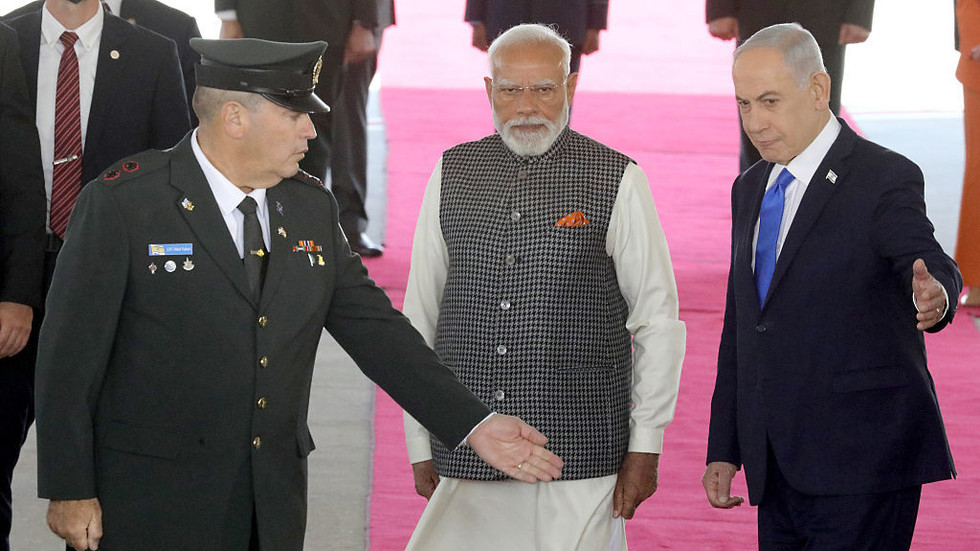
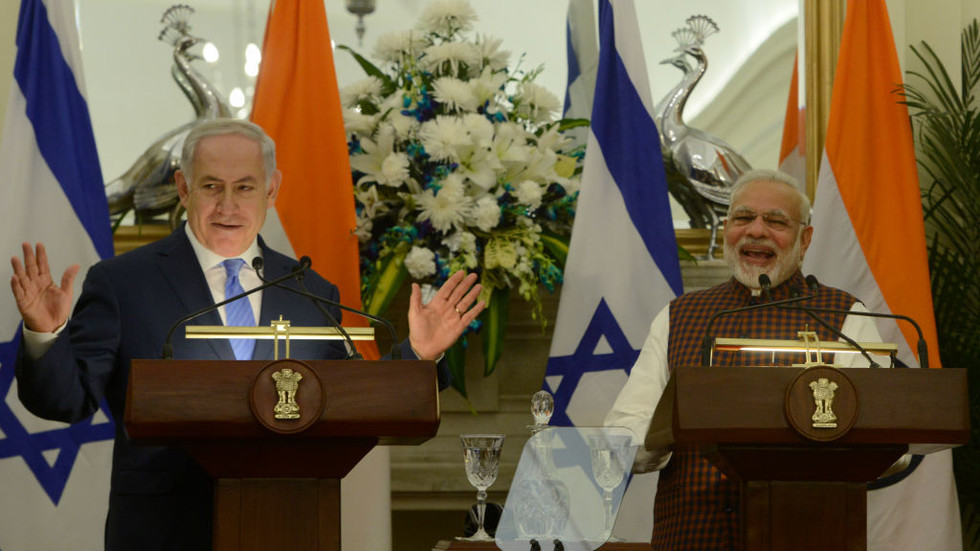
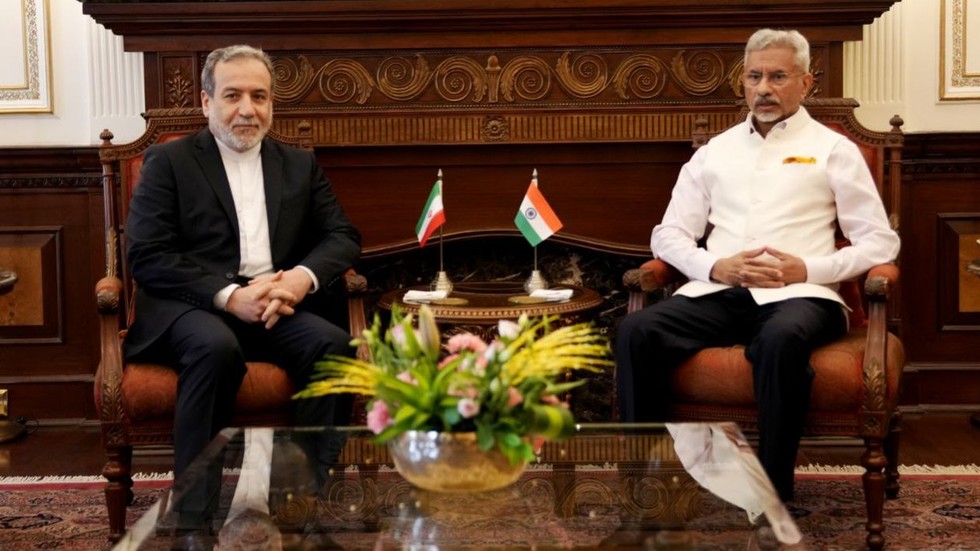
Indian and international coverage agree that Indian Prime Minister Narendra Modi undertook a high‑profile visit to Israel, framed as a state-level engagement with Israeli Prime Minister Benjamin Netanyahu. Reports converge that the trip featured a formal address to the Knesset in which Modi hailed the relationship as rooted in historical and civilizational ties stretching back roughly two millennia, and highlighted defense and security cooperation, including memoranda of understanding and substantial arms deals. Coverage also notes that the visit occurred amid ongoing conflict in Gaza, with visible protests in several locations criticizing Israel’s military actions and India’s closer alignment with Jerusalem, and that the trip attracted statements from regional players, notably Iran’s foreign minister Abbas Araghchi, who condemned Israel and described India–Israel ties as “unfortunate.”
Shared context across outlets emphasizes that India–Israel relations have significantly warmed since around 2017, moving from a historically cautious, low‑profile security partnership to a more open strategic alignment centered on defense technology, counterterrorism, and trade. Reports agree that New Delhi is simultaneously seeking to maintain or expand its traditional partnerships with Arab states and Iran, making the Israel outreach part of a broader balancing act in West Asia. Media from both sides acknowledge that the visit is embedded in longer‑term Indian ambitions—such as becoming a leading global economy and linking into regional economic and technological corridors—while Israel is cast as a key innovation and defense partner whose cooperation fits India’s modernization and great‑power aspirations.
Framing of the visit’s purpose. Government-aligned coverage presents Modi’s trip as a strategic milestone that normalizes and celebrates an already maturing partnership, emphasizing continuity, shared values, and pragmatic cooperation in defense, technology, and trade. Opposition-oriented narratives tend instead to stress the symbolism of the timing, arguing that choosing to visit during a Gaza war signals a political and ideological tilt toward Israel rather than a purely technocratic policy step. While pro-government sources foreground long-term planning and mutual benefits, opposition sources question whether the visit primarily serves domestic image-building and geopolitical signaling more than concrete policy gains.
Gaza, protests, and moral positioning. Government coverage typically acknowledges protests and Gaza-related criticism but treats them as background noise to an otherwise legitimate state visit, framing India’s stance as carefully calibrated and focused on national interest. Opposition coverage amplifies the protests and Iran’s condemnation, portraying them as evidence that India’s image as a non-aligned, pro-Palestinian voice is eroding and that Modi is aligning India with a state widely criticized for actions in Gaza. Government-aligned outlets stress that ties with both Israel and Arab countries can coexist, whereas opposition outlets contend that the optics of the visit during active conflict undermine India’s historical support for Palestinian rights and its soft-power capital in the Global South.
Strategic alignment and regional risks. In government narratives, closer defense and security cooperation with Israel is depicted as a rational response to India’s security needs and a way to access cutting-edge technology, with minimal downside for relations with Arab states and Iran. Opposition coverage instead underscores potential blowback, suggesting that overt alignment with Israel could complicate India’s energy security, expatriate labor interests in the Gulf, and diplomatic maneuvering in multilateral forums where Palestine remains salient. Government-aligned sources highlight Iran’s assurances that bilateral ties remain strong despite rhetorical criticism, while opposition voices treat Tehran’s language about a “genocidal regime” and “unfortunate” ties as a warning sign of accumulating political costs.
Domestic political implications. Government-friendly outlets largely present the visit as an example of Modi’s statesmanship, reinforcing an image of India as an assertive global actor capable of independent choices in West Asia. Opposition-oriented commentary, by contrast, views the outreach to Israel as consistent with the ruling party’s ideological preferences and as a break from India’s older foreign-policy consensus, warning that it may deepen polarization at home over questions of secularism, minority rights, and solidarity with Palestinians. Where government coverage tends to separate foreign policy from domestic politics, opposition media explicitly links the Israel visit to internal debates about the country’s identity and the ruling coalition’s political project.
In summary, government coverage tends to frame Modi’s Israel visit as a carefully considered strategic partnership deepening India’s security and economic prospects with manageable diplomatic risks, while opposition coverage tends to cast it as a normative and geopolitical departure that damages India’s traditional pro-Palestinian stance, increases regional vulnerability, and serves the ruling party’s ideological and domestic political agenda.