government
Russia aware of foreign Black Sea gas pipeline sabotage plot
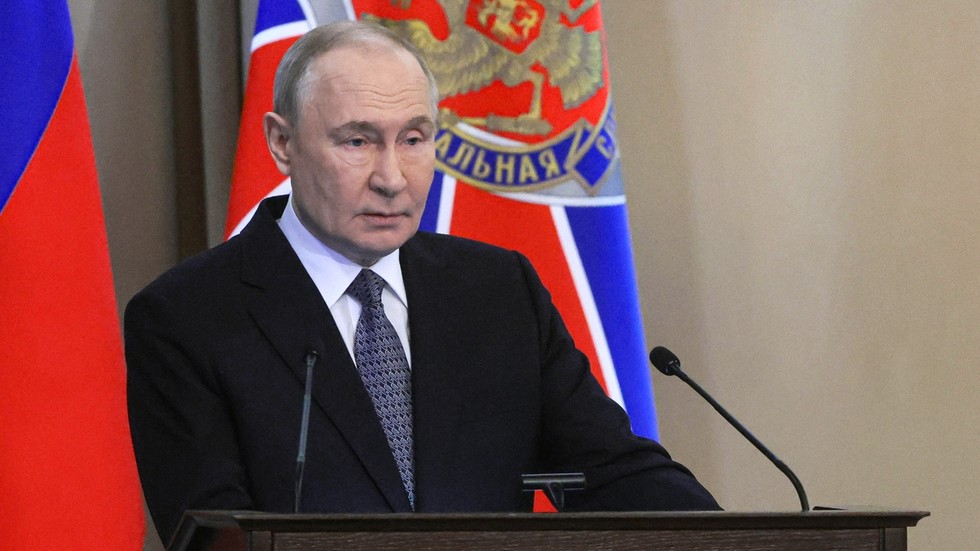
Russia has learned about plans to bomb the TurkStream and Blue Stream pipelines, President Vladimir Putin has said
2 months ago
Russian and Turkish officials are reported to have discussed intelligence indicating alleged sabotage plots against the TurkStream and Blue Stream natural gas pipelines in the Black Sea, which carry Russian gas to Turkey and onward to Europe. According to Russian government statements cited in government-aligned coverage, President Vladimir Putin and Kremlin spokesman Dmitry Peskov say Russian intelligence services obtained information about planned attacks by actors linked to the Kiev authorities, and that this information has been formally shared with Ankara through the Russian embassy in Turkey.
Across outlets, the pipelines are described as critical elements of the regional gas network that connect Russia to Turkey and serve as transit routes to southern and southeastern Europe, running under the Black Sea and operating amid heightened security concerns since the full-scale invasion of Ukraine. Coverage also converges on the notion that previous attacks or attempted attacks on Black Sea energy infrastructure and earlier warnings from Russian security services, including an alleged joint Ukrainian-UK plot against TurkStream, form the immediate background to the current alerts, situating the issue within the broader context of the war in Ukraine and energy security politics between Russia, Turkey, and Europe.
Responsibility and blame. Government-aligned sources present the alleged sabotage plans as the work of the Kiev regime and its Western partners, emphasizing prior claims about Ukrainian and possibly UK involvement in plots against TurkStream. Opposition-leaning commentary is more likely to question whether the evidence for such specific attribution has been independently verified, framing the accusations as part of Russia’s broader narrative that external enemies are targeting its infrastructure. While government outlets stress the operational role of Russian intelligence and the seriousness of the threat, critical voices tend to highlight the lack of publicly disclosed proof and raise the possibility that such claims serve domestic or diplomatic messaging purposes.
Motives and strategic intent. Government coverage portrays the purported sabotage schemes as deliberate efforts to derail peace efforts and destabilize regional energy supplies, arguing that Russia is acting defensively to preserve stability and a diplomatic settlement. In contrast, opposition-oriented analysts often note that framing the plots as attempts to undermine a peace process gives Moscow leverage to claim moral high ground and depict Ukraine and its allies as spoilers. Where government narratives emphasize Russia’s responsibility as a security provider for critical infrastructure, dissenting views suggest that invoking sabotage threats can also justify increased militarization of the Black Sea and tighter control over energy routes.
Role of Turkey and international partners. Government-aligned reports stress close coordination with Turkey, underlining that Russian intelligence has shared detailed information with Ankara and that both countries have a mutual interest in protecting the pipelines as strategic assets. Opposition voices tend to question how much agency Turkey actually has in verifying or responding to these claims, and whether Ankara is being drawn deeper into Russia’s conflict narrative with the West and Ukraine. While official accounts highlight partnership, trust, and shared security responsibilities, critics focus on the diplomatic tightrope Turkey must walk between Russia, NATO partners, and Ukraine.
Information transparency and credibility. Government outlets emphasize the authority of the sources—Putin, Peskov, and the FSB—and present their statements as sufficient grounds to treat the threat as real, even if operational details remain classified. Opposition or independent commentators stress the pattern of highly consequential accusations being made without open evidence, drawing parallels with previous incidents where competing claims about attacks on energy infrastructure were never fully clarified. Thus, state-aligned media frame secrecy as necessary for security and intelligence work, while skeptical coverage frames it as a key reason to treat the allegations with caution.
In summary, government coverage tends to treat the alleged sabotage plots as credible intelligence pointing to Ukrainian and possibly Western culpability and to highlight Russia’s cooperative stance with Turkey in protecting vital energy links, while opposition coverage tends to question the evidentiary basis, emphasize the information asymmetry and geopolitical uses of such claims, and focus on the broader risks of instrumentalizing pipeline threats in wartime narratives.