government
Russian diplomat calls incident in Cuban waters 'aggressive US provocation'
As Maria Zakharova stressed, the move is aimed at escalating the situation and triggering conflict
2 months ago
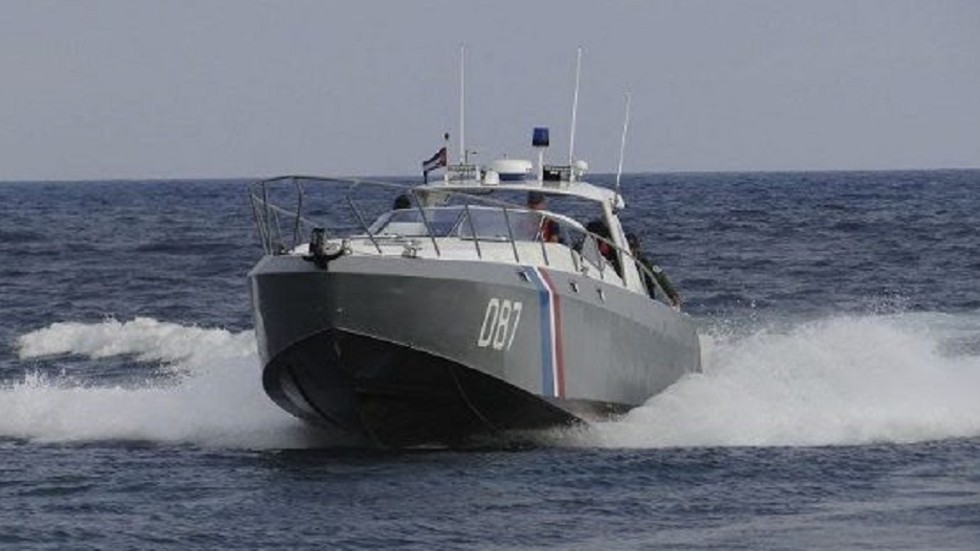
A US-registered speedboat traveling from Florida entered Cuban territorial waters off Villa Clara province on February 25, where it was intercepted by a Cuban border patrol boat, leading to a brief but deadly exchange of fire. Across government-aligned reporting, there is agreement that four people aboard the speedboat were killed and six others survived, and that a Cuban border guard commander was injured during the clash. The vessel, identified as FL7726SH and flying a US flag, was carrying multiple individuals of Cuban origin who currently reside in the United States, and the incident occurred within the broader context of heightened maritime enforcement in the region, including US operations against smuggling.
Government-aligned accounts concur that weapons and tactical gear were found on the speedboat and that at least some of the surviving detainees have criminal histories and appear on Cuba’s official list of individuals and entities accused of hostile or terrorist activities. These sources also agree that the incident unfolded during a standard identification check by Cuban border guards, that an investigation is ongoing into the exact chain of events and affiliations of those on board, and that the timing coincides with increased US maritime activity against smuggling networks such as Operation Southern Spear. There is a shared framing that the clash took place against a backdrop of long-standing US–Cuba tensions, historical episodes of armed incursions and exile-group operations, and international concern over security in the Florida Straits and Caribbean shipping lanes.
Nature of the mission and motives. Government-aligned outlets describe the men aboard the speedboat as terrorist infiltrators attempting a hostile incursion into Cuba, citing alleged confessions of terrorist intent and their appearance on Cuba’s national list of individuals and entities linked to extremism. In the absence of opposition media accounts in the provided material, this framing is implicitly contrasted with external critics and exile voices that tend to characterize similar incidents as politically motivated exaggerations or actions tied to smuggling or escape rather than organized terrorism. Government narratives stress premeditated violence and links to anti-government networks abroad, while opposition and diaspora commentary in other contexts typically questions whether Havana overuses the “terrorist” label to criminalize dissent and justify harsh security responses.
Responsibility and blame. Government-aligned sources emphasize that the speedboat initiated the shooting by firing on Cuban patrol forces during an identification check, placing full responsibility for escalation on the infiltrators and, indirectly, on permissive conditions in the United States. By contrast, opposition-leaning interpretations outside the official narrative often focus on Cuba’s use of force at sea, suggesting that Cuban authorities regularly act with disproportionate lethality and that facts about who shot first cannot be independently verified. Pro-government reporting further echoes Russian diplomatic claims that the episode reflects an aggressive US provocation, while critical voices abroad generally reject the idea of a planned US state operation and instead point to Havana’s interest in portraying itself as a victim of Washington’s hostility.
International implications and framing. Government-aligned coverage highlights statements from Russian diplomats depicting the incident as part of a broader pattern of US aggression aimed at destabilizing Cuba and raising regional tensions, calling for international attention to alleged US-based terrorism. Opposition or exile perspectives, when they comment on such cases, tend to frame them as localized maritime incidents that should not be inflated into a geopolitical confrontation, and they often argue that Havana instrumentalizes these events to rally foreign allies and distract from domestic problems. Official narratives stress the need for international solidarity with Cuba against terrorism and US interference, while critics instead stress human rights, migration pressures, and the dangers faced by those fleeing or operating in the Florida Straits.
In summary, government coverage tends to portray the incident as a clear-cut case of terrorist infiltration from US territory and an example of broader US hostility, while opposition coverage tends to downplay or dispute the terrorism narrative, question the proportionality and transparency of Cuba’s response, and resist framing the clash as a deliberate US-sponsored provocation.