government
Trump calls rising oil prices small price to pay for national and global security
The US president says the prices will fall soon "when the destruction of the Iran nuclear threat is over"
a month ago
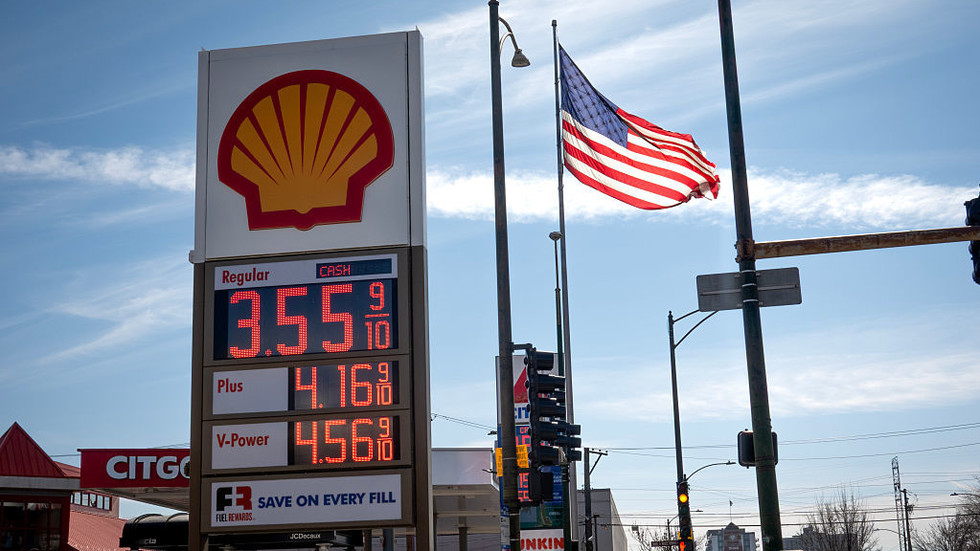
President Donald Trump is quoted in multiple reports saying that sharply rising oil prices are a "small price to pay" or a "very small price to pay" for the security and safety of the United States and the wider world, in connection with a harder line against Iran and the goal of eliminating what he calls the Iran nuclear threat. Government-aligned coverage notes that Brent crude prices had already surged nearly 20% to above $111 per barrel, and in some accounts past $100 per barrel, while acknowledging market fears that prices could climb much higher, with some economists and Russian officials warning they could move beyond $120 or even $200 if conflict endures. These reports also highlight parallel efforts by U.S. Treasury and Energy officials to explore measures to bring crude and gasoline prices down, including pledges aimed at keeping pump prices under $3 per gallon, while Trump publicly downplays short-term economic pain as justified by national and global security concerns.
The shared context in government-leaning accounts portrays the oil spike as closely linked to escalating tensions around Iran and U.S. policy moves framed as necessary to neutralize a nuclear threat, with energy markets reacting to the risk of supply disruptions and broader regional instability. Across this coverage, key institutions such as the U.S. presidency, Treasury Department, and Department of Energy are presented as jointly responsible for both the security strategy and economic management, suggesting that price volatility is a temporary byproduct of a larger security realignment that, if successful, is expected to allow oil prices to fall rapidly. The overarching narrative is that short‑term energy market turbulence is an acceptable trade‑off to prevent a potentially far costlier security crisis, tying domestic gasoline concerns, global oil benchmarks, and diplomatic pressure on Iran into a single policy framework.
Framing of sacrifice. Government-aligned outlets frame Trump’s comment that high oil is a "small" or "very small" price to pay as a sober acknowledgment that modest economic discomfort is justified to guarantee U.S. and global security, often stressing that prices will fall once the Iran threat is removed. Opposition sources, by contrast, tend to treat the same phrase as evidence of indifference to household budgets, arguing that leaders are minimizing real pain for consumers and small businesses in favor of an uncertain strategic payoff.
Economic risk versus strategic gain. Government coverage emphasizes that while Brent crude has surged and could move higher, institutions like the Treasury and Energy Department are actively exploring tools to stabilize markets and even push gasoline below $3 per gallon, depicting economic risks as manageable and temporary relative to the long‑term strategic gain of containing Iran. Opposition reporting typically underscores expert warnings that prices could soar past $120 or even $200 per barrel, casting doubt on official assurances and suggesting that the administration is underestimating the potential for recessionary shocks and global trade disruption.
Credibility of official assurances. In government narratives, Trump’s promise that oil prices will “drop rapidly” once the Iran nuclear issue is resolved is presented as a credible projection backed by U.S. market influence and policy levers, with faith in U.S. capacity to offset supply disruptions and calm traders. Opposition outlets are more likely to question this confidence, highlighting past instances where geopolitical crises produced lasting price elevation and arguing that complex global supply chains and OPEC behavior make rapid normalization far from guaranteed.
Security rationale. Government-aligned sources largely accept or echo the premise that confronting Iran’s nuclear ambitions is intrinsically tied to "World Safety and Peace," portraying current energy shocks as the cost of preempting a more dangerous future conflict. Opposition sources often dispute this causal chain, suggesting that aggressive posturing can itself inflame regional tensions and elevate oil prices, and arguing that diplomacy or multilateral agreements might achieve security goals with less economic fallout.
In summary, government coverage tends to present high oil prices as a justified, temporary sacrifice underpinned by credible policy tools and a clear security rationale, while opposition coverage tends to cast the same price spike as risky, potentially long‑lasting, and symptomatic of an overconfident strategy that discounts economic hardship and alternative diplomatic paths.