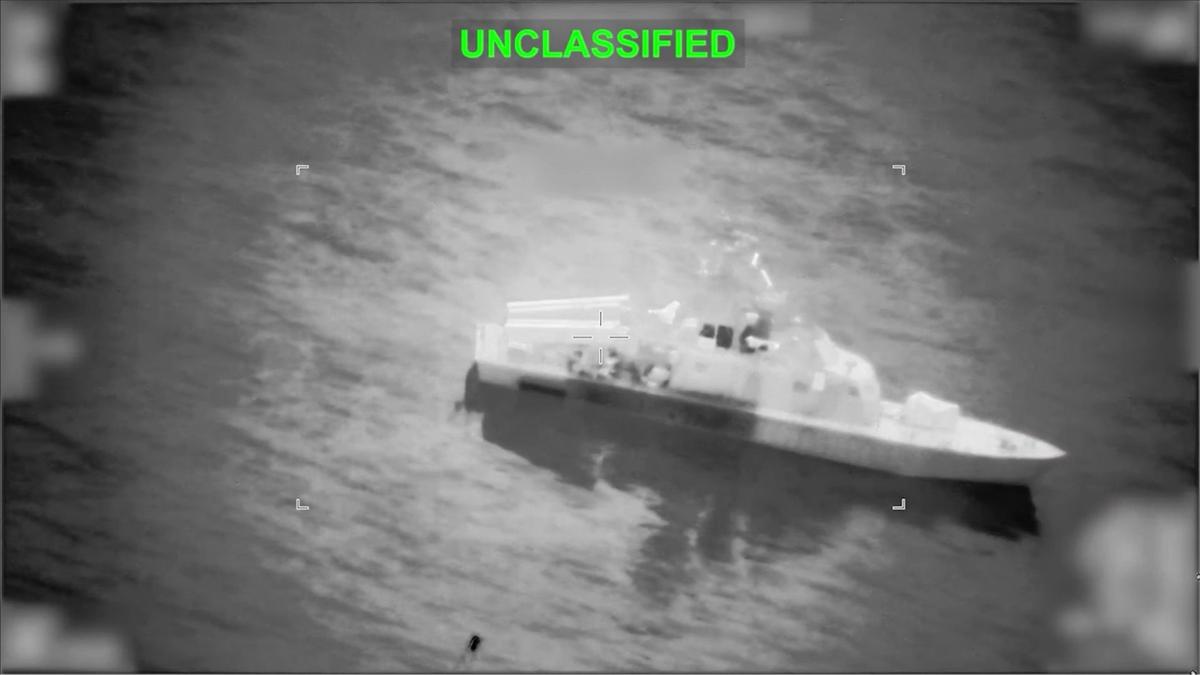
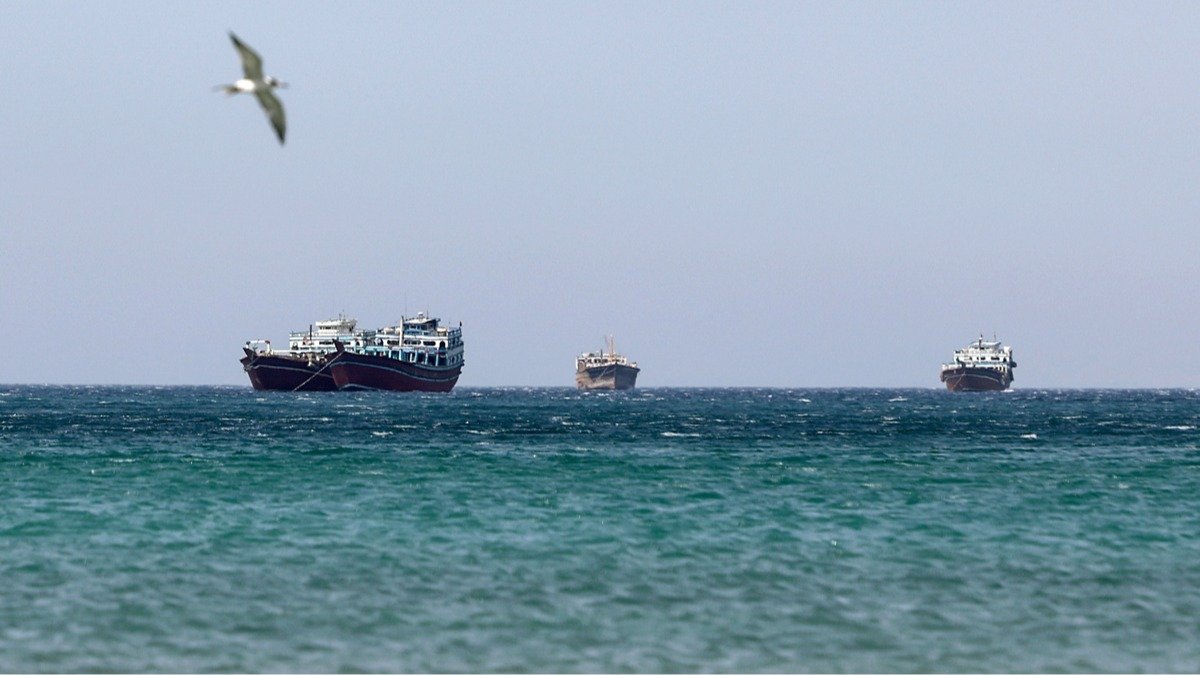
The exchange of airstrikes between the US, Israel, and Iran has been ongoing for 12 days. Amidst the conflict, tanker traffic through the Strait of Hormuz, a narrow waterway through which about a quarter of the world's maritime oil trade and a fifth of liquefied natural gas supplies pass, has practically stopped. Major ports, including Jebel Ali in Dubai and Port Khalifa in Abu Dhabi, have been idle since Iranian forces warned ships last week against passing through the strait in response to US and Israeli strikes. Prices for diesel, gasoline, aviation fuel, and naphtha have risen. The gas market risks experiencing its biggest shock since the full-scale invasion of Ukraine, which upended global gas trade and forced Europe to urgently seek alternative sources. More on the latest attacks on ships in the Strait of Hormuz and the economic consequences in the material from 'Novaya Gazeta. Europe'. Trading ships in the waters of the Strait of Hormuz, view from the coast of the city of Hasab, Oman, June 24, 2025. Photo: Ali Haider / EPA. Attack on ships Last week, Iran announced that the strait was closed and its troops would open fire on any vessel attempting to pass through it. Several ships have already been attacked by an 'unidentified object' - this morning three ships were hit in the region. As reported by the UK Maritime Trade Operations (UKMTO), one of the ships reported a collision with an unidentified object 11 nautical miles north of Oman in the Strait of Hormuz, resulting in a fire on board and the crew having to evacuate. This concerns the Mayruree Naree under the Thai flag, owned by the Bangkok-based company Precious Shipping. At the time of the attack, there were 23 Thai crew members on board. The Royal Navy of Oman rescued 20 people; efforts are underway to evacuate the remaining three. Two other incidents were also recorded: one vessel was hit by a projectile approximately 50 nautical miles northwest of Dubai, and another sustained damage off the coast of the United Arab Emirates. According to the British agency United Kingdom Maritime Trade Operations, a total of 13 attacks on ships have been recorded in the Strait of Hormuz, the Persian and Oman Gulfs since the beginning of the war. Fire on a Thai cargo ship in the Strait of Hormuz, March 11, 2026. Photo: Royal Thai Navy / Xinhua / Abaca Press / ddp images / Vida Press. On Wednesday, March 11, two cargo ships reported being hit by unknown projectiles, and a third was hit approximately 80 kilometers northwest of Dubai. Simultaneously, Iran's Islamic Revolutionary Guard Corps announced it had launched its most massive and intense strikes since the beginning of the war, targeting American and Israeli sites across the region. The statement indicated that targets included American facilities in Erbil, Iraqi Kurdistan, and that ballistic missiles were launched during the attacks. Although isolated voyages have occurred on this waterway in recent days – on March 9, Reuters reported, citing maritime traffic tracking services, that a Greek tanker with Saudi oil passed through the strait – most shipping remains suspended. The Strait of Hormuz is one of the most critical strategic nodes of global trade. Typically, about 100 ships pass through it daily. According to Lloyds List Intelligence, about 15 ships have passed through the strait since the beginning of the war, most of which belong to the so-called 'shadow fleet' transporting Iranian oil to China and India. Many of them are small Chinese tankers that announce their presence and origin to the IRGC via loudspeakers and shortwave radio. Lack of tanker escort According to Reuters sources, the US Navy almost daily denies requests from the shipping industry for military escort through the Strait of Hormuz, explaining that the risk of attacks on ships is currently too high. As the agency notes, this contradicts Trump's statement at the beginning of the war that the US Navy would begin escorting tankers through the Strait of Hormuz. On March 3, the US President ordered the US International Development Finance Corporation to begin insuring political risks and providing financial security guarantees for all maritime trade passing through the Persian Gulf at a 'very reasonable price.' Three Reuters sources stated that the US Navy regularly briefs representatives of the shipping and oil industries and each time declares that it cannot currently provide escort. Meanwhile, shipping industry representatives make such requests almost daily. An anonymous US official told the agency that the US military has not yet escorted any commercial vessels through the strait. Mine laying in the strait On March 10, the US military destroyed Iranian vessels in the Strait of Hormuz, including 16 mine-laying boats, the US Central Command reported. The previous day, CNN and CBS News, citing sources, reported that Iran had begun mining the Strait of Hormuz. Trump stated that if this is indeed the case, the Iranian military must remove all mines 'immediately,' otherwise 'the consequences for Tehran will be unprecedented.' It is not yet known what specific mines the Iranians are trying to lay in the Strait of Hormuz, explains military observer David Sharp in comments to 'Novaya Gazeta. Europe.' He points out that the strait itself is quite narrow, and theoretically, mining its shipping channel should not be difficult. 'However, the Americans are actively preventing the Iranian army from making any moves in the strait's waters from the air. US aviation has already sunk 16 small boats used for laying mine barriers. However, it is known that Iran possesses a so-called 'mosquito fleet' consisting of small ships and even motorboats armed with missile launchers and heavy machine guns,' says Sharp. According to him, the Americans have the capability to unblock the strait, but this would require a large-scale comprehensive operation involving aviation, the navy, and possibly a ground landing of special forces. 'But even if the US attempts to take control of the strait itself, they cannot guarantee 100% safety of passage for ships. After all, even without mining, Iran can effectively disrupt navigation in the Strait of Hormuz. For this, it has coastal anti-ship missiles, unmanned boats and various drones, as well as light boats that suicide pilots can use for ramming ships.' 'I consider the attempt to mine the Strait of Hormuz not so much a military operation as an economic-psychological one. One or two successful tanker attacks will be enough for insurance companies to skyrocket the prices for insuring ships leaving the Persian Gulf. And the passage of civilian ships through the Strait of Hormuz will stop again. This is exactly what Iran is counting on,' says the expert. A projectile hits an Iranian naval vessel, March 10, 2026. Frame from a video released by the US Central Command (CENTCOM). Photo: CENTCOM / Reuters / Scanpix / LETA. Former Israeli intelligence and police officer Sergei Migdal explains in a conversation with 'Novaya Gazeta. Europe' that Iranian mine layers are boats loaded with two to three sea mines. The boat goes to the designated spot where several people unload the mines into the water. 'These could be classic 'horned' sea mines. However, there is a possibility that Iran has purchased more sophisticated types of mines from China, which sink to a certain depth and, detecting a passing ship using sensors, surface and hit its hull,' Migdal believes. He notes the seriousness of the US approach to destroying the Iranian fleet: many large ships have already been sunk, and strikes are also being made on the 'mosquito fleet.' 'However, the main danger to navigation currently comes from drones of various types.' 'With the 'Shahed' UAV system, by reducing fuel load for flight over a relatively short distance, the warhead is significantly increased. The Ayatollah regime could have tens of thousands of such drones. They pose a very serious threat,' warns the interlocutor of 'Novaya-Europe.' Migdal states that to combat Iranian ships, missiles, and drones, American destroyers, corvettes, and frigates need to be stationed in the Strait of Hormuz at certain intervals to ensure the safe passage of merchant ships. But American ships would then become the first target for Iranian attacks, the expert points out. 'American aircraft carrier groups are moving closer to the war zone. The aircraft carrier 'Lincoln' is in the Indian Ocean. And a group led by the aircraft carrier 'George Bush' is arriving in the Mediterranean Sea. It will take up a position off the coast of Cyprus. Questions arise regarding the Persian Gulf states. The UAE, Bahrain, Qatar, Oman, Saudi Arabia, and Kuwait have spent hundreds of billions of dollars on arms purchases. How many times have modern warships of all types been shown on television, with crews in white uniforms greeting another sheikh. And none of these states want to participate in ensuring the safety of navigation in the Strait of Hormuz. Although they themselves need it most of all. But no one wants to fight, meaning to interfere with Iran's attempts to block the strait,' comments Migdal. The tanker 'Callisto' at anchor near Muscat, Oman, March 10, 2026. Photo: Benoit Tessier / Reuters / Scanpix / LETA. Economic consequences Amid growing concerns of an energy crisis, Japan announced it would begin unloading oil from its strategic reserves. This decision came ahead of a G7 leaders' meeting to discuss the possibility of jointly using oil reserves in coordination with the International Energy Agency. According to Bloomberg sources, China has ordered its largest refineries to suspend exports of diesel and gasoline. The Strait of Hormuz is a key route for oil exports from Saudi Arabia, Iraq, Kuwait, the UAE, and Iran. If the oil flow decreases, global supply drops almost instantly. The International Energy Agency has proposed the largest release of oil reserves in its history to curb rapidly rising crude oil prices. Diesel and the risk of economic slowdown In recent years, there has been a diesel fuel deficit due to disruptions related to the war in Russia and Ukraine, but the war between Israel and the US with Iran exacerbates the problem. 'Diesel is the backbone of freight transport, agriculture, mining, and manufacturing. Therefore, it is particularly sensitive to macroeconomic fluctuations,' said Shokhrukh Zukhritdinov, founder of the Dubai-based company Nitrol Trading. According to economist Philippe Verleger, disruptions in the Strait of Hormuz could reduce global diesel fuel supplies by 3-4 million barrels per day, which is about 5-12% of global consumption. Another approximately 500,000 barrels per day will be lost due to the blockage of exports from Middle Eastern refineries. 'By closing the Strait of Hormuz, Iran has reduced exports of distillate-rich Middle Eastern oil, aviation fuel, and diesel. In chess, there is a term for this – checkmate,' Reuters quotes the expert. 'Since the beginning of the war, diesel prices have risen faster than oil and gasoline. According to Verleger, they could double in the retail market if the strait remains closed for a long time. US diesel futures rose by more than $28 per barrel from February 27 to March 10, while oil futures increased by more than $16. James Noel-Beswick, an analyst at Sparta Commodities, warns that sustained increases in diesel and aviation fuel prices could lead to reduced demand and a slowdown in the global economy. Rising diesel prices could also quickly impact food costs. According to Shai Hosseinzadeh of OnyxPoint Global Management, US farmers may already slow down planting due to rising fuel prices. In Asia, margins for low-sulfur diesel have increased to $33 per barrel, about $12 higher than pre-war levels. Oil market and new routes Earlier in the week, oil prices surged to nearly $120 per barrel, but then fell to around $90 as investors began to expect a swift end to the war. Currently, Brent crude is trading around $91 per barrel on the London ICE exchange. According to Kpler, a tanker tracking company, while Arab oil producers in the Persian Gulf, from Saudi Arabia to Iraq, are cutting production and trying to find new routes bypassing the strait, Iran is exporting more oil through the Strait of Hormuz than before the war. Iran's export volumes may fluctuate week by week, but the recent increase shows that, unlike other producers, its supplies are unhindered and that China has not lost interest in Tehran's oil, notes The Wall Street Journal. 'Virtually all ships crossing the strait are linked to Iran or China. We advise all shippers to refrain from crossing the strait,' said Christopher Long, head of intelligence at Neptune P2P Group, a UK maritime security firm. Homayoun Falakshahi, head of crude oil analysis at Kpler, stated that only military escort, a ceasefire between the US and Israel, or Iran's capitulation would prompt shippers to resume transit. He said he expects a gradual resumption of exports, often under continued downtime. Limited bypass routes As the transit delay through the Strait of Hormuz drags on, oil-producing companies, including Saudi Arabia, are cutting production as onshore storage and vessels at sea fill up. Saudi Arabia and the UAE have the option to reroute their oil via pipelines, bypassing the Strait of Hormuz. Iraq also has a pipeline running from autonomous Kurdistan to the port of Ceyhan in Turkey. But as energy infrastructure in the Persian Gulf has become the focus of the conflict, Iraq has suspended exports along this route as a precautionary measure, Bloomberg writes. 'Kuwait, Qatar, and Bahrain have no choice but to transport their oil through the Strait of Hormuz. Analysts, in conversation with the Financial Times, warn that bypass routes – including long overland road routes and costly air cargo flights – are nowhere near matching the scale of the main logistics hub of the Persian Gulf and increase the risk of food price hikes and shortages if disruptions continue. Meanwhile, Asian buyers have switched to American oil, contributing to record-high freight costs for US export oil. Indian refineries are reorienting towards Russian oil. Threat to the food market The prolonged conflict could also cause a shortage of fertilizers, threatening global food security. According to the analytical company Kpler, about 33% of global fertilizers, including sulfur and ammonia, pass through the strait.