government
Russian presidential envoy thanks US side for productive meeting in Florida
The US was represented by presidential envoy Steve Witkoff, US president’s son-in-law Jared Kushner, and White House Senior Advisor Josh Gruenbaum
a month ago
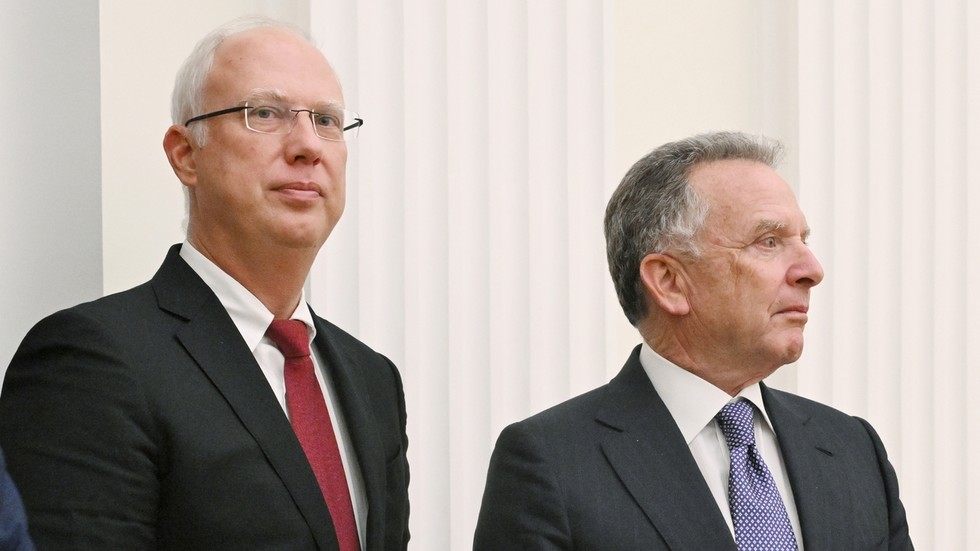
Kirill Dmitriev, the Russian presidential envoy for investment and head of the Russian Direct Investment Fund, held a meeting with US officials in Florida that both sides describe as focused on economic cooperation and the global energy market situation. The encounter reportedly involved prominent American figures including Steve Witkoff, Jared Kushner, and Josh Gruenbaum, and followed or paralleled broader talks between Russian and US envoys about the oil crisis linked to tensions involving Iran, the US, and Israel. Public accounts indicate the Florida talks addressed the role of Russian oil and gas in global economic stability, the impact of existing sanctions regimes, and possible cooperative projects, with Dmitriev later posting thanks on his X account and characterizing the discussions as productive.
Coverage also converges on the broader institutional and geopolitical context: Dmitriev is acting as a presidential envoy as well as RDIF CEO, and the discussions are framed within longstanding but strained Russia–US economic and energy ties. Both sides acknowledge that the talks occurred against a backdrop of global energy volatility, sanctions pressure on Russia, and US efforts to manage the fallout of conflict with Iran and its regional effects. There is agreement that the meeting fits into a pattern of high-level, informal or semi-official contacts aimed at exploring ways to stabilize markets and potentially recalibrate aspects of the bilateral economic relationship, without implying any formal treaty negotiations or immediate policy reversals.
Significance of the meeting. Government-aligned sources present the Florida talks as a meaningful step toward restoring Russia–US economic relations and easing global energy tensions, highlighting the seniority of the participants and Dmitriev’s gratitude for a “productive” discussion. Opposition sources, by contrast, tend to downplay the strategic weight of the encounter, portraying it as one of many unofficial or exploratory contacts that are unlikely to shift core US sanctions policy or fundamentally change the trajectory of bilateral relations.
Interpretation of US motives. Government coverage emphasizes that US officials are increasingly recognizing the indispensability of Russian oil and gas for global stability and the shortcomings of sanctions, implying a quiet recalibration in Washington. Opposition coverage typically frames US participation as pragmatic crisis management driven by short-term market pressures, arguing that any engagement does not equate to a principled reassessment of sanctions but rather a tactical effort to hedge against energy shocks.
** portrayal of sanctions and leverage.** Government-aligned outlets depict sanctions as largely ineffective and counterproductive, claiming the Florida meeting shows the US has been forced to engage Russia to stabilize energy markets, thereby affirming Moscow’s leverage. Opposition voices generally argue that sanctions remain a central and effective tool of Western pressure, contending that the talks underscore Russia’s vulnerability and desire for sanctions relief more than any real weakening of the Western position.
Prospects for future cooperation. In government narratives, the discussion of promising joint projects is treated as evidence that practical avenues for renewed cooperation are opening up, suggesting that economic logic will gradually push both sides toward a more constructive relationship. Opposition narratives tend to cast these same projects as speculative and politically fragile, stressing that domestic politics in the US and allied countries, as well as ongoing conflicts, will severely limit any tangible follow-through on such initiatives.
In summary, government coverage tends to frame the Florida meeting as a validation of Russia’s energy importance and a sign that US policymakers are reconsidering sanctions and seeking deeper economic engagement, while opposition coverage tends to depict it as a constrained, tactical contact that reflects Russia’s search for relief under persistent Western pressure rather than a genuine policy shift in Washington.