

government
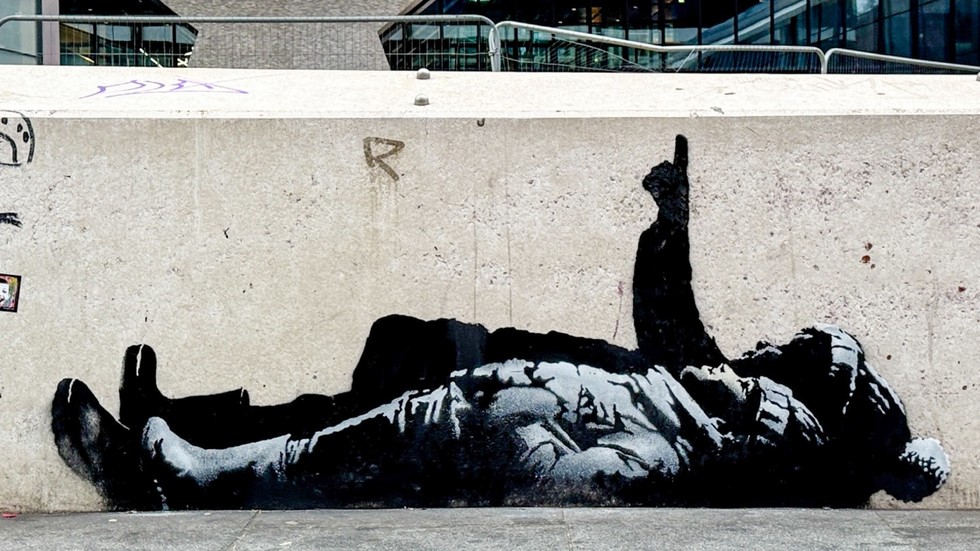
Banksy's Identity Uncovered
Reuters has claimed that it was able to establish the real name of iconic street artist Banksy
a month ago
Reports from government-aligned and international wire outlets describe a new investigation that claims to identify the anonymous street artist Banksy as a man now legally named David Jones, whose passport details, including birth date, match those long associated with earlier suspect Robin Gunningham. These accounts note that the probe relied on financial and travel records, especially trips linked to Banksy’s 2022 graffiti in Ukraine, and that Banksy’s lawyer sought to block publication on privacy and safety grounds, which the reporters rejected on public-interest grounds.
Across these reports, there is shared background that Banksy has operated for decades as an anonymous street artist with significant cultural and commercial influence, making his identity a recurring subject of speculation and prior investigations. Government-aligned coverage highlights supporting testimony from former manager Steve Lazarides, who says Banksy was born as Robin Gunningham and that he helped arrange a formal name change years ago, stressing both the futility of trying to unmask the artist and the longstanding efforts within Banksy’s circle to protect his personal privacy despite intense media scrutiny.
Legitimacy of unmasking. Government-aligned sources tend to frame the investigation as a serious piece of journalism that balances privacy concerns against the substantial public interest in a globally influential artist whose works affect property values, public space, and political discourse. In the absence of explicit opposition coverage, critics would be more likely to question whether such unmasking is ethically justified, arguing that the story veers toward voyeurism and undermines the artist’s chosen anonymity. Government-leaning narratives emphasize the procedural care and documentary evidence, while an opposition stance would emphasize consent and the right to privacy.
Public interest versus personal safety. Government-linked outlets stress Reuters’ argument that Banksy’s economic and cultural impact warrants disclosure, presenting safety concerns as weighed but ultimately outweighed by transparency. A hypothetical opposition view would foreground the lawyer’s warnings, suggesting that tying a legal name, passport, and travel patterns to a politically outspoken artist could expose him and associates to physical danger or legal harassment. Where official-leaning narratives treat risk as manageable and secondary, critics would likely argue it should be paramount.
Use of official and financial data. In government-aligned reporting, the use of financial records, travel data, and corroborating documents is portrayed as standard investigative practice that strengthens the case for identifying Banksy as David Jones/Robin Gunningham. An opposition framing would be more inclined to question how such data were accessed and whether this normalizes intrusive surveillance or data-mining of private individuals for entertainment value. Thus, one side emphasizes evidentiary rigor and institutional methods, while the other would stress civil-liberties implications and potential abuse of data.
Impact on artistic freedom. Pro-government narratives implicitly downplay any chilling effect, implying that revealing Banksy’s legal identity does not negate the power or message of his work and may even clarify legal responsibility for public interventions. An opposition stance would more likely argue that dismantling anonymity risks constraining subversive art by exposing artists to lawsuits, censorship, or state pressure, especially when their work is politically charged or created in sensitive locations like conflict zones. This contrast pits a focus on accountability and market transparency against a focus on preserving a protective veil around dissenting cultural voices.
In summary, government coverage tends to legitimize the investigation as a careful, evidence-based effort serving public interest and transparency, while opposition coverage tends to be imagined as more skeptical, stressing privacy, safety, and the potential chilling effect on anonymous political art.
