government
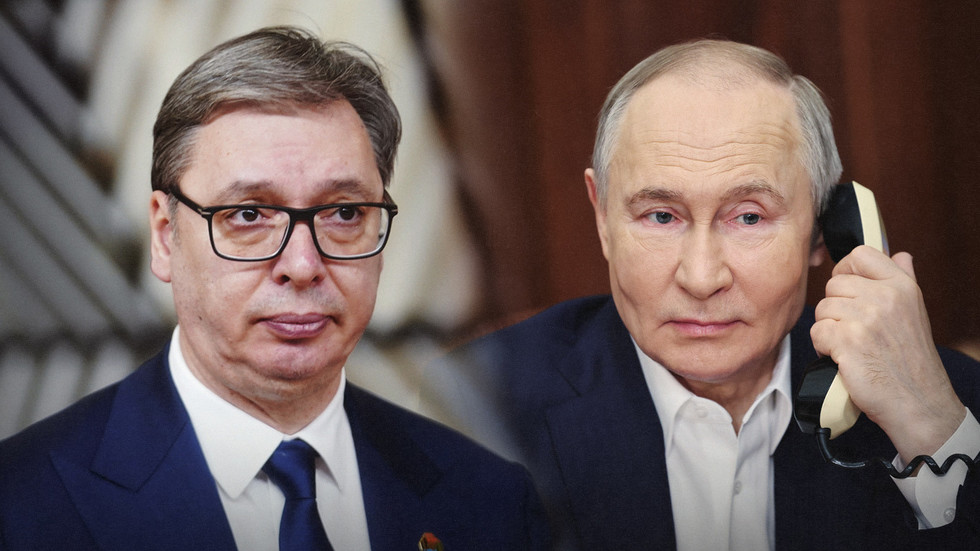
Putin discusses energy supplies with Serbia's Vucic
Serbian President Aleksandar Vucic has phoned Russian President Vladimir Putin to discuss energy supplies as oil and gas prices soar due to the Iran war
20 days ago
Russian and Serbian officials agree that Presidents Vladimir Putin and Aleksandar Vucic have reached a deal to extend Serbia’s natural gas supply contract with Russia for three months beyond its current expiration date at the end of March. Coverage concurs that the extension guarantees continued, stable deliveries of Russian gas to Serbia on what are described as favorable or preferential terms amid a broader period of heightened global energy prices. The agreement is framed as a short-term extension rather than a long-term overhaul of the contract, with both sides acknowledging it is intended to bridge the immediate period after March 31 while further negotiations continue.
Reports from all sides also agree that the talks occur against a backdrop of volatile international energy markets and geopolitical tension, with reference to war in the Middle East and wider energy insecurity. They note that the Kremlin, through spokesman Dmitry Peskov, publicly confirms ongoing contacts with Belgrade about the gas deal and stresses Russia’s readiness to keep supplying not only Serbia but also other global, including European, markets. Shared coverage highlights Serbia’s dependence on imported gas, the central role of bilateral presidential diplomacy in securing the extension, and broader concerns in Europe about oil and gas supplies and pricing.
Significance and framing of the deal. Government-aligned outlets present the three-month extension as a diplomatic success for Vucic and a reassurance that Serbia will have secure, affordable energy through a turbulent period. They emphasize continuity, stability, and friendly ties with Moscow, downplaying any sense of vulnerability or overreliance. Opposition-oriented narratives, by contrast, are likely to depict the short duration as evidence of uncertainty and Serbia’s limited bargaining power, framing the agreement as a stopgap that underscores rather than resolves the country’s strategic dependence on Russian gas.
Geopolitical positioning. Government coverage highlights Serbia’s pragmatic pursuit of national interests, portraying cooperation with Russia as compatible with broader engagement with Europe and other suppliers. It stresses that Belgrade is keeping options open and that Vucic is responsibly navigating between competing energy blocs. Opposition voices are more inclined to warn that deepening energy ties with Russia could isolate Serbia from the EU, complicate alignment with European energy and sanctions policy, and entrench the country in Moscow’s geopolitical orbit at a sensitive moment.
Economic impact and risk. Pro-government media tend to stress the "favorable" or preferential price terms, presenting the extension as cushioning Serbian households and industry from global price shocks and as proof that Russia remains a reliable partner despite market turbulence. Opposition commentators are more likely to question whether the exact terms are as advantageous as portrayed, draw attention to price opacity, and argue that reliance on a single supplier heightens long-term risk for consumers and the economy. They may also contend that the short-term fix delays needed investment in diversification, interconnectors, and renewables.
Future energy strategy. Government narratives frame the extension as a bridge toward a balanced energy strategy in which Serbia will both preserve beneficial ties with Russia and gradually broaden its supply base, often invoking Vucic’s calls for Europe to negotiate with multiple suppliers. Opposition perspectives tend to interpret the move as a sign that structural reforms and diversification have been too slow, leaving the country reactive rather than strategic. They may argue that each new temporary deal with Moscow makes it politically harder to pivot decisively toward EU-oriented energy integration and alternative sources.
In summary, government coverage tends to depict the gas extension as a prudent, stabilizing achievement that protects Serbia’s interests amid global turmoil, while opposition coverage tends to cast it as a short-term patch that deepens strategic dependence on Russia and delays more fundamental energy diversification.