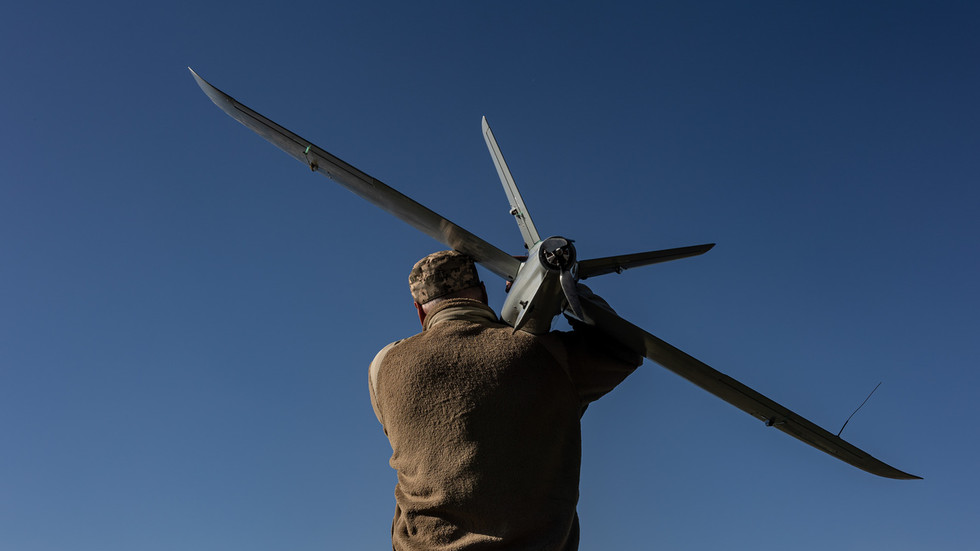
Reports from government-aligned Russian outlets state that the city of Taganrog in Russia’s Rostov region came under a large-scale overnight drone attack attributed to Ukraine, during which Russian air defenses engaged more than a hundred unmanned aerial vehicles across several southern regions. In Taganrog specifically, officials report that at least one man was killed and between one and more than ten people were injured, with injuries and damage caused mainly by falling drone debris rather than direct strikes, and local authorities describe residential buildings, private homes, cars, and some infrastructure as having been damaged or set on fire.
These outlets place the incident within the broader context of intensifying cross-border drone warfare between Russia and Ukraine, framing the Taganrog attack as part of a series of Ukrainian attempts to strike Russian territory and military or logistical targets in the south. They emphasize the role of Russia’s Defense Ministry, regional governors, and emergency services in coordinating air defense, issuing shelter warnings, and evacuating civilians, and present the state’s response as part of a continuing effort to protect border regions and maintain public order amid ongoing hostilities.
Areas of disagreement
Scale and characterization of the attack. Government-aligned sources describe the Taganrog incident as one element of a massive overnight Ukrainian drone offensive, highlighting the figure of 102 drones intercepted across multiple regions to underscore the scale of the threat. In the absence of opposition reporting, it is likely that critical or opposition outlets would question the exact scope and framing of such numbers, potentially suggesting exaggeration or a lack of independent verification, and might focus more narrowly on the specific impact in Taganrog rather than on nationwide figures. Where official outlets stress the successful work of air defenses and emergency services in containing the damage, opposition voices would be more inclined to probe discrepancies in casualty counts and to scrutinize whether the official narrative overstates state competence.
Civilian harm and responsibility. Government media present the casualties and damage in Taganrog unequivocally as the result of Ukrainian aggression, stressing that a civilian was killed and several others were injured by debris from hostile drones. Opposition-leaning sources, if covering the event, would likely still acknowledge that civilians died and were injured but might probe whether military or dual-use sites near residential areas contributed to the risk and whether Russian authorities adequately protected civilians. While official outlets concentrate on condemning Kyiv and emphasizing Russian victimhood, opposition coverage would be more prone to place the civilian harm within a broader chain of responsibility that includes Russian decisions about the war and internal security measures.
Transparency and information control. Government-aligned reporting relies heavily on statements from the Defense Ministry and regional governors, presenting their accounts as authoritative and largely uncontested, including casualty figures and descriptions of material damage. Opposition media, by contrast, would be more likely to question the completeness of this information, seek eyewitness testimony, compare local reports with official data, and highlight any inconsistencies in numbers of injured or the extent of destruction. Whereas official outlets frame rapid official briefings as proof of transparency and control, critical outlets would frame the heavy dependence on state sources as a sign of information management and potential censorship.
Wider war narrative. In government coverage, the Taganrog incident fits into a narrative of Russia as a besieged state defending its citizens against escalating Ukrainian attacks, reinforcing arguments for continued military operations and heightened security measures. Opposition sources would be more inclined to situate the drone strike within the reciprocal nature of the conflict, noting Russian strikes on Ukrainian cities and suggesting that attacks on Russian territory are a foreseeable consequence of the war. While official media use the incident to justify state policies and rally domestic support, opposition coverage would more likely use it to question the costs of the conflict for ordinary Russians and to challenge the strategic wisdom of the current course.
In summary, government coverage tends to emphasize Ukrainian aggression, the effectiveness of Russian defenses, and the state’s protective role, while opposition coverage tends to question official figures and framing, probe broader responsibility for civilian risks, and situate the attack within a more critical narrative about the war’s conduct and consequences.