government
Russia ready to do everything to stabilize situation in Middle East
The situation in the region is of universal concern, the Russian leader said
25 days ago
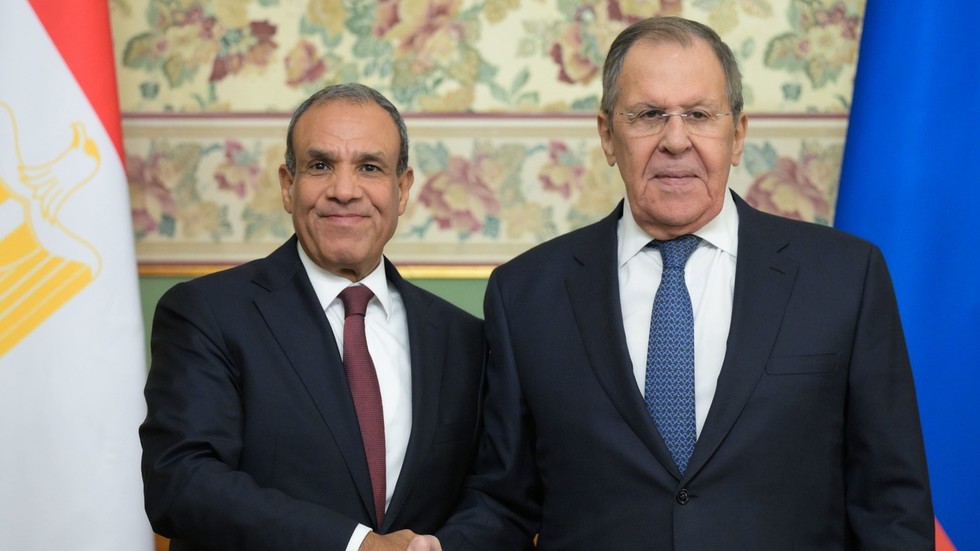
Russian and Egyptian sources agree that Russian President Vladimir Putin held a meeting with Egyptian Foreign Minister Badr Abdelatty in Moscow, at the Kremlin, during Abdelatty’s working visit. Both sides concur that the talks involved senior Russian officials including Foreign Minister Sergey Lavrov and presidential aide Yury Ushakov, and that they covered bilateral relations and regional issues in the Middle East, particularly current conflicts and the need for de-escalation. They also confirm that trade and economic cooperation, especially Russian grain and energy supplies to Egypt, were central, with discussion of creating a logistics or hub structure in Egypt for Russian grain and petroleum products and reference to bilateral trade volumes exceeding $10 billion.
There is shared acknowledgment that Russia and Egypt describe their relationship as a “strategic partnership” spanning economic, political, security, and energy dimensions, and that both governments publicly advocate negotiated political solutions and an immediate cessation of hostilities in ongoing Middle East conflicts, including those involving Iran and Palestine. Both sides present Egypt as a key regional actor and mediator, especially in channels between the United States and Iran, and emphasize a common interest in regional stability, conflict de-escalation, and the prevention of broader war in the Middle East.
Framing of Russia’s role in the Middle East. Government-aligned coverage portrays Russia as a stabilizing power ready to “do everything” to restore order in the Middle East and working in close strategic concert with Egypt. Opposition outlets are more likely to question this self-image, highlighting how Russia’s regional military engagements and alignment with certain actors may deepen tensions rather than ease them. While government narratives stress constructive diplomacy and peace-brokering, opposition narratives tend to emphasize power projection, arms sales, and geopolitical leverage as Moscow’s primary drivers.
Economic cooperation and grain supplies. Government sources frame the discussion of grain and energy hubs in Egypt as evidence of Russia’s reliability as a supplier and benefactor, underscoring strong harvests, generous offers, and mutually beneficial trade exceeding $10 billion. Opposition voices typically probe the asymmetry in this relationship, suggesting that dependence on Russian grain and energy can make Egypt vulnerable to Russian political pressure and international sanctions dynamics. Where government coverage highlights opportunity, resilience, and South-South partnership, opposition coverage stresses exposure to risk, over-concentration of suppliers, and the potential for economic leverage to translate into political influence.
Narrative on regional conflicts and blame. Government media emphasize shared Russian–Egyptian calls for ceasefires, negotiated settlements, and the need to address the “forgotten” Palestinian issue, often accusing unnamed Western or regional actors of trying to sabotage talks with Iran or weaponize UN resolutions such as those regarding the Strait of Hormuz. Opposition outlets are more inclined to scrutinize this line, arguing that Moscow instrumentalizes such rhetoric to weaken Western influence and to justify closer ties with Iran, while downplaying its own contributions to militarization and escalation. Thus, government sources foreground external spoilers and Western double standards, whereas opposition narratives highlight Russia’s partiality and strategic use of conflict narratives.
Link to the Ukraine war. Government-aligned coverage treats Lavrov’s briefing to Abdelatty on the “special military operation” in Ukraine as a normal element of strategic consultations, presenting it as transparent information-sharing between partners and sometimes as a way to counter Western “disinformation.” Opposition media, however, tend to view the insertion of the Ukraine issue into Middle East diplomacy as evidence that Russia uses every platform to legitimize its actions in Ukraine and recruit sympathetic states or at least neutral ones. Where government outlets stress mutual understanding and coordination across theaters, opposition outlets underscore reputational costs for Egypt and question whether alignment with Russia’s Ukraine narrative could complicate Cairo’s relations with Western partners.
In summary, government coverage tends to depict the Putin–Abdelatty meeting as a harmonious strategic dialogue that enhances regional stability, economic opportunity, and principled diplomacy, while opposition coverage tends to question Russia’s stabilizing claims, highlight asymmetries and risks in the partnership, and frame the encounter as part of Moscow’s broader effort to expand geopolitical influence and legitimize its positions on other conflicts such as Ukraine.