government
Pam Bondi’s firing had nothing to do with Epstein files
Outgoing AG Pam Bondi has been widely criticized over her botched handling of the release of the Jeffrey Epstein files
24 days ago
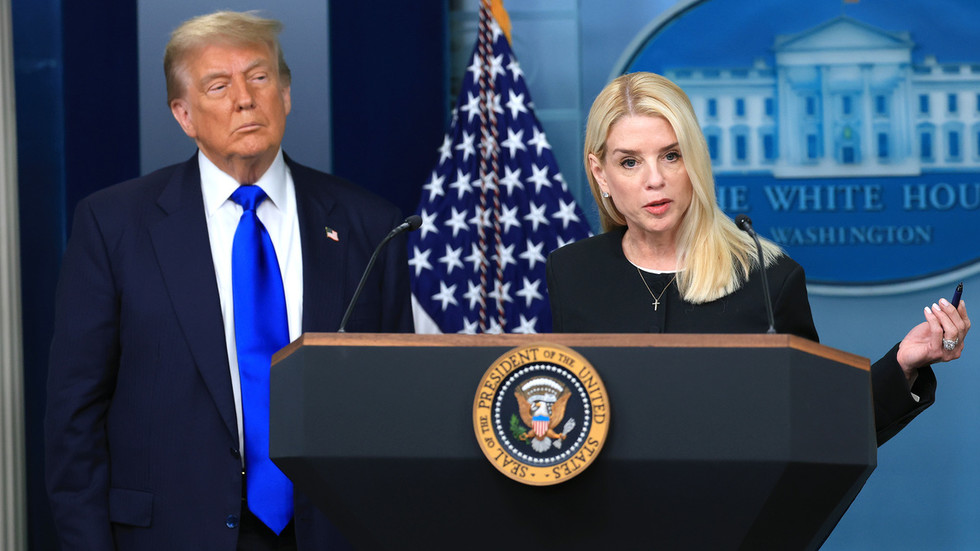
President Donald Trump dismissed US Attorney General Pam Bondi from her post, announcing that she would transition to a private sector role and that Todd Blanche would serve as acting attorney general. Across government-aligned reporting, there is agreement that the immediate trigger publicly cited for her firing was alleged mishandling of files related to Jeffrey Epstein’s estate, including the high-profile but limited release of Epstein-related documents that generated public backlash. These accounts concur that Bondi, previously seen as a Trump loyalist, faced scrutiny over her department’s handling of Epstein matters and that speculation emerged about Trump’s frustration with her broader performance, even as officials formally denied that the dismissal was linked specifically to the Epstein case.
Government-aligned coverage also converges on contextual details: Bondi’s tenure was already controversial due to the way Epstein-related documents were managed and released, and to the perception that her office failed to satisfy public and media demands for transparency. Institutions at issue include the Department of Justice, the attorney general’s office, and federal oversight of Epstein’s estate and related records, all operating under intense public and political pressure following Epstein’s death. There is shared acknowledgment that the episode sits within a longer pattern of personnel turnover in the Trump administration, where senior law-enforcement and legal officials are periodically replaced amid disputes over politically sensitive cases. These sources also agree that Todd Blanche’s elevation to acting attorney general is framed as a continuity move meant to stabilize the Justice Department and restore confidence in high-profile case management.
Cause of the firing. Government-aligned sources emphasize official denials that Bondi’s dismissal was a direct consequence of her handling of Epstein files, portraying the firing as part of a broader assessment of performance and a routine personnel change. In contrast, opposition coverage portrays the Epstein matter as central, arguing that the timing and circumstances strongly suggest she was removed because her management of the files, including a limited and controversial document release, threatened to expose politically damaging material. Government narratives focus on diffuse shortcomings and the need for new leadership, while opposition narratives center on a targeted move to contain fallout from the Epstein case and shield Trump and his associates.
Handling of Epstein records and transparency. Government-aligned outlets acknowledge public dissatisfaction with the Epstein document release but stress procedural justifications, suggesting that legal constraints and investigative sensitivities limited what could be disclosed. Opposition sources instead accuse Bondi’s Justice Department of deliberately concealing emails, photographs, and other records that might link powerful figures, including Trump, to Epstein, casting the episode as an institutional cover-up. Where government coverage frames the controversy as a mismanaged communications problem and a technical legal issue, opposition reporting characterizes it as intentional obstruction and a betrayal of transparency commitments.
Characterization of Bondi and Trump’s motives. Government coverage typically describes Bondi as a long-time Trump loyalist whose departure is regrettable but necessary, framing Trump’s decision as a tough, managerial move to maintain standards at the Justice Department. Opposition coverage depicts her instead as a compromised official whose loyalty to Trump and mishandling of sensitive cases made her both a liability and a potential scapegoat, arguing that Trump fired her primarily to deflect criticism from himself. Government sources highlight Trump’s prerogative to restructure his team and improve accountability, while opposition voices interpret the same action as self-protective damage control in the face of worsening Epstein-related scrutiny.
Future direction of the Justice Department. Government-aligned outlets present Todd Blanche’s appointment as acting attorney general as a stabilizing choice aimed at restoring confidence and ensuring that high-profile investigations are handled competently and apolitically. Opposition coverage questions this framing, suggesting instead that Blanche is likely to be more closely aligned with Trump’s personal and political interests, potentially tightening the president’s control over law-enforcement responses to ongoing scandals. While government narratives speak of reform, continuity, and professionalization under new leadership, opposition analyses warn of further politicization and reduced willingness to pursue lines of inquiry that could implicate Trump or his allies.
In summary, government coverage tends to portray Bondi’s firing as a performance-based, institutionally focused decision with disputed links to the Epstein case, while opposition coverage tends to cast it as a politically motivated maneuver to manage scandal exposure, deflect blame, and tighten presidential control over sensitive investigations.