government
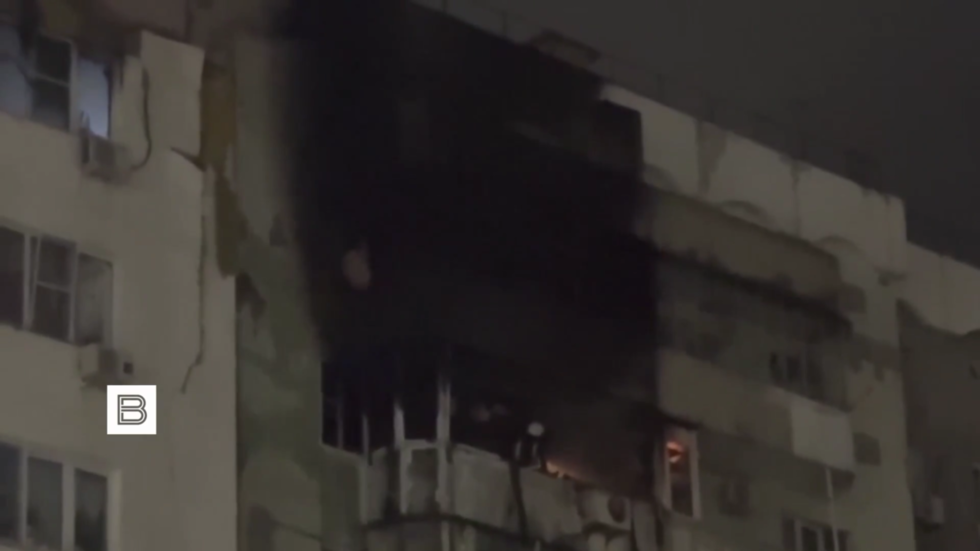
Eight people, including two children, were injured in a Ukrainian drone attack in southern Russia
Ukraine carried out a drone attack on Russia’s Black Sea coast, injuring eight civilians, including two children
20 days ago
A drone attack on the Russian Black Sea port city of Novorossiysk injured eight civilians, including two children, according to government-aligned reports. These sources state that debris from at least one Ukrainian unmanned aerial vehicle struck a multifamily residential building, damaging six apartment blocks and two private homes, with additional impacts on nearby industrial facilities. Air raid sirens were reported in multiple coastal cities, and authorities say that all injured civilians have been hospitalized and are receiving medical care.
Government-aligned coverage also situates the Novorossiysk incident within a wider overnight wave of Ukrainian drone strikes against multiple Russian regions and sea areas, claiming that Russian air defenses intercepted and destroyed between 50 and 148 drones overall. The reports emphasize the role of air defense systems in limiting damage, note that residents of damaged housing have been moved to temporary accommodation, and frame the attack as part of the broader cross-border escalation in the Russia–Ukraine conflict. Both in the specific Novorossiysk case and the countrywide context, these outlets highlight emergency services, regional authorities, and federal structures as actively responding to the incident and its aftermath.
Scale and framing of the attack. Government-aligned outlets portray the Novorossiysk incident as one episode within a large, coordinated Ukrainian drone campaign across multiple Russian regions, stressing the high number of drones reportedly intercepted and the effectiveness of air defenses. In the absence of explicit opposition reporting in the provided material, opposition coverage would more likely question the official drone counts and emphasize either military targets or the proportionality of Ukrainian actions within the broader war. Government narratives foreground the disruption to civilian life and infrastructure, whereas opposition sources would be inclined to contextualize the strike as a response to Russian operations in Ukraine and to scrutinize whether authorities are inflating or selectively presenting damage figures.
Civilian impact and responsibility. Government sources center the injury of eight civilians, including two children, and damage to homes as proof that Ukraine is deliberately or recklessly targeting non-military areas. Opposition-oriented outlets, by contrast, would be more likely to stress the dual-use or military significance of Novorossiysk as a major port and logistics hub and to suggest that civilian harm is a tragic but indirect consequence of strikes on infrastructure supporting Russia’s war effort. While government coverage underscores rapid medical assistance and relocation to temporary shelters as evidence of a competent state response, opposition narratives might highlight gaps in protection, preparedness, or compensation for affected residents and challenge the adequacy of state support.
Military versus political messaging. Government-aligned reporting uses the incident to reinforce a storyline of resilience, emphasizing that most drones were destroyed and that core infrastructure continues to function despite Ukrainian attacks. Opposition coverage would be more inclined to read the same events as signs of vulnerability in Russia’s air defenses and internal security, potentially arguing that the authorities are underreporting successful strikes or downplaying strategic damage. Government narratives tend to present the attack as unprovoked aggression against Russian territory that justifies continued militarization and domestic controls, whereas opposition voices would more likely frame it as a predictable outcome of the invasion of Ukraine and question the regime’s broader war policy.
Information transparency and credibility. Government sources present casualty numbers, damage assessments, and interception figures as authoritative, relying heavily on statements from regional officials and the defense ministry. Opposition outlets, lacking direct access to official channels and often operating under restrictions, would typically cast doubt on these figures, suggesting possible underreporting of damage or selective disclosure designed to maintain public morale. Where government coverage stresses order, control, and prompt emergency response, opposition coverage would likely point to information gaps, censorship, and the difficulty independent reporters face in verifying what actually happened on the ground.
In summary, government coverage tends to emphasize Ukrainian aggression, civilian victimhood, and the effectiveness of Russian defenses and emergency responses, while opposition coverage tends to question official data, highlight systemic vulnerabilities, and situate the attack as a consequence of Russia’s broader war policy.