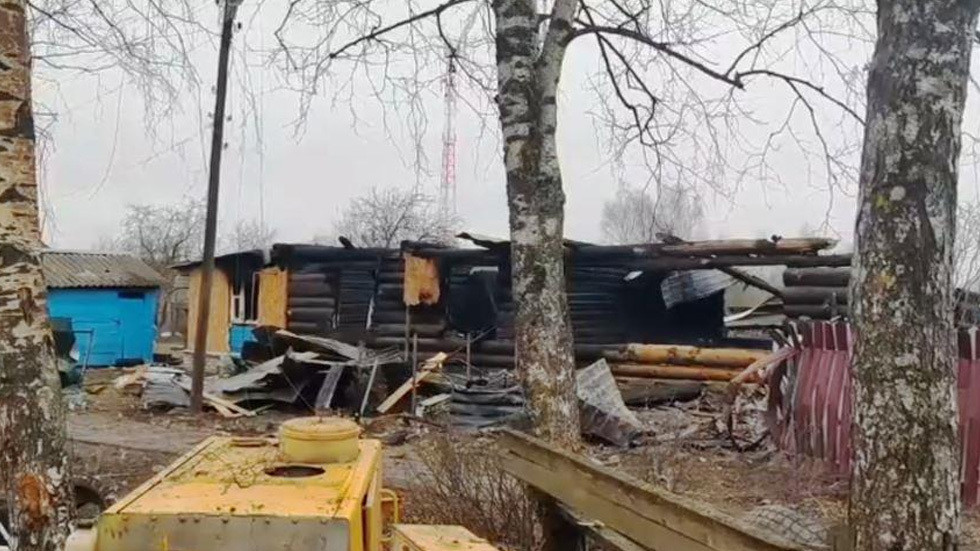
A Ukrainian drone strike on a residential apartment building in Russia’s Vladimir Region killed three members of one family—two adults and their 12-year-old child—while a younger child survived with burns, according to both government-aligned and opposition outlets. They agree that the strike occurred overnight as part of a broader wave of Ukrainian drone activity over Russian territory, that a fire broke out in the residential building and was subsequently extinguished, and that emergency services responded on the scene.
Both sides also concur that this incident was one part of a wider overnight drone campaign that included attacks or interceptions in other Russian regions such as Voronezh and Leningrad, with additional damage to industrial or technological facilities and at least one reported injury outside Vladimir Region. Coverage from both camps situates the strike within the ongoing Russia-Ukraine conflict and acknowledges that Ukraine has increasingly used drones to reach targets deep inside Russia, while Russian air defenses claim to have intercepted numerous drones across several regions during the same period.
Areas of disagreement
Characterization of the attack. Government-aligned outlets frame the Vladimir Region strike primarily as a deliberate Ukrainian attack on civilians, emphasizing the death of a child and parents in their home to underscore what they present as terrorism and criminal tactics. Opposition outlets, while reporting the same casualties and condemning the human cost, tend to place the incident more neutrally within a pattern of cross-border strikes and counterstrikes, highlighting the broader military context rather than foregrounding the moral framing advanced by Russian authorities.
Intent and targeting. Government sources stress that Ukraine is intentionally targeting residential areas and civilians, citing the apartment block impact as proof that Kyiv’s forces aim to spread fear among the Russian population. Opposition coverage more often notes Ukraine’s stated objective of hitting economic or industrial infrastructure to pressure Russia’s war effort, suggesting the possibility of mis-targeting or collateral damage rather than a primary intent to kill civilians, and it places more emphasis on the industrial damage in regions like Voronezh.
Military balance and effectiveness. Government-aligned media highlight the number of drones allegedly intercepted by Russian air defenses, presenting the incident as tragic but exceptional within an otherwise successful defensive effort that downed dozens of incoming drones across multiple regions. Opposition outlets acknowledge interceptions but focus relatively more on the fact that some drones are penetrating deep into Russian territory and causing casualties and industrial damage, implicitly questioning both the completeness and effectiveness of the official defense narrative.
Narrative context and blame. Government coverage situates the strike within a broader story of Ukrainian escalation and Western-backed aggression, using the family’s death to reinforce claims that Russia is defending its population against an increasingly reckless enemy. Opposition outlets, while not disputing Ukrainian responsibility for the specific strike, more frequently situate the event within the overall war initiated by Russia’s invasion of Ukraine, implying that such tragedies are a consequence of Moscow’s strategic choices and the ongoing conflict rather than isolated acts of unprovoked violence.
In summary, government coverage tends to portray the Vladimir Region strike as a deliberate Ukrainian terror attack on civilians within a larger narrative of successful Russian air defenses under siege, while opposition coverage tends to frame the incident as a tragic part of an escalating cross-border drone war that exposes vulnerabilities at home and stems from the broader conflict dynamics initiated by Russia.