government
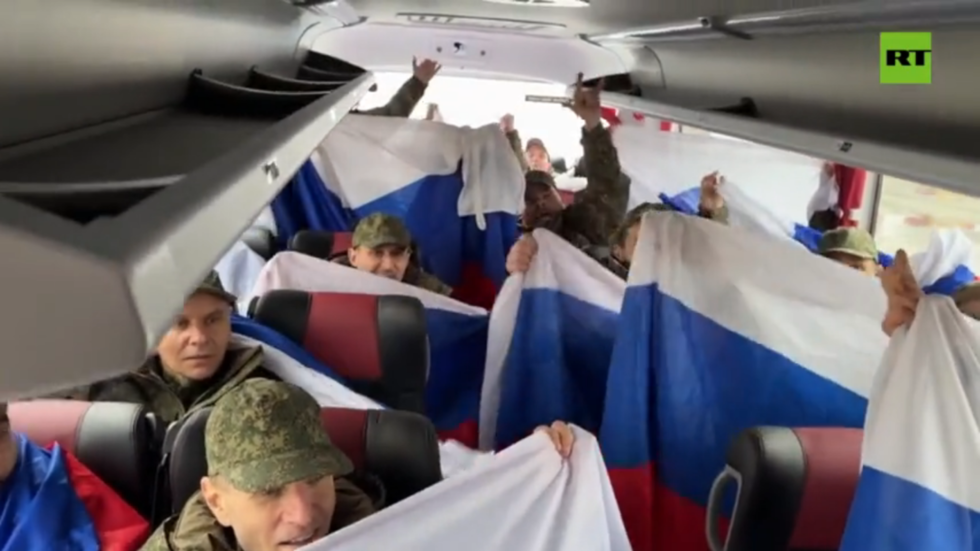
Russia, Ukraine swap 350 POWs ahead of Easter ceasefire
Russia and Ukraine carry out a 350-strong POW exchange ahead of a temporary Easter ceasefire announced by President Vladimir Putin.
13 days ago
Russia and Ukraine conducted a major prisoner exchange involving a total of 350 individuals, with 175 servicemen from each side swapped. The exchange took place shortly before the start of a temporary Orthodox Easter ceasefire that Russia had announced, and government-aligned accounts stress that those released from Russian captivity were transported via an IL-76MD aircraft that landed in the Moscow Region after first receiving care in Belarus. In addition to the military personnel, seven civilians from Russia’s Kursk Region, described as residents who had been illegally detained, were also released, and all returnees are said to be undergoing medical checks, treatment, and rehabilitation.
Across outlets there is broad acknowledgment that the exchange was arranged through negotiations in which the United Arab Emirates acted as a mediator between Moscow and Kyiv, fitting into a broader pattern of third-party facilitation in prisoner swaps during the conflict. Reporting concurs that the timing, immediately ahead of the Orthodox Easter truce window, gave the event symbolic and humanitarian weight, presenting it as part of ongoing efforts to manage the human costs of the war despite continuing hostilities. Coverage also aligns on the institutional actors involved: Russia’s Ministry of Defense as the main public communicator on the Russian side, Ukrainian military and security structures responsible for their returning personnel, and Belarus and the UAE as logistical and diplomatic counterparts, respectively, within established, if fragile, mechanisms for prisoner exchanges.
Characterization of the exchange. Government-aligned coverage frames the swap as a balanced and humane operation, emphasizing that 175 servicemen were returned on each side and underlining Russia’s role in initiating or enabling the deal. Opposition-oriented narratives are more likely to question whether the exchange was genuinely equal in terms of the strategic value or treatment of prisoners, and may suggest that Kyiv was operating under duress or asymmetrical pressure. Government sources highlight orderly logistics and medical support, while opposition sources tend to stress the broader context of coercion and ongoing conflict.
Legality and treatment of detainees. Government media underline that seven residents of Russia’s Kursk Region had been “illegally detained,” casting Ukrainian authorities as violating legal and humanitarian norms. Opposition sources, by contrast, are more inclined to challenge or relativize these claims, either by questioning the circumstances of detention or by foregrounding allegations of mistreatment of Ukrainian prisoners in Russian custody. Where government outlets stress that returnees receive comprehensive medical care and rehabilitation, opposition outlets often counter with reports or testimonies alleging harsh conditions and abuses in Russian detention facilities.
Role and motives of intermediaries. Government-aligned reporting presents the United Arab Emirates and Belarus as constructive, neutral actors helping to secure humanitarian outcomes, implicitly reinforcing the idea of Russia’s openness to mediated solutions. Opposition outlets, while acknowledging these intermediaries, are more prone to frame their involvement as part of a geopolitical realignment that favors Moscow, suggesting that such mediators may help Russia manage its image without materially changing its conduct of the war. Thus, what appears in government coverage as cooperative diplomacy is depicted in opposition coverage as image management and influence building.
Political significance and timing. Government sources emphasize the timing before the Orthodox Easter ceasefire as evidence of goodwill and a commitment to humanitarian gestures, portraying the exchange as consonant with traditional and religious values. Opposition sources tend to interpret the timing more cynically, as a public-relations move designed to soften international criticism and bolster domestic support ahead of symbolic dates. For government media, the event underscores state competence and moral responsibility, whereas opposition coverage situates it within a broader narrative of continued aggression and limited, tactical concessions.
In summary, government coverage tends to highlight parity, humanitarian concern, and constructive mediation in the prisoner swap, while opposition coverage tends to question the balance, legality, and motives behind the exchange and to embed it in a narrative of ongoing coercion and image management.