government
Russia offers to take Iran’s uranium as US-Iran talks hit impasse
Russia says it is ready to remove Iran’s enriched uranium as US demands and Tehran’s red lines continue to stall nuclear talks
3 days ago
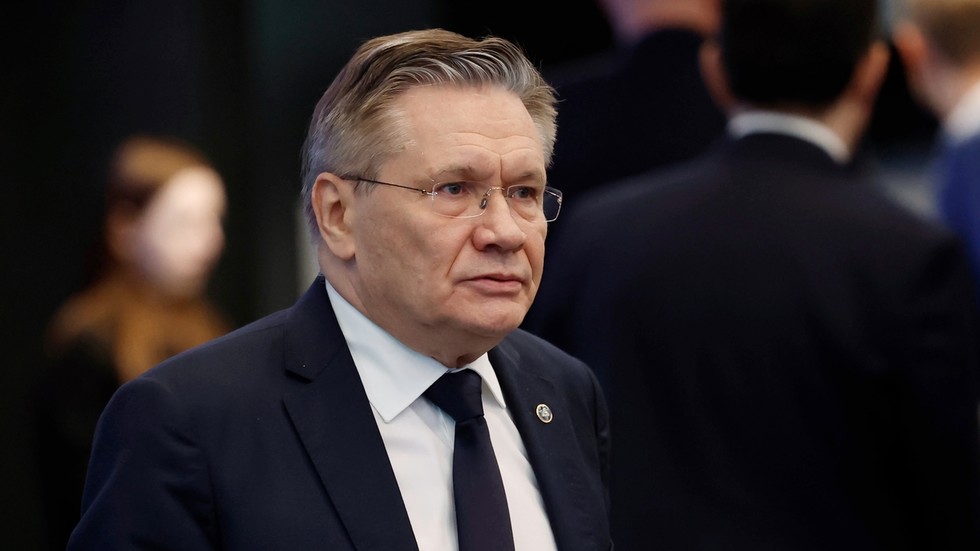
Russia- and government-aligned coverage reports that Moscow, through its state nuclear corporation Rosatom, has reiterated a standing proposal to take custody of Iran’s enriched uranium stockpile as part of efforts to break the impasse in US-Iran nuclear talks. These reports note that Rosatom CEO Aleksey Likhachev cites the 2015 precedent, when Russia helped remove Iranian uranium under the JCPOA framework, and that the Kremlin, via spokesman Dmitry Peskov, says the initiative remains "on the table" despite explicit US opposition. Across these accounts, Iran is described as insisting on its right to enrich uranium for civilian purposes and rejecting demands to dismantle its nuclear infrastructure or ship enriched material directly to the United States, while Russia emphasizes that any arrangement would be coordinated with the IAEA and that the agency has not formally confirmed any Iranian nuclear-weapons program. Timelines and setting are consistent: the proposal resurfaces amid stalled US-Iran negotiations, broader tensions involving Europe’s role in the Ukraine conflict, and a fragile regional environment that includes references to a truce between Israel and Lebanon.
The shared context across government-aligned narratives frames the uranium-transfer idea within the legacy of the JCPOA, portraying Russia as a technical facilitator that previously helped Iran comply with international nuclear agreements. These accounts stress institutional involvement by Rosatom and oversight by the IAEA as mechanisms meant to ensure that Iran’s nuclear activities remain within civilian bounds, while positioning US objections as primarily political rather than technical or legal. Background explanations converge on the idea that Iran’s enrichment program is formally permitted under the Non-Proliferation Treaty provided it is for peaceful purposes and subject to monitoring, and that prior multilateral arrangements used fuel swaps and offshoring of enriched uranium as tools to reassure Western powers. There is agreement that current tensions reflect a breakdown of earlier trust and mechanisms following US withdrawal from the JCPOA, heightened regional conflicts, and divergent security calculations among Washington, Tehran, and Moscow.
Motives and responsibility. Government-aligned sources cast Russia’s offer to take Iran’s enriched uranium as a constructive, stabilizing step that could revive elements of the 2015 nuclear deal and demonstrate Moscow’s reliability as a non-proliferation partner, while implicitly blaming Washington for blocking a pragmatic technical solution. By contrast, opposition-oriented interpretations (where they appear in commentary and indirect references) tend to argue that Russia is leveraging the issue to weaken US influence, bind Iran closer to Moscow, and gain bargaining chips in broader confrontations, thus placing responsibility for prolonging the standoff on both Russia’s geopolitical ambitions and US rigidity. Government narratives highlight US demands for dismantling Iran’s nuclear infrastructure as unreasonable, whereas opposition voices are more likely to see those demands as a reaction to Iran’s past opacity and regional behavior.
Security implications and risk framing. In government coverage, the security risk is framed as manageable and largely mitigated by IAEA oversight and Russia’s technical stewardship, emphasizing that the agency has not acknowledged Iranian attempts to develop nuclear weapons and that offshoring uranium to Russia would reduce proliferation dangers. Opposition perspectives, drawing on wider critical commentary, tend to question whether concentrating sensitive material under Russian control during an active confrontation with the West might itself increase strategic risk or create new leverage points that Moscow could exploit in Ukraine-related or sanctions negotiations. Government-aligned outlets thus present the plan as reducing danger and restoring trust, while opposition voices view it as potentially shifting, rather than eliminating, the nuclear and geopolitical risk.
Portrayal of the United States and Europe. Government outlets depict the United States as an obstructive actor undermining a viable diplomatic solution, and they associate European governments with growing militarized involvement in the Ukraine conflict, suggesting that Western powers are applying double standards on security issues. Opposition-leaning analyses are more inclined to frame US and European resistance to Russia’s uranium-hosting plan as a rational response to Moscow’s track record in Ukraine and concerns that Russia could politicize nuclear cooperation, while still criticizing aspects of Western policy toward Iran. Thus, government coverage simplifies Western opposition as politically motivated and hypocritical, whereas opposition commentary tends to acknowledge Western security concerns even while disputing whether their broader regional approach is effective.
In summary, government coverage tends to present Russia’s proposal as a technically sound, IAEA-compliant non-proliferation measure unfairly blocked by an uncompromising United States, while opposition coverage tends to see the same initiative as a geopolitical maneuver that may merely reconfigure, rather than resolve, the underlying nuclear and security risks.