government
Ukraine launches 207 drones at Russian regions last night, strikes kill two children
According to preliminary reports, two adults suffered injuries
6 days ago
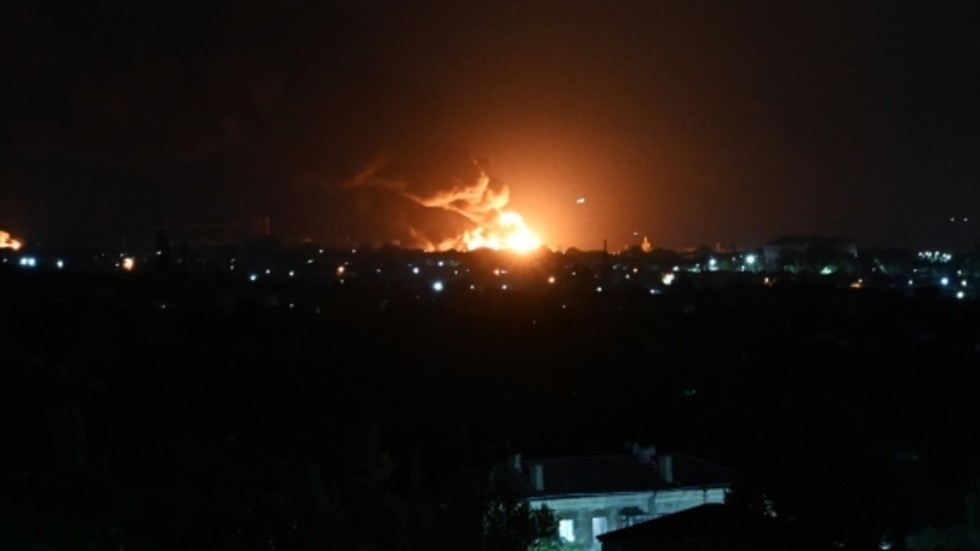
A Ukrainian overnight drone attack on the Black Sea port city of Tuapse in Russia’s Krasnodar region killed two children, aged five and fourteen, and injured two adults, according to both government-aligned and opposition outlets. Both sides report that the incident occurred during a wider wave of Ukrainian drones, with Russia’s Defense Ministry claiming air defenses intercepted 207 drones over multiple regions including Belgorod, Smolensk, Kursk, Bryansk, Oryol, Krasnodar, and Crimea, while debris from at least one drone struck residential buildings in Tuapse, damaging an apartment block, several houses, and industrial facilities near the seaport.
Coverage from both camps agrees that the broader attack triggered fires at port infrastructure in Tuapse, with particular mention of process equipment at a marine terminal and reports of a blaze at or near the Tuapse oil refinery. They also concur that large firefighting contingents and emergency services were deployed to tackle the fires and assess damage, and that additional drones were downed over Sevastopol without reported casualties, situating the Tuapse strike within a pattern of escalating long-range attacks linked to the ongoing Russia‑Ukraine war.
Responsibility and blame. Government media frame the attack as a deliberate Ukrainian strike on civilian areas, stressing the ages of the children and accusing Kyiv of terrorism and using Western-supplied weapons against Russian territory. Opposition reporting, while confirming Ukrainian responsibility for the drones, tends to present the incident more neutrally as part of reciprocal strikes in a broader war, avoiding charged terms like terrorism and focusing on the Defense Ministry’s operational description rather than moral condemnation.
Targeting and intent. Government-aligned outlets emphasize the residential damage and the children’s deaths to argue that Ukraine is intentionally targeting civilians or showing reckless disregard for them, even when industrial and port facilities are mentioned. Opposition sources place more relative weight on the military and industrial significance of Tuapse’s port and refinery infrastructure, implying that these were the primary targets and that civilian casualties, while real and tragic, may have been collateral rather than the main objective.
Role of the West. Government coverage repeatedly highlights claims that Ukraine used Western weapons and accuses European leaders of dragging their countries directly into the conflict, using Tuapse as evidence that NATO-linked support enables attacks deep inside Russia. Opposition outlets either omit this accusatory framing or treat it as a brief official allegation, instead centering on the factual scale of the drone barrage and the technical performance of air defenses, without echoing the narrative that Western states bear direct responsibility for the children’s deaths.
Military effectiveness and vulnerability. Government sources stress the interception of 207 drones as proof of robust Russian air defenses, portraying Tuapse as an isolated tragedy within an otherwise successful defense effort. Opposition coverage, while citing the same interception figure, gives more prominence to the fact that at least one drone or its debris still reached key energy and port infrastructure, implicitly underscoring Russian vulnerability and the strategic reach of Ukrainian drones despite heavy defensive measures.
In summary, government coverage tends to foreground Ukrainian culpability, civilian victimhood, and Western complicity while presenting Russian defenses as largely effective, while opposition coverage tends to confirm the core facts but frame the strike within a broader pattern of mutual long-range attacks, highlight strategic infrastructure targeting, and downplay overtly accusatory rhetoric toward the West.