government
Pope Leo XIV arrives in Cameroon after Algeria stop
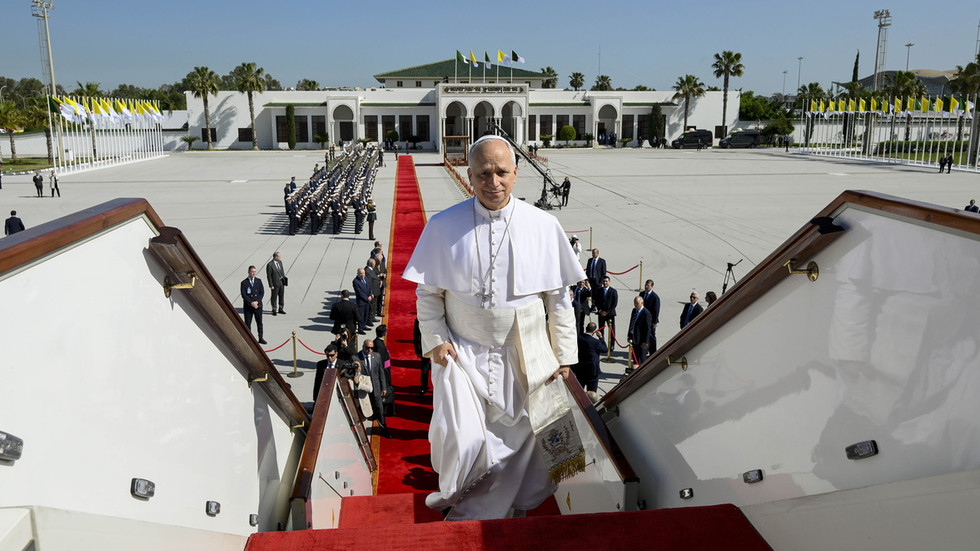
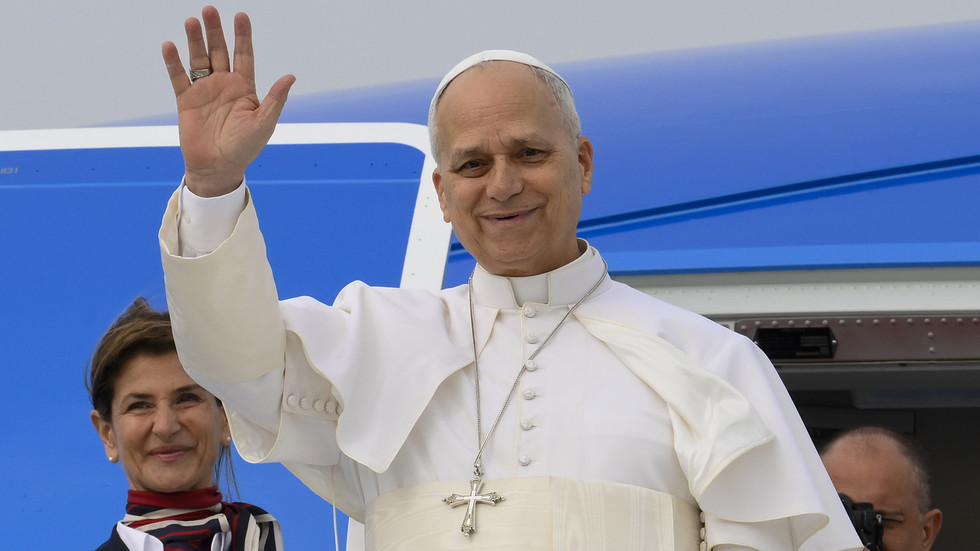
Pope Leo XIV has arrived in Cameroon on an Africa tour after visiting Algeria, as separatist groups in the Anglophone region announced a temporary truce
7 days ago
Pope Leo XIV is on an 11-day apostolic journey in Africa, with confirmed stops in Algeria and Cameroon and planned visits to Angola and Equatorial Guinea. Coverage agrees that the visit’s stated aims include promoting reconciliation and peace, particularly in Cameroon’s conflict-affected Anglophone regions where separatist factions have announced a temporary halt in fighting, and addressing themes of migration, the environment, youth, and family values. Reports also concur that this tour is occurring shortly after a public dispute between the Pope and US President Donald Trump over a US-Israeli attack on Iran, and that the Vatican is using the occasion to underscore its independent diplomatic stance and moral positioning.
Both sides note that the African continent is gaining importance within the Catholic Church, as its Catholic population grows and local churches become more central to the Vatican’s long-term pastoral and strategic planning. They also agree that the visit is framed as historic, particularly the stop in Algeria, because of the country’s complex religious landscape and its political sensitivity in North Africa. Across outlets, there is shared acknowledgment that the Pope’s messaging links local African conflicts and social challenges with broader global issues, positioning the tour as both a pastoral mission and a diplomatic engagement.
Motives and symbolism. Government-aligned sources portray the tour as primarily a pastoral and reconciliatory mission driven by spiritual concerns and the need to support African Catholics, while would-be opposition narratives are more likely to question whether the Vatican also seeks to bolster its geopolitical influence and repair its image after clashes with powerful states. Government coverage emphasizes the Pope’s moral authority and presents the Algeria stop as a neutral gesture of interfaith respect, whereas opposition coverage would be prone to highlight the symbolic weight of visiting politically sensitive countries and ask whose interests are ultimately served. While government reporting focuses on the official themes of peace and unity, opposition voices would tend to interpret the same symbolism as part of a calculated soft-power strategy.
Framing of the Anglophone conflict. Government outlets describe the separatists’ temporary halt in fighting as a positive response to the Pope’s call for peace and as evidence that dialogue is possible under state-led frameworks, while opposition-leaning analysis would likely stress that the truce is fragile and driven by tactical considerations rather than genuine reconciliation. In government narratives, the visit validates existing peace initiatives and implies that the international Church recognizes state efforts to stabilize the Anglophone regions. In contrast, opposition perspectives would be more inclined to argue that local grievances remain unaddressed and that invoking the Pope’s presence risks masking deeper governance and human rights problems behind a short-term ceasefire.
Characterization of state and Church roles. Government-aligned media tend to present the state and the Church as cooperative partners in a shared project of national unity and social cohesion, framing the Pope’s arrival as an endorsement of the government’s overarching stability agenda. Opposition sources, by contrast, would be more likely to underscore tensions between prophetic religious critique and political power, suggesting that the Pope’s emphasis on migrants, the environment, and conflict victims implicitly challenges aspects of government policy. While official reporting accentuates ceremonial protocol and harmonious church–state relations, critical outlets would focus on whether the visit pressures authorities to undertake reforms on justice, corruption, or decentralization.
Interpretation of the Trump dispute. Government coverage treats the Pope’s clash with President Trump over the US-Israeli attack on Iran mainly as backdrop that underscores Vatican independence and moral courage, tying it to a proud narrative of sovereign foreign policy and South–South solidarity. Opposition-oriented commentary would be likelier to ask whether local governments are genuinely aligned with the Pope’s critique of militarism and external interference, or merely using his stance rhetorically while maintaining close security ties with Western powers. In government narratives, the dispute enhances the prestige of hosting a globally assertive Pope, whereas opposition narratives would emphasize the gap between the Pope’s words and the foreign policy practices of the hosting states.
In summary, government coverage tends to foreground harmony, shared values, and validation of existing state-led peace and development agendas through the Pope’s visit, while opposition coverage tends to emphasize underlying conflicts, instrumentalization of the tour for political legitimacy, and the tension between the Pope’s stated principles and on-the-ground governance realities.