opposition
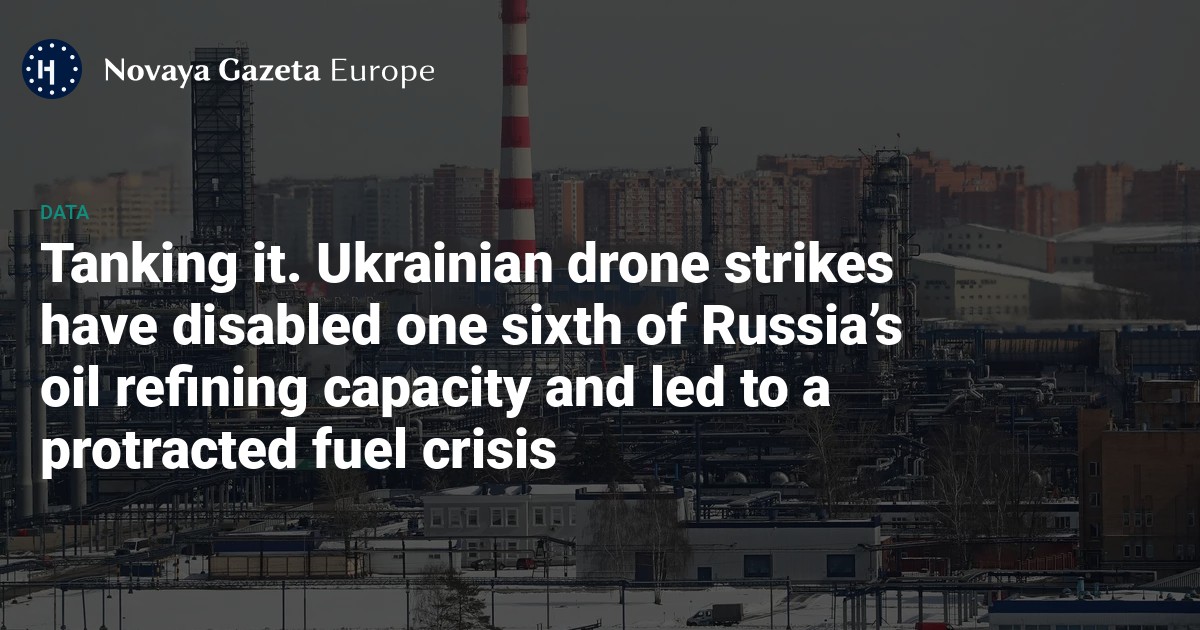
Tanking it. Ukrainian drone strikes have disabled one sixth of Russia’s oil refining capacity and led to a protracted fuel crisis
The Gazpromneft Moscow Petroleum Refinery, 4 April 2022. Photo: EPA/MAXIM SHIPENKOV
4 months ago
Both government and opposition-leaning discussions of the Ukrainian drone strikes on Russian energy infrastructure tend to converge on several factual points, even when framed differently. They broadly acknowledge that:
Where coverage diverges is in the interpretation, causality, and implications of the fuel crisis. Opposition outlets stress that:
By contrast, official and pro‑government narratives (where present) typically downplay the duration and severity of the crisis, frame drone damage as manageable and under control, and emphasize state capacity to re‑route supply, regulate prices, and protect consumers, while avoiding detailed discussion of how sanctions and structural vulnerabilities limit long‑term resilience.
In sum, both sides recognize that Ukrainian drone strikes have significantly disrupted Russian refining and contributed to a domestic fuel crunch, but opposition sources frame this as a systemic, long‑term vulnerability amplified by sanctions and market flaws, while government‑aligned narratives tend to cast it as a temporary, controllable challenge that the state can absorb and manage.