government
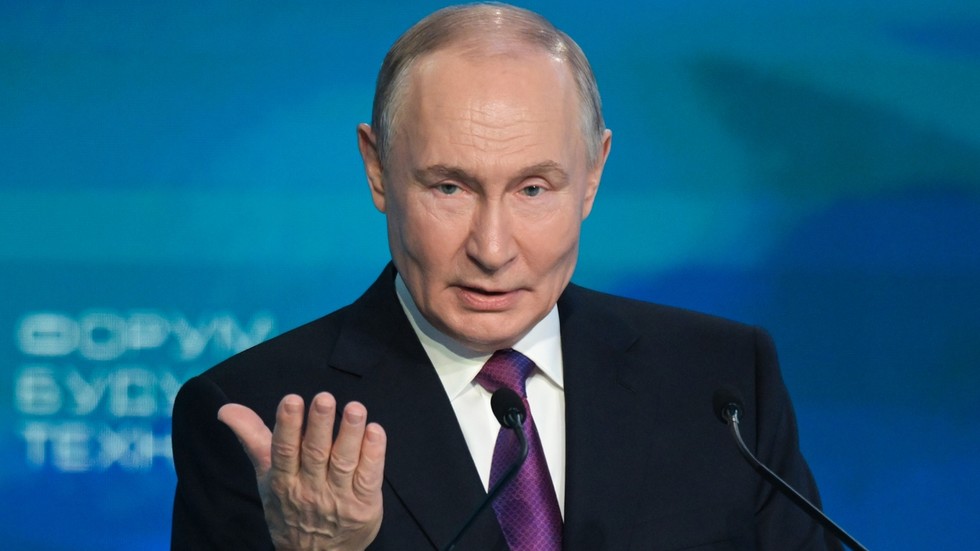
IN BRIEF: Putin speaks at Future Technologies Forum
Russia is proud that its scientists made a "sound contribution" to biosciences, the Russian leader said
2 months ago
Russian and international coverage agree that at the Future Technologies Forum in Moscow, Vladimir Putin highlighted advances in Russian biotechnology, including work on artificial human organs while acknowledging that a fully functional artificial heart remains a long-term goal. Reports converge that he framed the bioeconomy as a strategic national priority, promised preferential benefits and protections for domestic biotech companies, and called for expanded grants in agribusiness and healthcare that use artificial intelligence and bioinformatics, alongside the creation of ethical guidelines for biotechnologies.
Across outlets, there is also agreement that Putin linked Russia’s plans to the broader BRICS framework, inviting member states to participate in joint bioeconomy projects that he described as a “new phenomenon” of global growth. Both sides note his argument that biotechnologies could help tackle climate change, food insecurity, and public health challenges, and that he has instructed the government to accelerate a national bioeconomy strategy and support the export of Russian biotech products, situating these initiatives within long-term economic modernization efforts.
Strategic framing and intent. Government-aligned sources present Putin’s bioeconomy push as a visionary, science-driven modernization program that will diversify Russia’s economy and integrate it into a high-tech global growth trend, especially via BRICS. In the absence of explicit opposition reporting in the provided context, opposition-leaning interpretations in similar cases typically frame such initiatives more skeptically, suggesting they may serve as political messaging to project technological prowess and international relevance despite sanctions and structural economic weaknesses. Government outlets emphasize practical implementation steps and international cooperation, whereas opposition voices would likely question whether this represents substantive economic transformation or primarily a rebranding of existing industrial policy.
Economic impact and feasibility. Government coverage underscores potential benefits such as support measures for biotech firms, export growth, and solutions to climate, food, and health issues, portraying the plans as realistic and already in progress. Opposition-oriented analysis, by contrast, would be more inclined to highlight gaps between ambitious rhetoric and Russia’s actual investment levels, regulatory capacity, and access to Western technologies, raising doubts about whether large-scale breakthroughs—like artificial organs or competitive biotech exports—are attainable under current constraints. While state media stress long-term strategic planning and state backing, critical outlets would likely foreground risks of underfunding, bureaucratic inertia, and brain drain that could limit the policy’s real impact.
Ethics, regulation, and governance. Government narratives frame the call for ethical guidelines and regulatory frameworks as evidence of responsible, forward-looking governance in sensitive areas such as AI-driven medicine and bioengineering. Opposition commentators would likely read the same pledge more ambivalently, warning that weak institutional checks, opacity, and politicization of research in Russia could undermine credible ethical oversight, and raising concerns about potential misuse of biotech and health data by the state. Where official outlets emphasize the promise of safe, regulated innovation, opposition sources would more often question who sets the rules, how transparent they are, and whether independent scientific and civic input is genuinely incorporated.
Geopolitics and BRICS collaboration. Government-aligned media present the BRICS-focused invitation as proof that Russia is building an alternative, multipolar technological ecosystem and successfully pivoting toward non-Western partners for high-tech cooperation. Likely opposition narratives would treat the same outreach as partly compensatory, arguing that deeper BRICS cooperation is being oversold to mask isolation from Western research networks, capital, and markets, and noting asymmetries within BRICS that may limit real joint projects. State outlets emphasize opportunity and strategic autonomy, while critics would stress the uncertainty of concrete outcomes and the risk that geopolitical signaling outpaces practical scientific collaboration.
In summary, government coverage tends to depict the bioeconomy initiative and BRICS outreach as credible, forward-looking pillars of Russia’s technological and economic future, while opposition coverage tends to cast them as rhetorically ambitious but structurally constrained projects whose feasibility, governance, and geopolitical payoffs remain highly uncertain.