government
Possible US strike on Iran unlikely to cause longstanding regional conflict
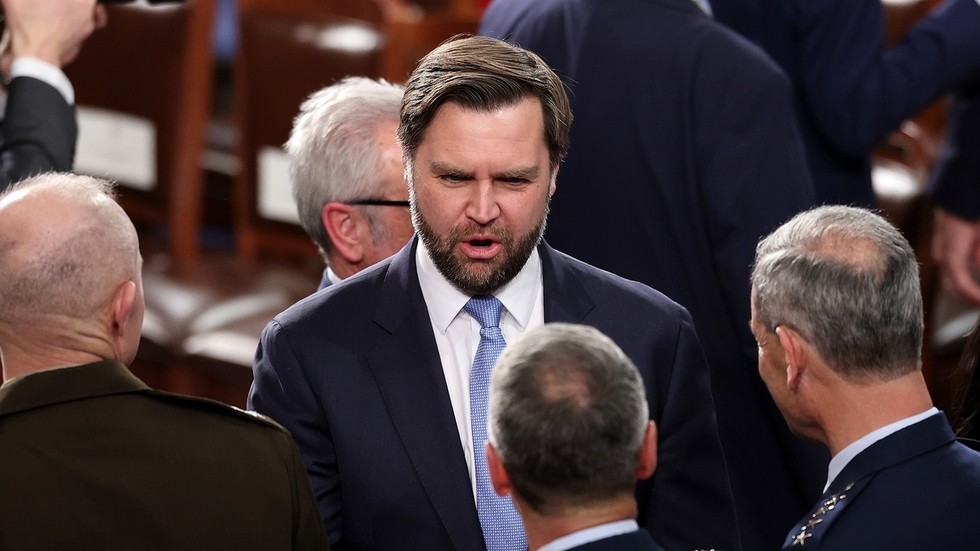
US Vice President JD Vance stressed he does not know what Donald Trump will decide to do about Iran
2 months ago
US and international coverage agree that US Vice President J.D. Vance has publicly argued a potential American strike on Iran would not turn into another open-ended military commitment. They report that he has said there is "no chance" such an operation would create a new "forever war" in the Middle East, while also stressing that the ultimate decision on whether to use force rests with President Trump. Government-aligned and neutral outlets concur that Vance framed military action as one option alongside diplomacy to prevent Iran from obtaining a nuclear weapon, and that he referenced prior US military support for Israel against Iran in outlining the stakes.
Across outlets, there is shared acknowledgment that the current US administration officially prefers a diplomatic resolution to Iran’s nuclear program and is participating in technical talks in venues such as Vienna. They agree that Vance characterizes himself as skeptical of foreign interventions but argues that past mistakes in Iraq and Afghanistan should not make Washington permanently reluctant to use force when it deems it necessary. It is also broadly reported that the discussion over Iran is occurring alongside intra-conservative debates about US policy toward Israel, including controversial statements about Israeli territorial claims that Vance describes as part of an ongoing conversation within the American right.
Risk of escalation. Government-aligned coverage amplifies Vance’s confidence that any strike on Iran can be tightly controlled and limited, highlighting his assertion that there is "no chance" of a drawn-out regional war. Opposition coverage, by contrast, tends to question this certainty, emphasizing Iran’s capacity for asymmetric retaliation and the risk of drawing in regional proxies and great powers, and often invoking past underestimates of escalation risks in Iraq and Libya.
Learning from past wars. Government sources stress Vance’s narrative that Washington must learn from Iraq and Afghanistan without becoming paralyzed, presenting his stance as a calibrated rejection of both reckless interventionism and blanket isolationism. Opposition outlets more often argue that his assurances underplay the depth of those prior failures, casting his position as a rhetorical reframing of intervention that could repeat old patterns under a new label of "limited" or "surgical" action.
Diplomacy versus force. Government-aligned reporting emphasizes the administration’s stated preference for diplomacy and ongoing technical talks over Iran’s nuclear program, portraying any discussion of strikes as a contingency designed to strengthen negotiating leverage. Opposition coverage typically portrays the same messaging as skewed toward coercion, suggesting that the prominence given to military options undermines diplomatic credibility and may box both sides into confrontation.
Domestic political framing. Government-friendly outlets tend to frame Vance’s remarks as responsible statesmanship aimed at reassuring a war-weary public while keeping all options on the table, and they often depict internal conservative debates over Israel and Iran as a sign of healthy policy discussion. Opposition coverage more often interprets the comments as politically motivated signaling to hawkish constituencies, linking his dismissal of a "forever war" to election-cycle messaging and warning that domestic politics, rather than clear strategy, may be driving the Iran discourse.
In summary, government coverage tends to present Vance’s comments as a balanced, reassuring articulation of a limited and controllable use-of-force option backstopped by a genuine diplomatic track, while opposition coverage tends to portray his assurances as politically convenient, strategically risky, and insufficiently attentive to the historical pattern of "limited" strikes evolving into long, costly entanglements.