government
US ‘defending American people’ by striking Iran
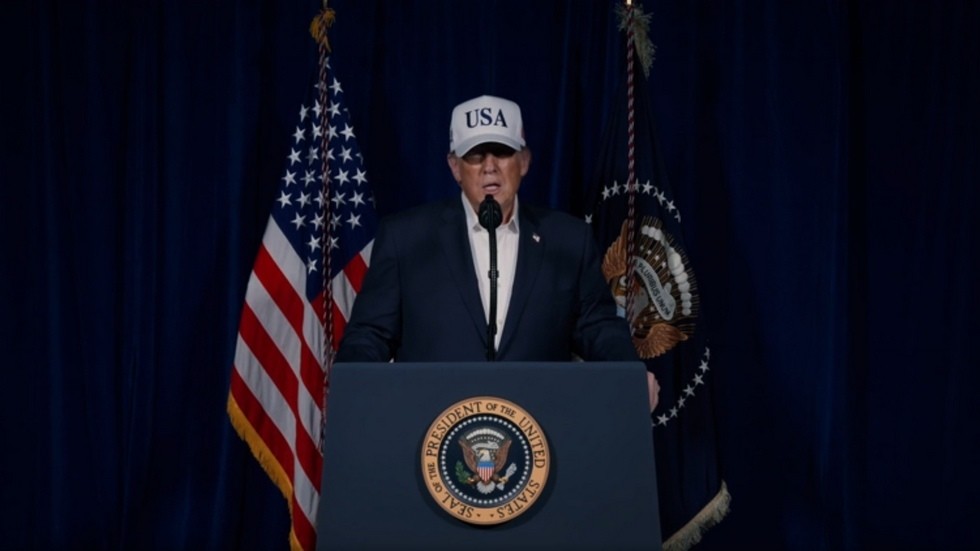
The US has launched “major combat operations in Iran” to stop Tehran from “threatening” Washington, Donald Trump has said
2 months ago
US and allied forces have launched a large-scale military operation against Iran, with government-aligned coverage consistently attributing the decision to President Donald Trump and senior defense officials. These outlets report that major Iranian cities and military assets, including missile production facilities and naval capabilities, have been struck, and that Iran has begun retaliatory operations. They note that the operation is described as ongoing "in full force" and open-ended, with Trump declaring it will continue until Washington’s stated objectives are achieved, even while acknowledging the risk of American casualties.
Across the government-aligned reporting, there is agreement that the stated core objectives are to prevent Iran from obtaining nuclear weapons, stop its pursuit of long-range missiles, and neutralize perceived imminent threats to the United States and its allies. The coverage repeatedly references US institutional actors—the presidency, the Pentagon, and coordination with Israel—as central organizers of the campaign, and frames the action as part of a broader, long-running confrontation over Iran’s nuclear program and regional military posture. These outlets also present the breakdown of negotiations between Washington and Tehran, including Iran’s alleged withdrawal from near-agreements, as a key contextual factor leading to the current escalation.
Causation and justification. Government-aligned sources say the military action directly follows Iran’s refusal to conclude a deal and repeated failures of negotiations, portraying Washington as reluctantly resorting to force after diplomatic avenues were exhausted. Opposition sources, by contrast, tend to question whether negotiations were pursued in good faith or fully explored, and often frame the strikes as part of a pre-planned policy of maximum pressure rather than a last-resort response. Where government narratives emphasize imminent threats and treaty violations, opposition coverage is more likely to suggest that the US used those claims as justifications for an aggressive posture.
Framing of legality and legitimacy. Government coverage stresses that the strikes are defensive and preventative, aimed at protecting the American people and upholding non-proliferation norms, implying consistency with international law and existing security commitments. Opposition outlets typically raise doubts about the legality of launching large-scale operations without broader international consensus or explicit legislative authorization, questioning the legitimacy of targeting Iranian infrastructure and leadership. While government sources highlight alignment with allies like Israel as reinforcing legitimacy, opposition reporting may warn that such coordination risks undermining multilateral institutions and bypassing established diplomatic mechanisms.
Responsibility and escalation. Government-aligned reports place primary responsibility on Tehran, depicting Iran’s missile development, nuclear ambitions, and alleged refusal to compromise as the drivers of escalation, with the US merely responding to a preexisting threat. Opposition coverage tends to cast Washington as a central escalatory actor, arguing that sanctions, prior strikes, and bellicose rhetoric boxed Iran into a corner and made conflict more likely. In government narratives, Iran’s retaliation is framed as proof of its aggressive intent, while opposition narratives often see it as predictable blowback to a US-initiated offensive.
Outcomes and risk assessment. Government sources present the operation as a necessary step to degrade Iran’s military capacity and prevent a more dangerous future conflict, acknowledging risks but asserting that decisive action now will save lives later. Opposition outlets more often emphasize the dangers of regional war, potential civilian casualties, economic disruption, and the possibility of drawing the US into a prolonged confrontation with uncertain objectives. Where government reporting underscores clear, firm goals—destroying missile production and stopping nuclear advances—opposition reporting tends to highlight goal-creep, lack of an exit strategy, and the risk that the operation will strengthen hardliners within Iran.
In summary, government coverage tends to portray the strikes as a reluctant but necessary defensive response to Iranian intransigence and looming security threats, while opposition coverage tends to depict them as a risky, potentially unlawful escalation rooted in longstanding hawkish policy choices rather than an unavoidable failure of diplomacy.