government
Bolivian plane crash kills 15 people, injures 28
According to earlier reports, the number of injured stood at 12
2 months ago
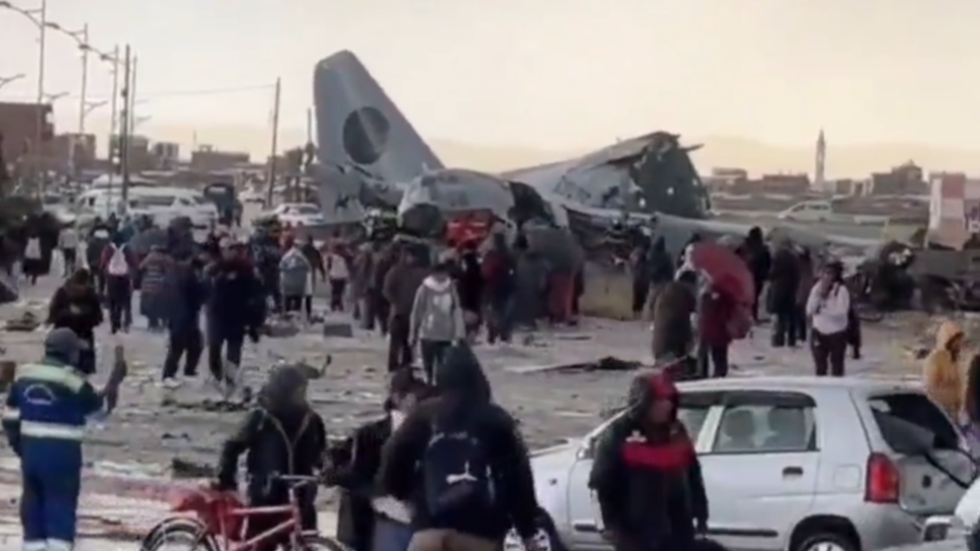
A Bolivian Air Force C-130 Hercules military cargo plane carrying newly printed banknotes crashed near El Alto airport, close to La Paz, killing at least 15 people and injuring around 28. The aircraft, reportedly arriving from Santa Cruz, lost control during its landing approach in poor weather conditions, veered off the runway, and slammed into vehicles on an adjacent highway, scattering cash across the crash zone. Emergency services and military personnel rushed to the scene to extinguish fires, treat the wounded, and recover bodies, while images and videos showed burning wreckage, damaged vehicles, and banknotes strewn over the road. Authorities quickly cordoned off the area, confirmed the casualty figures, and announced the opening of a formal investigation into the causes of the accident.
Government-aligned coverage situates the crash within the framework of Bolivia’s military and financial logistics, emphasizing that the plane was legally transporting newly printed currency as part of routine operations between Santa Cruz and El Alto. These outlets underline institutional responses: rapid deployment of emergency services, the role of the Air Force and civil aviation authorities in securing the site, and the Justice Ministry and prosecutors in probing the incident. They stress institutional order and control by highlighting police actions against people trying to grab scattered banknotes, portraying this as an effort to preserve public property and evidence. Across this coverage, the crash is framed as a national tragedy tied to infrastructure and operational risks rather than systemic institutional failure, with the expectation that official investigations and technical reviews will clarify whether weather, mechanical failure, or human error was primarily responsible.
Responsibility and blame. Government-aligned outlets largely describe the crash as a tragic accident likely influenced by poor weather and the challenging geography around El Alto, stressing that only an expert investigation can determine fault. They tend to avoid assigning direct blame to specific officials or institutions, instead focusing on the complexity of landing heavy aircraft at high altitude. Opposition sources, where they weigh in, are more inclined to question Air Force maintenance standards, pilot training, and oversight of flights transporting cash, suggesting potential negligence or mismanagement at higher levels.
Handling of the cash cargo. Government reporting underscores that the banknotes on board were part of authorized monetary logistics, with security forces acting swiftly to secure the currency and prevent looting. It portrays clashes with people attempting to collect scattered banknotes as law enforcement protecting state assets and preserving the crime scene. Opposition voices are more likely to frame the presence of large quantities of cash as suspicious, raising questions about transparency, chain of custody, and whether official explanations about the shipment and its destination are complete or credible.
Portrayal of security forces and public behavior. Government-aligned media highlight the professionalism of police, firefighters, and soldiers, praising their rapid response, rescue efforts, and crowd control around the wreckage. The focus is on order, discipline, and the difficulty of managing a chaotic scene where some civilians allegedly tried to grab money from the crash site. Opposition-leaning commentary tends to be more critical, emphasizing reports of harsh or heavy-handed policing, and sometimes portraying locals not as looters but as people reacting amid confusion and distrust toward state institutions.
Institutional accountability and follow-up. Government coverage stresses that an official investigation has been opened, promising technical inquiries, possible reforms to flight protocols, and full clarification of causes, thus framing the state as responsive and responsible. It emphasizes procedural steps and the involvement of aviation and judicial authorities, suggesting that the system is working as intended. Opposition coverage is more skeptical that internal investigations will lead to meaningful accountability, questioning whether findings will be made public, whether senior officials will face consequences, and whether broader structural issues in the military and aviation sectors will be addressed.
In summary, government coverage tends to frame the crash as a tragic but technically explainable accident managed by competent institutions, while opposition coverage tends to highlight potential negligence, opaque handling of the cash cargo, and doubts about whether official investigations will deliver real accountability.