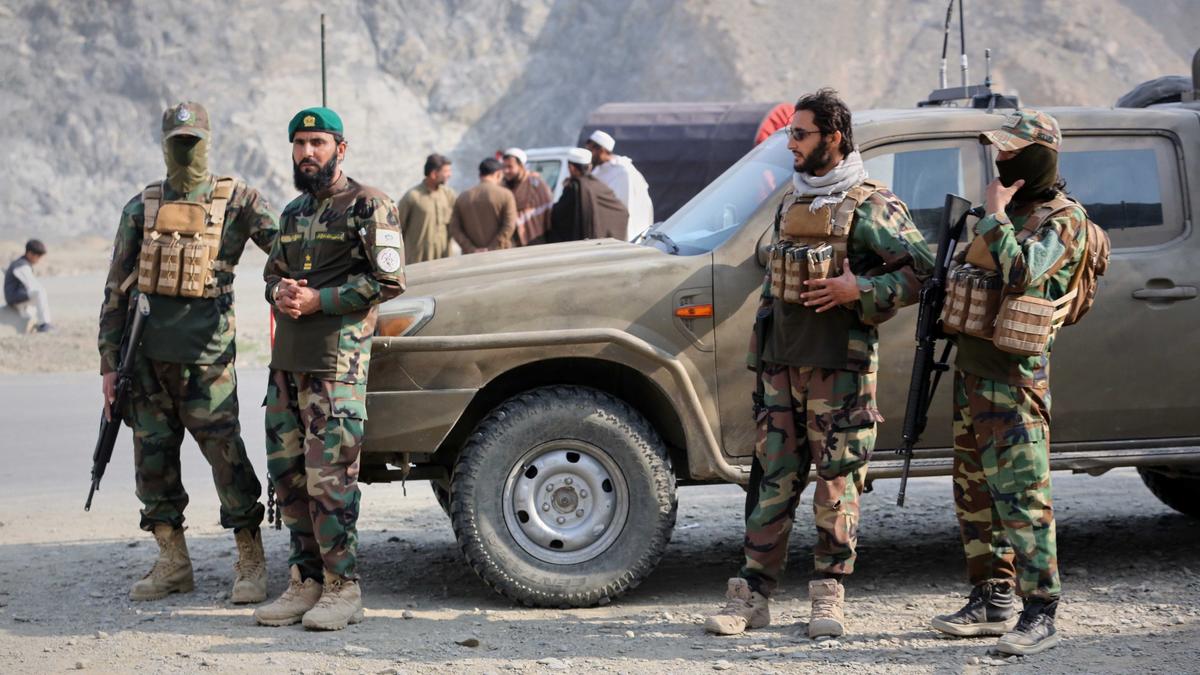
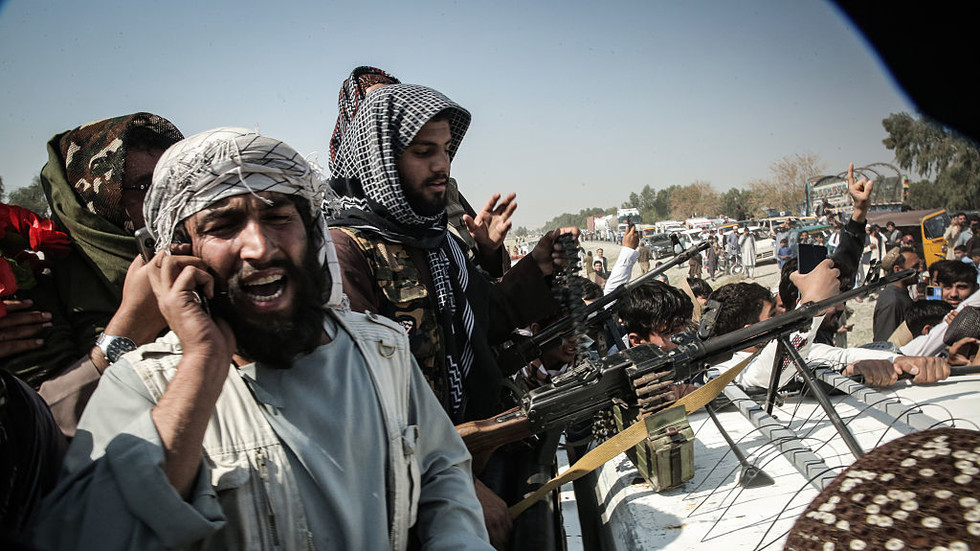
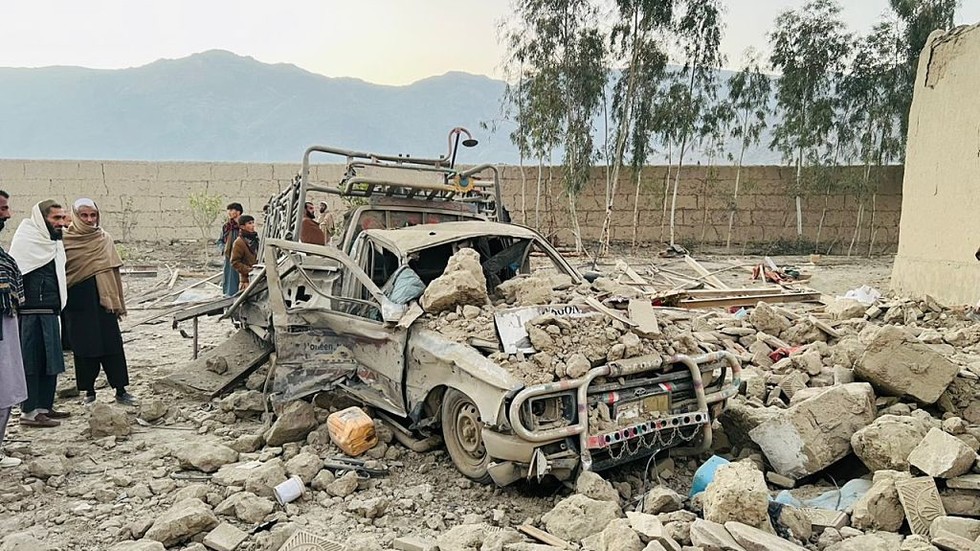
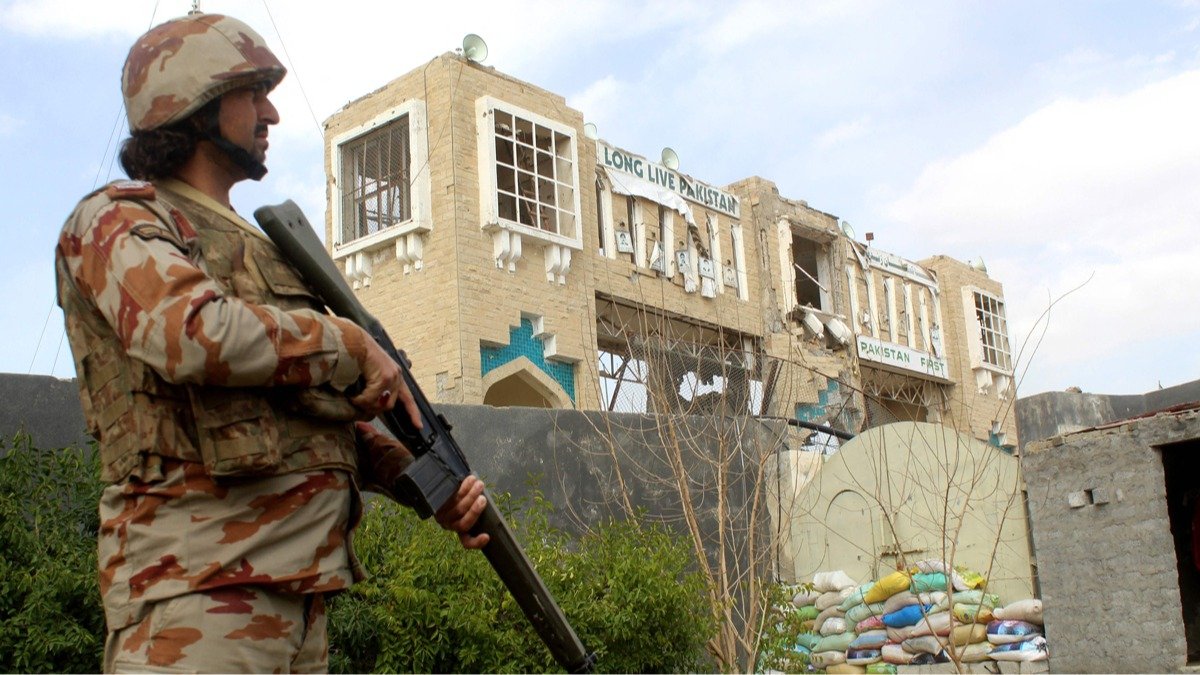
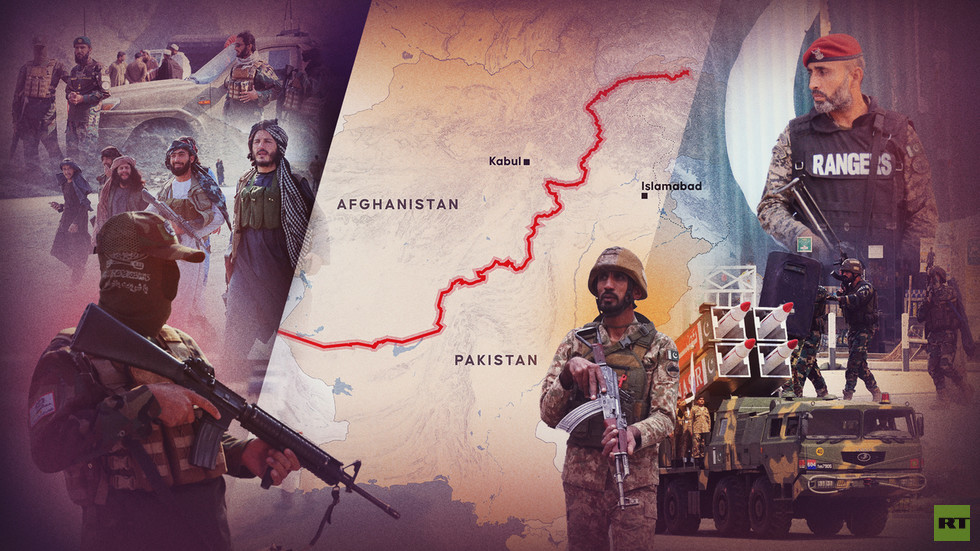
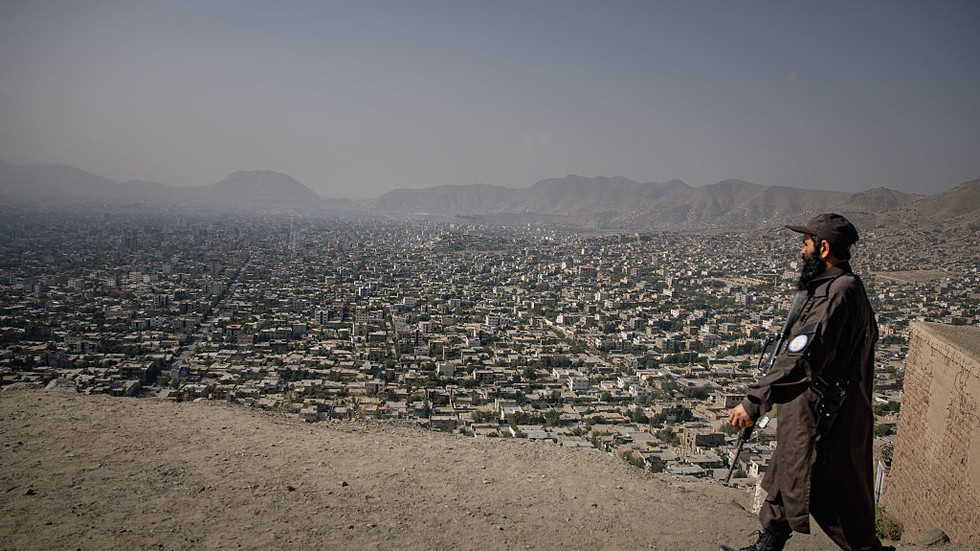
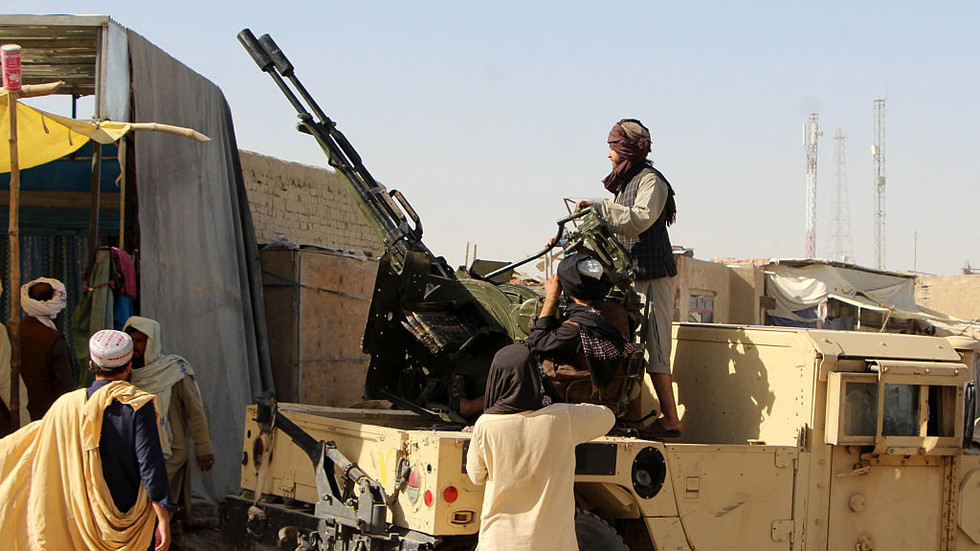
A series of armed clashes between Pakistan and Afghanistan escalated by Friday night, February 27, into what the Pakistani Ministry of Defense described as 'open war'. The Afghan Taliban reported a 'large-scale offensive' on border posts and the elimination of 'many' Pakistani soldiers. Pakistan, in turn, carried out airstrikes on targets in Kabul, as well as in the provinces of Paktia and Kandahar. On Friday afternoon, the Pakistani military clarified that the operation on Pakistani territory was still ongoing. Together with orientalist and NEST Centre expert Ruslan Suleimanov, we are analyzing how far two countries, one of which is a nuclear power, can go in this confrontation. A Pakistani army serviceman on the border with Afghanistan near the city of Chaman, February 27, 2026. Photo: Abdul Basit / AFP / Scanpix / LETA. Ruslan Suleimanov. Orientalist, NEST Centre expert. What happened between Pakistan and Afghanistan? On Friday morning, Pakistani authorities reported that Afghan forces attacked their military positions near the border, prompting Islamabad to launch airstrikes on Afghan territory. 'Our patience has run out. Now there is an open war between us,' wrote Pakistani Defense Minister Khawaja Asif on social network X. The Pakistani operation was codenamed 'Righteous Anger.' As is usual in such cases, each side blames the other for the escalation. Kabul, for example, points to the fact that on February 22, Pakistani forces carried out airstrikes on the Afghan provinces of Paktia and Nangarhar. Islamabad claims that the targets of the attacks were seven camps of the 'Tehrik-i-Taliban Pakistan' and 'Islamic State' groups. The Pakistani authorities explained the necessity of that operation by the destabilizing activities of the militants, in particular, their organization of an explosion in a Shia mosque in Islamabad in early February. Pakistan claims that the attacks were carried out by Pakistani Taliban under the guidance of 'handlers from Afghanistan.' As reported by Al Jazeera, 70 militants were killed in those strikes. The Taliban, on the other hand, claimed that women and children were among the dead. The Taliban unequivocally assessed the Pakistani airstrikes as 'a provocation and a violation of the border by Islamabad.' In response, as stated by the Taliban's press secretary, a decision was made by February 26 to launch an operation against the military facilities of the Pakistani army. The Taliban claims to have captured 19 Pakistani military posts and two bases. According to them, 55 Pakistani soldiers were killed (Pakistani authorities have so far admitted the loss of 'at least 12' military personnel and injuries to 27 others). Meanwhile, Reuters, citing sources in Islamabad, reported 22 Taliban deaths. Describing these actions by the Taliban as 'unprovoked shelling,' Pakistan announced the retaliatory operation 'Righteous Anger.' Pakistani forces attacked Kabul, as well as the Afghan provinces of Kandahar and Paktia. It was stated that the main targets were ammunition depots and military infrastructure. 'Our forces are capable of crushing any aggressive ambitions,' stated Pakistani Prime Minister Shehbaz Sharif. 'The entire nation stands shoulder to shoulder with the Pakistani armed forces.' On Friday morning, the Afghan Ministry of Defense announced the completion of its military operation against Pakistan. 'We have struck important military targets in Pakistan, and this sends a signal that our hand can reach their neck,' said Afghan government spokesman Zabihullah Mujahid shortly later on Friday. Meanwhile, a representative of the Pakistani army noted in the afternoon: 'Pakistan's operation on Afghan territory continues on the prime minister's orders.' Smoke after Pakistani Air Force airstrikes near the Afghan military base Shamshad Ghar on the border in Torkham, February 27, 2026. Photo: Abdul Majeed / AFP / Scanpix / LETA. News came in all day on February 27. For instance, the Afghan state news agency Bakhtar reported that the Pakistani side shelled a hospital in Nangarhar province, resulting in one person being injured. Ariana News reported that the Afghan armed forces struck a certain nuclear testing ground in Pakistan and a military base in Khyber Pakhtunkhwa province (this information has not been confirmed). Preliminary data on casualties varies greatly. The Pakistani army's press service claims that 274 Taliban fighters were killed and over 400 were injured during the attacks. Additionally, they state that 83 Taliban positions were destroyed and 17 were captured. The Taliban government, meanwhile, has so far reported only eight deaths and 11 injuries on its side. Did the escalation of the conflict come as a surprise? Rather not. Relations between Pakistan and the Taliban have been tense throughout the period since the group came to power in Afghanistan in August 2021. This has led to serious clashes several times. For example, in October 2025, fierce fighting occurred on the border between the two countries, resulting in the deaths of dozens of military personnel. Then, as now, Pakistani authorities demanded that Kabul step up the fight against militants carrying out attacks on Pakistani territory. The trigger was two explosions in Kabul, for which the Taliban blamed Islamabad. After this, firefights began on the border between the two countries. Furthermore, the Pakistanis used heavy artillery and fighter jets. De-escalation occurred thanks to the mediation efforts of Turkey and Qatar. However, the root causes of the crisis were not resolved, leading to a new round of conflict. 'In the 1990s, Pakistan played a role in the creation of the Taliban and long believed it could control them. However, it turned out to be a genie released from the bottle,' says Ruslan Suleimanov, orientalist and NEST Centre expert, to 'Novaya-Europe.' 'During the Taliban's first rule—from 1996 to 2001—Pakistan still managed them somehow and was, along with Saudi Arabia and the UAE, one of the three states that recognized the Afghan Taliban regime. But now, in the second period of their rule, Pakistan can no longer cope.' According to the expert, 'the Taliban feel complete power and independence': 'They have gained other international partners besides Pakistan—primarily Arab countries like Qatar, as well as Turkey. And now the Taliban believe they can dictate their terms to Pakistan.' Why the conflict? According to Ruslan Suleimanov, 'there is a whole complex of contradictions, primarily in the security sphere.' Islamabad has long accused the Afghan Taliban of harboring militants linked to the Pakistani Taliban. In response, the Afghan Taliban claim that the Pakistani Taliban are not related to them and that Kabul does not interfere in Pakistan's internal affairs. Another important issue, as the expert notes, is the Durand Line – the practically unmarked border between Afghanistan and Pakistan, which arose in the late 19th century as a result of two Anglo-Afghan wars. The Taliban do not recognize it (although they do not officially state their intention to revise the border). 'De facto, the Taliban believe that Pashtuns are a divided people. After 2021, the problem of refugees became particularly acute. Afghans, primarily Pashtuns, began to flock to Pakistan. According to the Taliban's logic, they have every right to do so, and Pakistani authorities should not impede their free movement. Pakistan, however, views this as a threat to itself,' explains Ruslan Suleimanov. Taliban militants on the Afghan side of the Torkham border crossing with Pakistan, February 27, 2026. Photo: Wahidullah Kakar / AP Photo / Scanpix / LETA. Firstly, the expert notes, 'it is a serious burden on the economy—we are talking about hundreds of thousands, if not more than a million refugees.' Secondly, the risk of terrorism increases: there is no guarantee that there are no militants among the migrants. 'Pakistan is demonstratively deporting migrants back to Afghanistan. The Afghan side dislikes this, except for cases where specific individuals suspected of something in Kabul are deported at their request,' notes the interlocutor of 'Novaya-Europe.' In aggregate, all these contradictions lead to periodic firefights on the border. What are the armies of the two countries like? There is a huge difference between the military potentials of Pakistan and the Afghan Taliban. In the Global Firepower ranking of countries by military strength, Pakistan ranks 14th in the world, and Afghanistan ranks 121st. The strength of the two armies is 660,000 and 75,000 people, respectively. The number of military aircraft is 1397 and 5. The difference in battle tanks is even greater: 2677 and 0. Finally, it is worth remembering that Pakistan is a nuclear power: according to Global Firepower, it has 170 warheads. The difference in military budgets is also impressive: $9.1 billion versus $145 million. At the same time, analysts emphasize that the Taliban have significant experience in guerrilla warfare. In addition, as Abdul Basit, a researcher at Singapore's S. Rajaratnam School of International Studies, told Al Jazeera, the Afghan Taliban resort to unconventional methods of warfare: 'They have suicide bombers and kamikaze drones, and I think they will use them in large numbers.' On Friday, there were already reports of drone attack attempts on three Pakistani cities. 'The Taliban like to emphasize that they have significantly increased the strength of the Afghan army—up to several hundred thousand people,' notes Ruslan Suleimanov. 'They claim that former servicemen of the Islamic Republic of Afghanistan army, as well as a large number of recruits, have joined its ranks. They also say that the army has supposedly been re-equipped. However, in practice, the Taliban mainly use what is left of the former army.' This primarily refers to equipment and weapons that the Taliban acquired after the withdrawal of American troops. The Taliban does not make large-scale arms purchases. According to Suleimanov, 'the Taliban currently have virtually no full-fledged partnerships in the military sphere, as there is a high level of distrust towards them—including in the Muslim world.' 'Even countries like Qatar and Turkey periodically criticize the Taliban for their harsh internal policies. Turkish leader Recep Tayyip Erdogan, for example, called their laws inhumane and contrary to Islamic principles. Therefore, it is not possible to say that the Taliban have reached a level that allows them to make significant purchases of modern weapons,' the expert notes. Pakistani Defense Minister Khawaja Asif accused the Taliban of turning Afghanistan into a 'colony of India.' Is this true? India quickly established contacts with the Taliban after the change of power in Afghanistan—initially through humanitarian aid supplies, and then through political and diplomatic channels. In October 2025, during a visit by the head of the Taliban's Foreign Ministry, Amir Khan Muttaqi, to Delhi, it was announced that the status of India's technical mission in Kabul would be raised back to the level of an embassy. The Taliban made an important gesture towards Delhi by stating that Jammu and Kashmir is part of India (this territory has been a subject of dispute between Indians and Pakistanis since 1947). And now, against the backdrop of the current escalation, the Indian Ministry of External Affairs has unequivocally sided with Afghanistan, condemning 'Pakistan's airstrikes on Afghan territory, which resulted in civilian casualties, including women and children, during the holy month of Ramadan.' A Pakistani army tank on the border with Afghanistan in the city of Chaman, February 27, 2026. Photo: Abdul Basit / AFP / Scanpix / LETA. Meanwhile, Ruslan Suleimanov is convinced that the statements about Afghanistan being an 'Indian colony' are just a 'rhetorical device, a form of political discrediting of the opponent.' 'It is typical for Pakistani politicians and officials in general to accuse their opponents of hostile ties with India. Such statements are largely aimed at the domestic audience in Pakistan,' he notes. According to the orientalist, while Afghanistan does have trade relations with India, 'there is no basis to speak of it turning into a 'colony'.' 'In this context, if one were to look for an external player with a more significant economic presence, Beijing could be mentioned: Chinese companies are actively developing Afghan mineral deposits and concluding long-term contracts, including for decades to come,' the interlocutor of 'Novaya-Europe' says. How will the conflict develop? A factor that cannot be ignored is the close economic relations between Afghanistan and Pakistan. Islamabad has always been Kabul's key trading partner and the main transit corridor for delivering Afghan products to world markets. Afghan exports—primarily agricultural products (fruits, nuts) and coal—traditionally went south through key border crossings in Torkham and Chaman. From there, cargo proceeded to Pakistani markets and ports, from where it was shipped to third countries. Pakistan, in turn, supplied Afghans with essential goods: rice, wheat, cement, pharmaceuticals, building materials, and textiles. 'Active trade continues between the countries, although it is not without complications from time to time. Pakistan remains the main buyer of Afghan coal, and the Taliban are unlikely to be interested in losing such a partner,' notes Ruslan Suleimanov. 'Therefore, there is no reason to talk about the prospect of a full-scale war with the aim of completely defeating one of the sides. So to speak, of raising the Afghan flag in Islamabad or the Pakistani flag in Kabul. These are large countries with large populations, and a war to the victorious end would be madness.' According to the expert, the Pakistani authorities have most likely decided to 'demonstrate their unwillingness to tolerate the strengthening of the Taliban and wanted to put the Taliban 'in their place' a bit.' 'This is about another escalation—albeit more significant than before. However, even it is difficult to call it a war in the full sense of the word,' concludes the interlocutor of 'Novaya-Europe.'