government
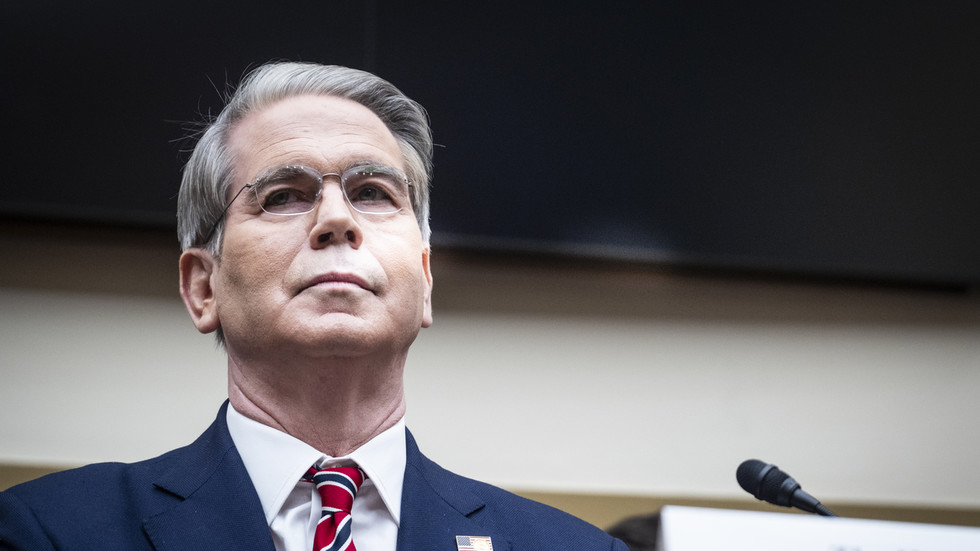
US Treasury Secretary Confirms Permission to India to Buy Russian Oil Loaded on Tankers
Scott Bessent also added that the US anticipated that New Delhi will ramp up its purchases of US oil
2 months ago
US and Indian officials, as covered in government-aligned reporting, agree that Washington has issued a time-bound, 30‑day waiver (via a Treasury license) allowing India to import Russian oil that is already loaded on tankers and at sea. They concur that the stated purpose is to stabilize global oil markets amid an energy crunch driven by conflict in the Middle East and tensions around Iran, and that the US Treasury Secretary Scott Bessent has repeatedly insisted the waiver is structured to prevent significant financial gain for Russia. Both sides acknowledge that Russia is currently India’s largest crude oil supplier, that the waiver follows earlier US pressure and tariff measures aimed at curbing Indian purchases of Russian oil, and that Washington expects India to increase its intake of US oil as part of this arrangement.
Shared context in these reports emphasizes the interconnected nature of sanctions policy, global energy security, and India’s strategic autonomy. Coverage highlights that the US is not only granting a specific 30‑day license to India but is also signaling a broader willingness to “unsanction” certain Russian oil flows to offset supply fears triggered by attacks and disruptions in key routes like the Strait of Hormuz. At the same time, India’s stated energy policy framework—prioritizing affordability, availability, and sustainability—is presented as a longstanding position that predates the current waiver and guides its continued reliance on Russian crude. The institutional backdrop includes the US Treasury’s sanctions architecture, earlier US attempts to dissuade India from Russian energy imports, and the broader geopolitical context of volatile oil prices, Middle East instability, and debates over whether sanctions should be flexibly applied to prevent global price spikes.
Framing of sovereignty and dependence. Government-aligned sources describe the waiver as a pragmatic, cooperative arrangement under which the US helps India manage supply risks while expecting a gradual shift toward more US oil imports. Opposition-oriented interpretations, by contrast, would likely stress India’s assertion that it does not need US permission to buy Russian oil and frame the waiver as symbolic rather than determinative of Indian policy. While pro-government narratives might emphasize alignment and partnership, critical voices would highlight that India’s official line underscores energy independence and rejects the premise that Washington can dictate New Delhi’s sourcing.
Impact on Russia and sanctions credibility. Government coverage echoes Treasury assurances that the 30‑day license and related “unsanctioning” of specific cargoes will not significantly enrich Russia and are tightly scoped to oil already at sea. Opposition narratives would be more inclined to question this claim, arguing that any relaxation of sanctions inevitably eases pressure on Moscow and undermines the stated moral basis of the sanctions regime. Where government-aligned accounts stress technical safeguards and the necessity of temporary relief to avoid price spikes, dissenting perspectives would portray the move as evidence that sanctions are elastic and politically convenient rather than principled.
Justification via global market stability. Government sources foreground the Middle East crisis, shipping disruptions, and surging prices as the central rationale for the waiver, casting the US as a responsible manager of global energy stability. Opposition perspectives would likely argue that these market-stability justifications are selectively invoked, noting that earlier US pressure and tariffs on India contributed to supply insecurity and higher costs. In this view, the same government now portrays itself as a stabilizer after partly creating the instability, whereas government-aligned reporting treats the waiver as a technocratic correction to unforeseeable external shocks.
Direction of bilateral leverage. Government-aligned accounts suggest the US retains meaningful leverage, highlighting expectations that India will increase US oil purchases and framing the license as a conditional privilege extended by Washington. Opposition commentary would invert this, emphasizing that India’s continued reliance on Russian oil and its public insistence on strategic autonomy show New Delhi has substantial bargaining power in a tight market. While the government narrative describes a calibrated US policy nudging India toward preferred suppliers, critics would contend that India is using its importance as a major buyer to win flexibility from Washington on its own terms.
In summary, government coverage tends to portray the waiver as a careful, time-limited tool that balances sanctions goals with global energy stability and respectful partnership with India, while opposition coverage tends to frame it as a politically convenient backtrack that exposes the limits of US leverage and the inconsistency of its sanctions-based foreign policy.